Second-Hand Flights for Sale: How to Choose the Right Pre-Owned Business Jet

Jay Franco Ser
September 4, 2026

When buyers search for second-hand flights for sale, they are almost always looking for pre-owned private jets and business aircraft available on the secondary market-not resold airline tickets. This guide walks through how to evaluate, compare, and acquire the right pre-owned jet for your mission, with concrete examples and current market data.

Key Takeaways

  • The phrase "second hand flights for sale" refers to pre-owned aircraft- private jets and business jets-offered for sale on the secondary market. Buyers can access high-spec aircraft from 2018–2024 model years at substantial discounts versus new-build pricing. Private jets range from $1 million to $80 million depending on type and age.

  • Evaluating total time, cycles, maintenance programs, and ownership history is critical to making the right choice. Private jet appraisals consider factors like airframe hours and maintenance program status, which directly affect both safety and residual value.

  • BusinessJets.com specializes in pre owned business jets, with over 1,500 completed transactions and 5,000+ satisfied clients, offering brokerage, appraisals, and aviation consulting.

  • This article covers concrete examples of second-hand aircraft- including the Gulfstream G550, Bombardier Global 6000, and Dassault Falcon 2000LX-and explains how to assess their value and suitability.

  • If you are actively considering buying or selling a private jet, request an appraisal or acquisition consultation to get started.

What "Second Hand Flights for Sale" Really Means

The phrase "second hand flights for sale" is widely searched but frequently misunderstood. It does not refer to the resale of airline tickets-many airlines treat non-refundable tickets as strictly non-transferable, and airlines charge hefty fees for name changes on transferable tickets. Verification of transfer eligibility is crucial when buying second-hand flight tickets, and buying second-hand flight tickets may carry the risk of financial fraud.

Second-hand flight tickets refer to the transfer or resale of airline tickets, and the resale of unused non-refundable tickets can provide value to both sellers and buyers-but legitimate platforms are necessary to avoid scams in the second-hand flight market. Many airlines do not allow passenger name changes after booking, making this route impractical for most travelers.

In aviation, the real opportunity lies in pre-owned aircraft: private jets and business jets being offered for sale on the secondary market. These typically include light jets, midsize jets, super midsize jets, and long-range aircraft built between roughly 2000 and 2025. There are 24,270 private jets in operation worldwide as of July 2024, and 63% of the world's private jets are registered in the United States.

Buying a pre-owned aircraft means acquiring the whole jet ownership, crewing, maintenance, and regulatory compliance-rather than purchasing a one-off charter flight. For serious buyers, the focus is on aircraft condition, operating economics, and mission fit rather than headline price.

Why Consider Pre-Owned Business Jets Instead of New?

The value proposition is straightforward: reduced capital outlay, faster availability, and proven in-service reliability. A 2024 Gulfstream G700 costs $80 million new. A late-model pre-owned Gulfstream G550 (2018–2020 vintage) typically transacts around $30–35 million with modern avionics and cabins intact. Older jets can depreciate to below $1 million at the far end of the spectrum, while a 2023 Cirrus SF50 Gen 2+ costs approximately $3.5 million.

The steepest depreciation in business aviation usually occurs in the first 3–7 years. Buying after that window means acquiring much of the capability of a new jet at reduced cost, with the most painful depreciation already absorbed.

Pre-owned jets can enter service within 30–90 days of offer acceptance, subject to pre-buy inspection and closing. Contrast this with new-build slots: OEMs in 2026 often have 12–24 month lead times. AMSTAT Q2 2026 data shows pre-owned business jet transactions increased approximately 11.2% year-over-year, with heavy jet transactions surging 43.8%.

Business aircraft users outperform non-users by 23% in revenue growth, and two-thirds of passengers feel more productive on business jets. Private jets access around 10 times more airports than airlines-roughly 5,000 airports in the US alone-giving operators unmatched flexibility and efficiency. These productivity and access advantages apply equally whether you buy new or pre-owned.

Key Factors to Evaluate in a Second-Hand Aircraft

Before committing to any second-hand flight for sale, treat the following as a practical checklist:

  • Total time and cycles: Total hours flown and total landings matter enormously. A 2018 super midsize jet with 3,000 average hours is very different from a 2005 airframe with 10,000+ hours. Cycles-takeoff and landing pairs-drive pressurization fatigue and structural inspection schedules independent of hours.

  • Engine and APU status: Time since overhaul and enrollment in programs like Rolls-Royce CorporateCare, Honeywell MSP, or Pratt & Whitney ESP directly impact predictable operating costs. Without program coverage, an engine overhaul can represent a multi-million-dollar unbudgeted event.

  • Maintenance history and damage record: Continuous maintenance at OEM or reputable MROs is essential. Incidents or significant repairs affect valuation. Logbooks must be verified for completeness.

  • Avionics and connectivity: Upgrades such as FANS 1/A, ADS-B Out, Ka-band internet, Starlink, or Gogo ATG-4000 are value drivers. If missing, retrofit costs and downtime must be factored into your acquisition price.

  • Interior condition and configuration: Whether the aircraft is configured for 10 or 16 passengers, forward versus aft galley, crew rest, medevac capability, and seat arrangement all affect mission fit and resale value.

BusinessJets.com routinely compiles this data into detailed comparison reports for corporate buyers and fleet managers.

Popular Categories of Pre-Owned Private Jets in 2026

The second-hand market segments naturally by jet size and range. Understanding which category fits your mission is the first step toward the right choice.

Very light and light jets such as the 2022 Cessna Citation M2 Gen2 or Embraer Phenom 300E serve 3–6 passengers on regional trips up to approximately 1,500 NM. Modern jets typically seat five to nine passengers. These are often used by a corporate owner or smaller companies seeking low fixed costs and single-digit-million-dollar acquisition prices.

Midsize and super midsize jets, including the 2020 Gulfstream G280, 2018 Bombardier Challenger 350, and 2019 Citation Latitude, suit transcontinental US flights with up to 8–10 passengers. The Bombardier Challenger 300 is a popular super mid-sized jet in this segment.

Large cabin, long-range jets like the Dassault Falcon 7X, Gulfstream G550, and Bombardier Global 6000 handle intercontinental missions-New York to London, Los Angeles to Tokyo-for corporate flight departments that require top-end speed and range. Pre-owned Global 5000–6500 fleet availability sits around 7.9%, while Falcon 6X/7X/8X listings hover near 4.7%.

Special mission and medevac-configured aircraft such as the Challenger 604 and 650 serve governments, NGOs, and specialized operators. Note that 38% of business aviation missions involve multiple destinations, making flexibility in mission planning a key consideration.

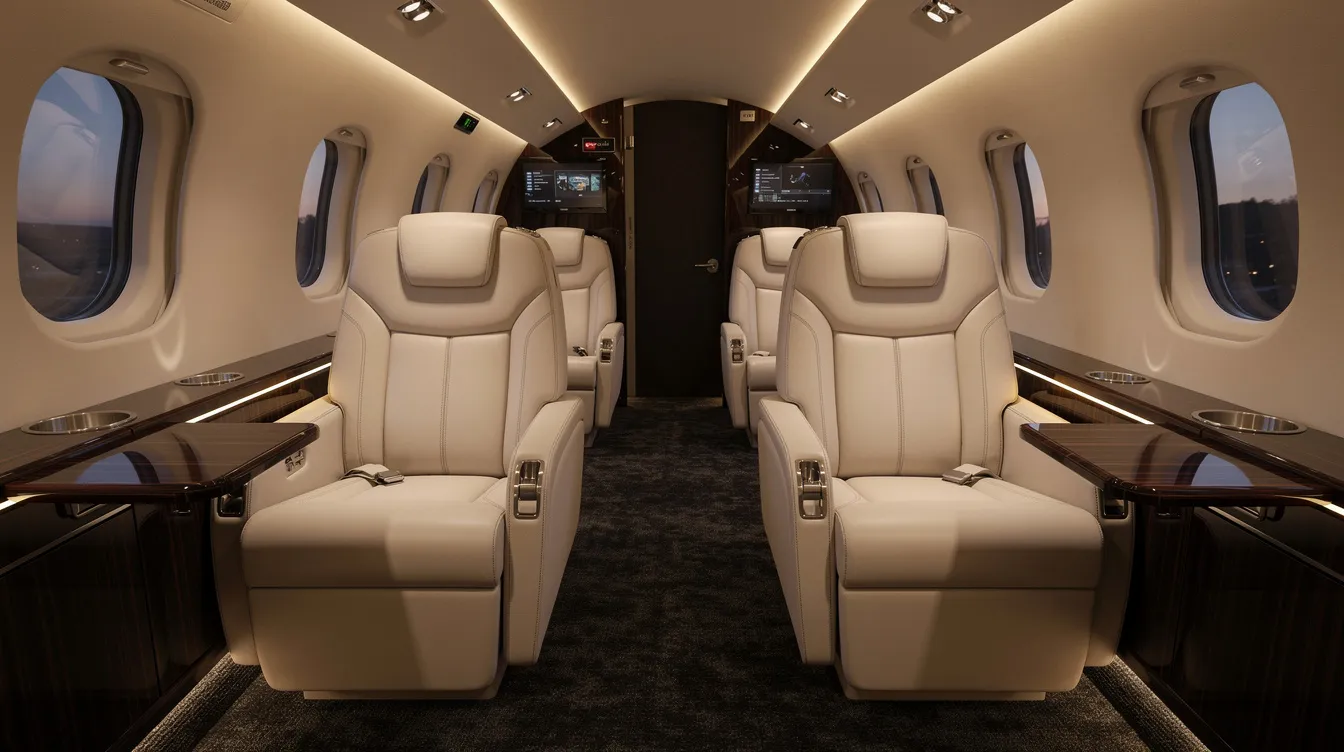
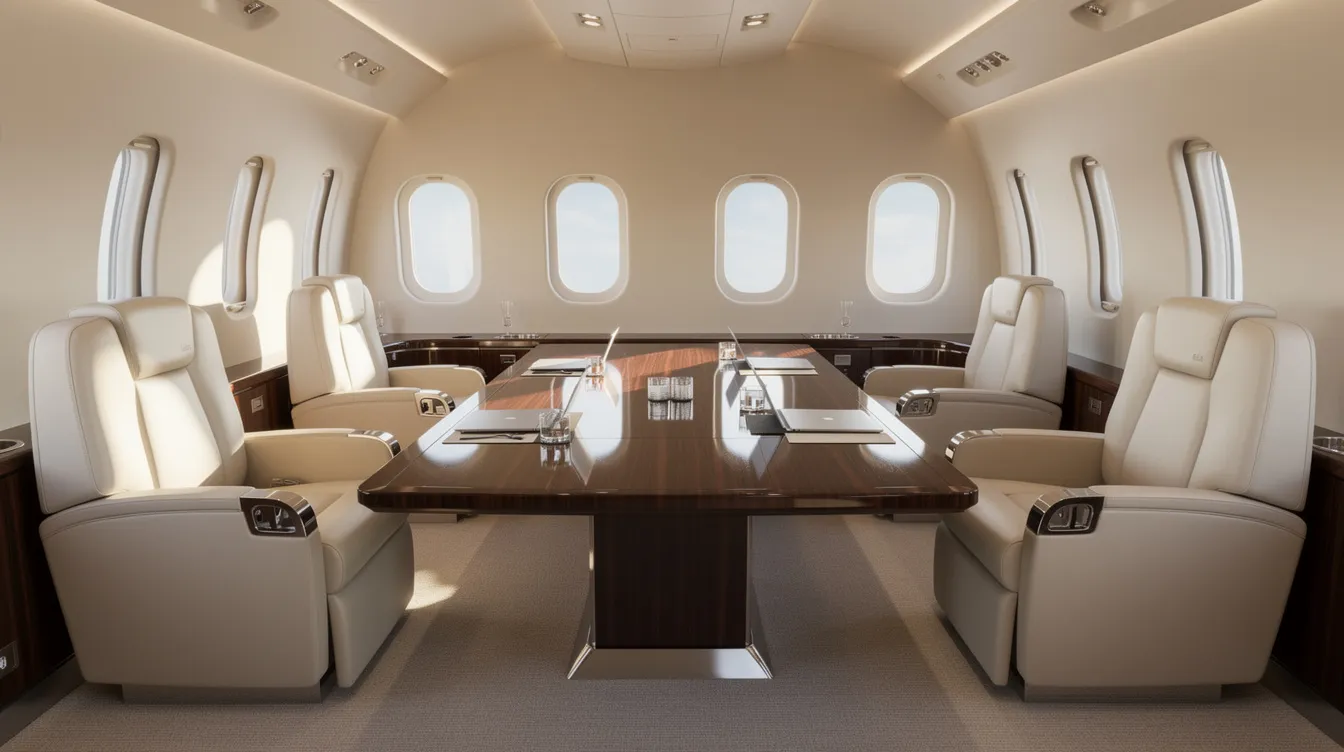
The interior of a luxurious private jet features plush leather seats arranged around a polished wood conference table, ideal for corporate meetings. This spacious cabin design emphasizes comfort and productivity for passengers, making it a top choice among business jets.

Real-World Examples of Second-Hand Business Jets for Sale

These illustrative profiles reflect realistic 2024–2026 market conditions:

2019 Gulfstream G550, based in Texas: Engines and APU enrolled in CorporateCare, forward galley, crew rest, Ka-band internet installed, total time under 3,500 hours, approximately 2,500 cycles. This aircraft suits a buyer or corporate owner needing long-range intercontinental missions with 10–12 passengers. Expected price: mid-$20s million range. Financing options for jets include loans and leasing arrangements.

2020 Dassault Falcon 2000LX, based in New England: ESP Gold coverage, Starlink plus Ka-band connectivity, 10-passenger layout, approximately 3,000 hours. Ideal for a buyer in Connecticut or elsewhere seeking transatlantic or regular US–Europe corporate missions with strong airport access.

2018 Bombardier Global 6000, based in Japan: Rolls-Royce CorporateCare, Smart Parts Plus, 13-passenger configuration, approximately 4,000 hours, 3,200 cycles. Commands a premium for Asia–Europe or North America–Asia routes. Buyers should budget for potential heavy inspection and interior refurbishment.

2022 Cessna Citation M2 Gen2, based in New Jersey: Williams TAP Blue and ProParts coverage, low total time, updated avionics. A low-risk entry point for first-time private ownership, typically in the $5–8 million range.

BusinessJets.com maintains an active portfolio of comparable aircraft for sale worldwide and can source off-market opportunities on your behalf, tailored to your mission and budget.

How to Assess Total Time, Usage, and Maintenance Programs

Two similar 2018 private jets can differ significantly in value based on total time, cycles, and program coverage. A 2018 super midsize jet with 2,800 hours flown by a single corporate owner on moderate schedules may be far more attractive than a same-year aircraft with 6,500 hours accumulated primarily in intensive charter service.

Aircraft operated under Part 91 (private) ownership often have lower utilization but sometimes less consistent maintenance. Charter-operated jets accumulate hours and cycles faster, which can accelerate wear on the interior, landing gear, and pressurization components.

Engine and APU programs such as CorporateCare, ESP, MSP, or JSSI structures de-risk major future maintenance events. Many institutional buyers insist on program coverage. Airframe and avionics maintenance tracking through systems like CAMP ensures records are current and verifiable.

BusinessJets.com's appraisal and consulting services include independent validation of logbooks, program status, and upcoming inspections-often identifying negotiation leverage or red flags that reshape deal economics.

Making the Right Choice: Matching Aircraft to Mission and Budget

Start with mission variables: typical routes, passenger loads (4 versus 12+), frequency of use, required baggage capacity, and whether you need medevac or special mission capability.

Balance acquisition price against hourly operating costs and residual value. For example, a Bombardier Global 6000's fixed cost runs approximately $1.49 million per year, plus variable costs around $14,800 per hour at low utilization. A Challenger 350 in a European corporate shuttle role will have substantially lower ownership costs but less range. Consider cabin height, noise levels, and connectivity expectations as qualitative factors.

Common pitfalls include buying "too much airplane" for the mission, underestimating hangar and crew costs, or choosing a type with thin global support. BusinessJets.com acts as a neutral advisor, helping corporate flight departments, family offices, and operators model different scenarios before committing-ensuring productivity gains justify the investment.

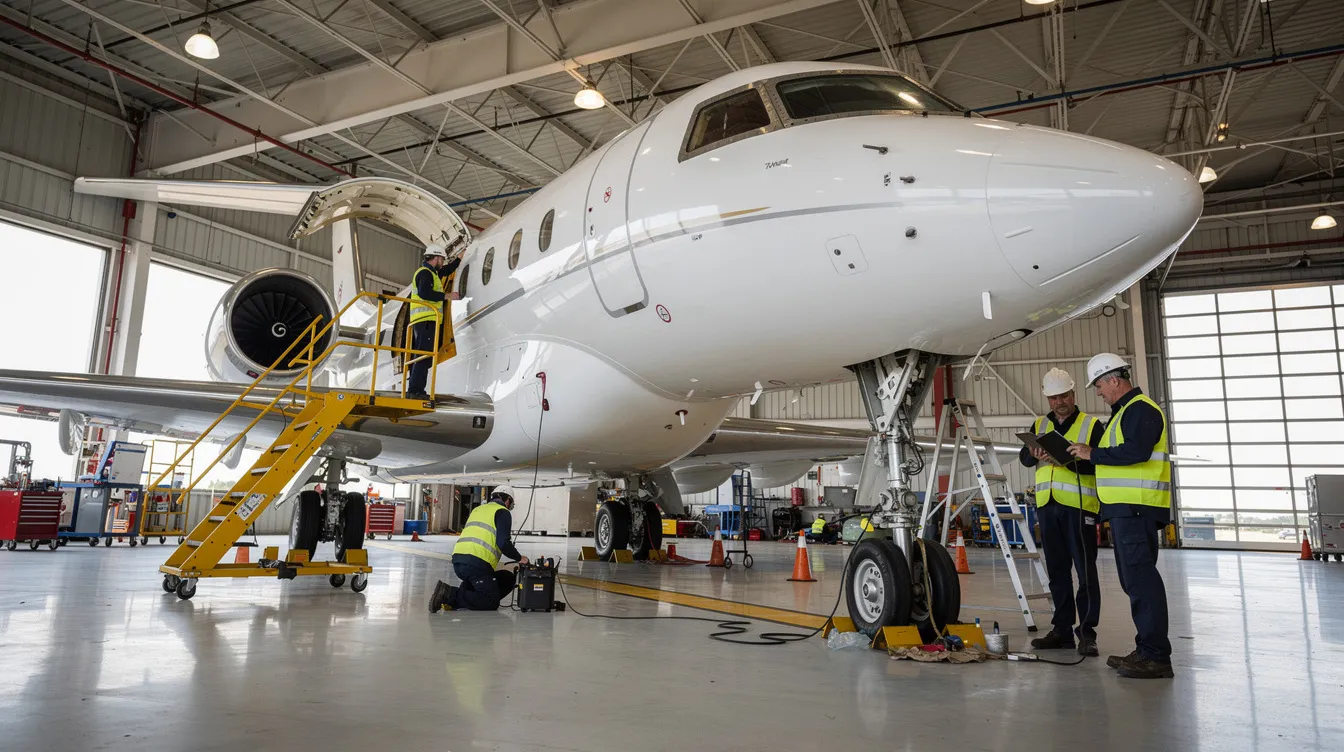
The image shows a private jet being inspected inside a spacious aircraft maintenance hangar, where technicians are diligently working on the aircraft. This setting highlights the importance of maintenance for business jets, ensuring they are ready for corporate owners and passengers alike.

The Transaction Process for Second-Hand Flights for Sale

From aircraft selection to closing, a professionally managed transaction typically spans 30–90 days. Complex cross-border or regulatory matters can extend this to 90–120 days.

Key steps include:

  1. Needs analysis: Define mission profile, usage, and budget

  2. Market search and shortlist: Review listings across databases, including off-market opportunities

  3. Preliminary offer (LOI): Contingent on satisfactory inspection, title, and program transfer

  4. Pre-buy inspection: Conducted at a neutral MRO; findings may include corrosion, upcoming major inspections, or avionics obsolescence

  5. Legal, financing, and regulatory work: Clean title, no liens, export/import compliance (FAA, EASA), tax planning

  6. Sale and purchase agreement: Price adjustments, escrow of funds, insurance, program transfers-dedicated resale marketplaces often use escrow systems to protect buyers and sellers

  7. Delivery and induction: Registration, any required modifications, entry into service

Cross-border considerations in 2026 include export/import restrictions, compliance with EASA or FAA frameworks, and the restored 100% bonus depreciation under recent US legislation. Aviation consulting supports strategic guidance for aircraft transactions through every phase. A disciplined, documented process protects both first-time buyers and experienced operators.

How BusinessJets.com Supports Pre-Owned Aircraft Buyers and Sellers

BusinessJets.com is a B2B-focused partner for aircraft brokerage, appraisals, and aviation consulting, with a track record of over 1,500 completed transactions and 5,000+ pleased clients worldwide. Consultants provide valuation services for aircraft transactions and help optimize aircraft asset management.

For sellers, BusinessJets.com assists with market-driven pricing, professional listing preparation, and global outreach to qualified buyers. For those ready to acquire, buyers benefit from independent aircraft valuations, comparison matrices across multiple candidate jets, and end-to-end support during negotiations, inspections, and closing.

Operator advisory and fleet strategy services serve corporate flight departments and fleet managers, including optimization of mixed fleets and timing of disposals in response to market trends. Consulting services include advice on buying or selling jets at every stage.

Ready to act? Request an aircraft appraisal, list a pre-owned aircraft for sale, or schedule a consultation to find second-hand flights for sale that match your mission profile. Email us or reach out through our website to begin your search.

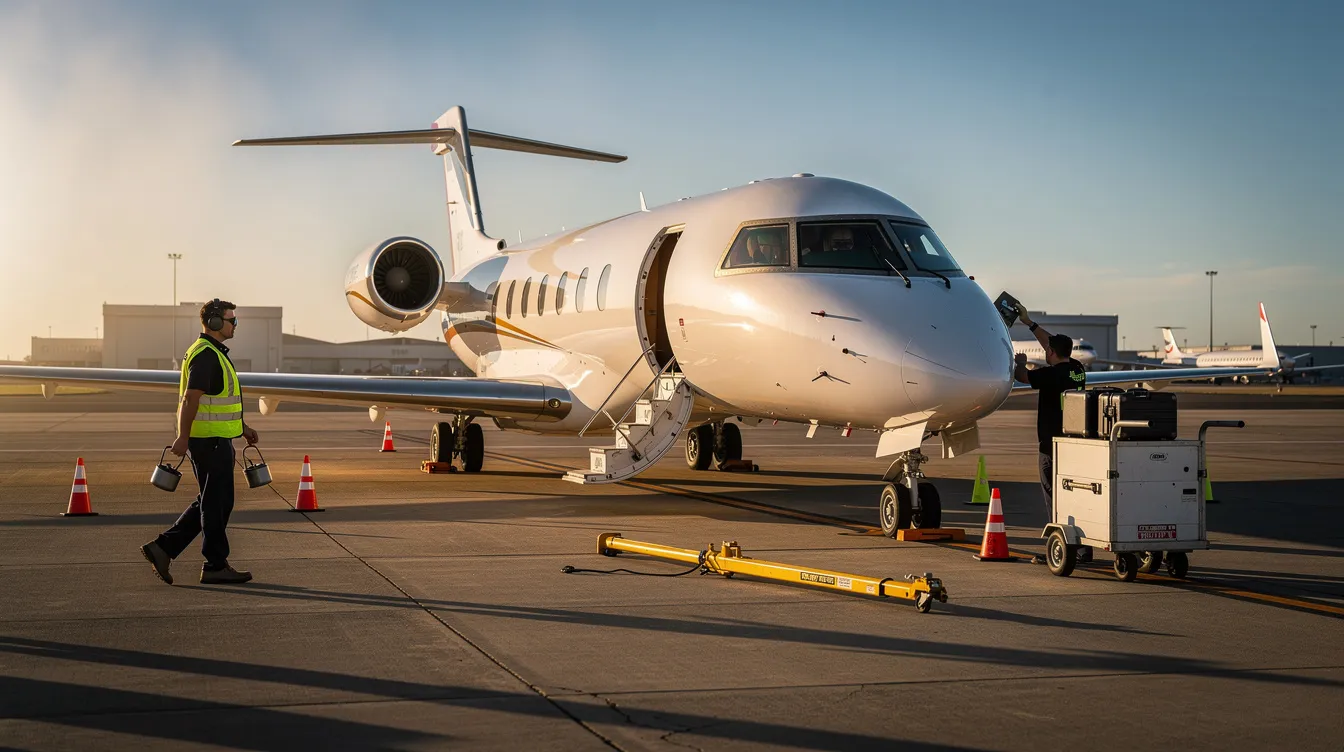
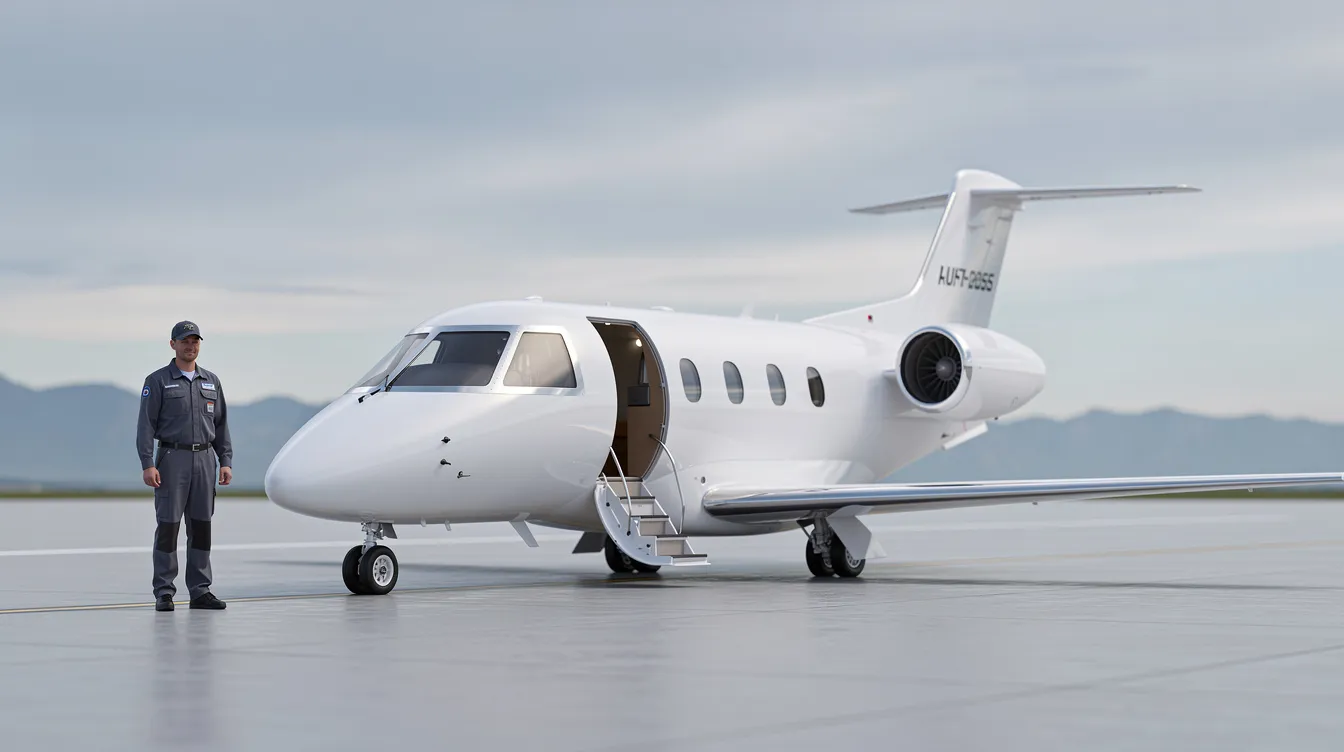
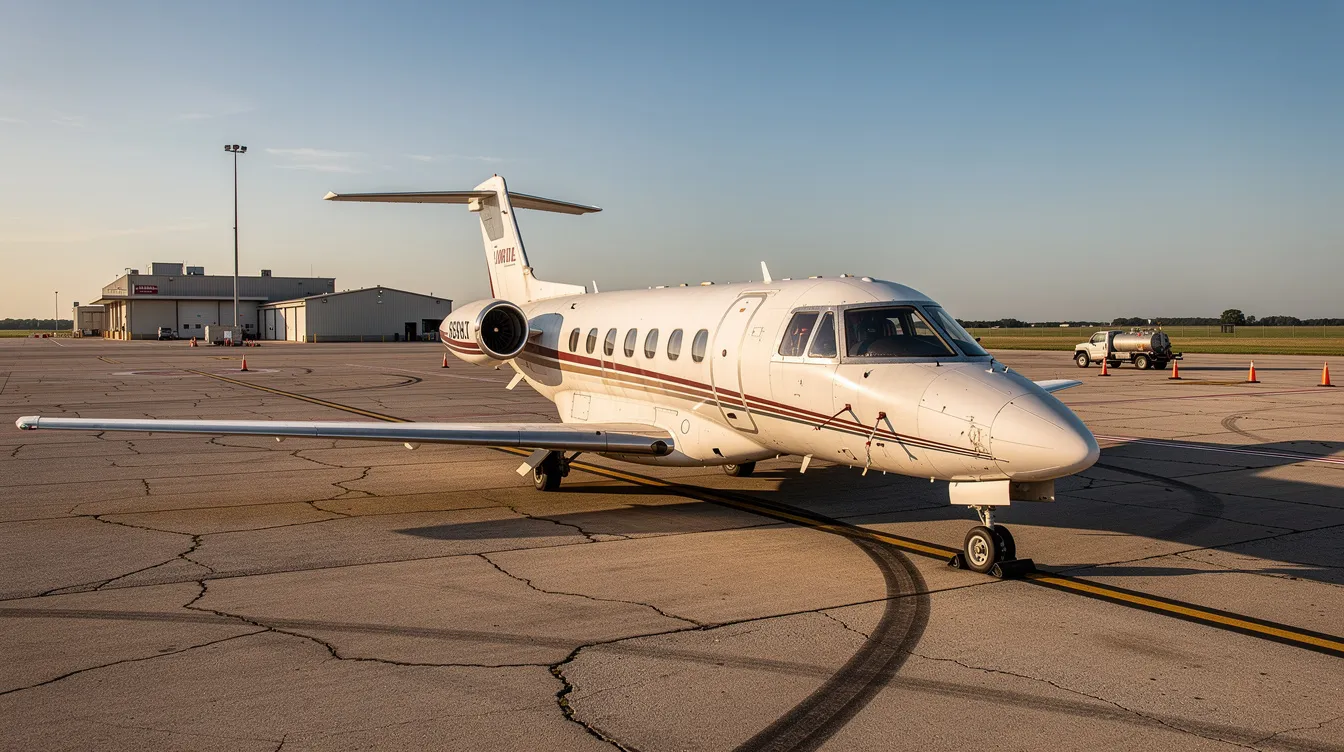
Two business professionals are collaborating on documents beside a sleek white private jet on an airport ramp, highlighting the efficiency and luxury of business jets. The scene emphasizes the importance of making the right choice in aircraft ownership, whether for corporate needs or personal use.

FAQ: Second Hand Flights for Sale

These questions address practical concerns for both first-time and experienced aircraft buyers.

Are second-hand private jets safe compared to new aircraft?

Safety depends on maintenance quality, regulatory compliance, and operational standards-not simply whether the aircraft is new or pre-owned. Many 10–15-year-old business jets in 2026 operate under stringent corporate or charter safety management systems with comprehensive maintenance records and modernized avionics. BusinessJets.com always recommends an independent technical evaluation before closing any transaction.

How long does it take to complete a pre-owned jet purchase?

For a straightforward transaction within a single jurisdiction, plan for approximately 6–10 weeks from offer acceptance to delivery. Timing depends on pre-buy inspection slots at MROs, financing or internal approvals, and any required modifications or import/export steps. BusinessJets.com can often shorten timelines by pre-coordinating inspection facilities and documentation workflows.

What additional costs should I budget for after buying a pre-owned aircraft?

Typical ongoing expenses include crew salaries and training, hangar or parking, insurance, fuel, maintenance reserves, engine and APU program fees, and navigation subscriptions. One-time post-acquisition costs may include interior refresh, paint, connectivity upgrades, or cabin modifications. BusinessJets.com can prepare indicative operating cost models for specific aircraft types to support board-level decisions.

Is it better to buy a low-time older aircraft or a higher-time newer one?

There is no universal answer. A 2012 jet with 2,500 hours and excellent maintenance may offer more value than a 2018 jet with 6,500 hours primarily in charter service, depending on mission requirements and upcoming inspection schedules. Engaging an appraisal team to analyze life-cycle costs and residual value projections is the most reliable way to compare options.

Can I charter out my aircraft to offset ownership costs?

In many markets, owners can place aircraft on a commercial AOC or management program, making the jet available for charter when not in use. Trade-offs include higher utilization and potential wear versus meaningful revenue that can offset fixed costs. Realistic projections-not optimistic assumptions-are essential. BusinessJets.com can help owners model different utilization and charter strategies while preserving asset value.

Conclusion

Purchasing second-hand flights for sale, meaning pre-owned private jets and business aircraft, offers a compelling value proposition for corporate buyers and high-net-worth individuals seeking flexibility, efficiency, and proven reliability. By focusing on critical factors such as total time, maintenance programs, avionics upgrades, and mission fit, buyers can secure aircraft that meet their operational needs while optimizing acquisition and lifecycle costs. BusinessJets.com stands ready to assist throughout the entire process, from appraisal and market analysis to transaction management and post-sale consulting, leveraging extensive industry experience and a proven track record to ensure informed decisions and successful outcomes.

Whether upgrading an existing fleet or entering private aviation for the first time, partnering with an expert advisor is essential to navigating the complexities of the secondary market and achieving long-term asset performance and value. For more detailed information, visit our Aviation Consulting Services and Aircraft Acquisition Support pages to explore how we can tailor solutions to your specific needs.

Second-Hand Flights for Sale: How to Choose the Right Pre-Owned Business Jet

Jay Franco Ser

When buyers search for second-hand flights for sale, they are almost always looking for pre-owned private jets and business aircraft available on the secondary market-not resold airline tickets. This guide walks through how to evaluate, compare, and acquire the right pre-owned jet for your mission, with concrete examples and current market data.

Key Takeaways

  • The phrase "second hand flights for sale" refers to pre-owned aircraft- private jets and business jets-offered for sale on the secondary market. Buyers can access high-spec aircraft from 2018–2024 model years at substantial discounts versus new-build pricing. Private jets range from $1 million to $80 million depending on type and age.

  • Evaluating total time, cycles, maintenance programs, and ownership history is critical to making the right choice. Private jet appraisals consider factors like airframe hours and maintenance program status, which directly affect both safety and residual value.

  • BusinessJets.com specializes in pre owned business jets, with over 1,500 completed transactions and 5,000+ satisfied clients, offering brokerage, appraisals, and aviation consulting.

  • This article covers concrete examples of second-hand aircraft- including the Gulfstream G550, Bombardier Global 6000, and Dassault Falcon 2000LX-and explains how to assess their value and suitability.

  • If you are actively considering buying or selling a private jet, request an appraisal or acquisition consultation to get started.

What "Second Hand Flights for Sale" Really Means

The phrase "second hand flights for sale" is widely searched but frequently misunderstood. It does not refer to the resale of airline tickets-many airlines treat non-refundable tickets as strictly non-transferable, and airlines charge hefty fees for name changes on transferable tickets. Verification of transfer eligibility is crucial when buying second-hand flight tickets, and buying second-hand flight tickets may carry the risk of financial fraud.

Second-hand flight tickets refer to the transfer or resale of airline tickets, and the resale of unused non-refundable tickets can provide value to both sellers and buyers-but legitimate platforms are necessary to avoid scams in the second-hand flight market. Many airlines do not allow passenger name changes after booking, making this route impractical for most travelers.

In aviation, the real opportunity lies in pre-owned aircraft: private jets and business jets being offered for sale on the secondary market. These typically include light jets, midsize jets, super midsize jets, and long-range aircraft built between roughly 2000 and 2025. There are 24,270 private jets in operation worldwide as of July 2024, and 63% of the world's private jets are registered in the United States.

Buying a pre-owned aircraft means acquiring the whole jet ownership, crewing, maintenance, and regulatory compliance-rather than purchasing a one-off charter flight. For serious buyers, the focus is on aircraft condition, operating economics, and mission fit rather than headline price.

Why Consider Pre-Owned Business Jets Instead of New?

The value proposition is straightforward: reduced capital outlay, faster availability, and proven in-service reliability. A 2024 Gulfstream G700 costs $80 million new. A late-model pre-owned Gulfstream G550 (2018–2020 vintage) typically transacts around $30–35 million with modern avionics and cabins intact. Older jets can depreciate to below $1 million at the far end of the spectrum, while a 2023 Cirrus SF50 Gen 2+ costs approximately $3.5 million.

The steepest depreciation in business aviation usually occurs in the first 3–7 years. Buying after that window means acquiring much of the capability of a new jet at reduced cost, with the most painful depreciation already absorbed.

Pre-owned jets can enter service within 30–90 days of offer acceptance, subject to pre-buy inspection and closing. Contrast this with new-build slots: OEMs in 2026 often have 12–24 month lead times. AMSTAT Q2 2026 data shows pre-owned business jet transactions increased approximately 11.2% year-over-year, with heavy jet transactions surging 43.8%.

Business aircraft users outperform non-users by 23% in revenue growth, and two-thirds of passengers feel more productive on business jets. Private jets access around 10 times more airports than airlines-roughly 5,000 airports in the US alone-giving operators unmatched flexibility and efficiency. These productivity and access advantages apply equally whether you buy new or pre-owned.

Key Factors to Evaluate in a Second-Hand Aircraft

Before committing to any second-hand flight for sale, treat the following as a practical checklist:

  • Total time and cycles: Total hours flown and total landings matter enormously. A 2018 super midsize jet with 3,000 average hours is very different from a 2005 airframe with 10,000+ hours. Cycles-takeoff and landing pairs-drive pressurization fatigue and structural inspection schedules independent of hours.

  • Engine and APU status: Time since overhaul and enrollment in programs like Rolls-Royce CorporateCare, Honeywell MSP, or Pratt & Whitney ESP directly impact predictable operating costs. Without program coverage, an engine overhaul can represent a multi-million-dollar unbudgeted event.

  • Maintenance history and damage record: Continuous maintenance at OEM or reputable MROs is essential. Incidents or significant repairs affect valuation. Logbooks must be verified for completeness.

  • Avionics and connectivity: Upgrades such as FANS 1/A, ADS-B Out, Ka-band internet, Starlink, or Gogo ATG-4000 are value drivers. If missing, retrofit costs and downtime must be factored into your acquisition price.

  • Interior condition and configuration: Whether the aircraft is configured for 10 or 16 passengers, forward versus aft galley, crew rest, medevac capability, and seat arrangement all affect mission fit and resale value.

BusinessJets.com routinely compiles this data into detailed comparison reports for corporate buyers and fleet managers.

Popular Categories of Pre-Owned Private Jets in 2026

The second-hand market segments naturally by jet size and range. Understanding which category fits your mission is the first step toward the right choice.

Very light and light jets such as the 2022 Cessna Citation M2 Gen2 or Embraer Phenom 300E serve 3–6 passengers on regional trips up to approximately 1,500 NM. Modern jets typically seat five to nine passengers. These are often used by a corporate owner or smaller companies seeking low fixed costs and single-digit-million-dollar acquisition prices.

Midsize and super midsize jets, including the 2020 Gulfstream G280, 2018 Bombardier Challenger 350, and 2019 Citation Latitude, suit transcontinental US flights with up to 8–10 passengers. The Bombardier Challenger 300 is a popular super mid-sized jet in this segment.

Large cabin, long-range jets like the Dassault Falcon 7X, Gulfstream G550, and Bombardier Global 6000 handle intercontinental missions-New York to London, Los Angeles to Tokyo-for corporate flight departments that require top-end speed and range. Pre-owned Global 5000–6500 fleet availability sits around 7.9%, while Falcon 6X/7X/8X listings hover near 4.7%.

Special mission and medevac-configured aircraft such as the Challenger 604 and 650 serve governments, NGOs, and specialized operators. Note that 38% of business aviation missions involve multiple destinations, making flexibility in mission planning a key consideration.
The interior of a luxurious private jet features plush leather seats arranged around a polished wood conference table, ideal for corporate meetings. This spacious cabin design emphasizes comfort and productivity for passengers, making it a top choice among business jets.

Real-World Examples of Second-Hand Business Jets for Sale

These illustrative profiles reflect realistic 2024–2026 market conditions:

2019 Gulfstream G550, based in Texas: Engines and APU enrolled in CorporateCare, forward galley, crew rest, Ka-band internet installed, total time under 3,500 hours, approximately 2,500 cycles. This aircraft suits a buyer or corporate owner needing long-range intercontinental missions with 10–12 passengers. Expected price: mid-$20s million range. Financing options for jets include loans and leasing arrangements.

2020 Dassault Falcon 2000LX, based in New England: ESP Gold coverage, Starlink plus Ka-band connectivity, 10-passenger layout, approximately 3,000 hours. Ideal for a buyer in Connecticut or elsewhere seeking transatlantic or regular US–Europe corporate missions with strong airport access.

2018 Bombardier Global 6000, based in Japan: Rolls-Royce CorporateCare, Smart Parts Plus, 13-passenger configuration, approximately 4,000 hours, 3,200 cycles. Commands a premium for Asia–Europe or North America–Asia routes. Buyers should budget for potential heavy inspection and interior refurbishment.

2022 Cessna Citation M2 Gen2, based in New Jersey: Williams TAP Blue and ProParts coverage, low total time, updated avionics. A low-risk entry point for first-time private ownership, typically in the $5–8 million range.

BusinessJets.com maintains an active portfolio of comparable aircraft for sale worldwide and can source off-market opportunities on your behalf, tailored to your mission and budget.

How to Assess Total Time, Usage, and Maintenance Programs

Two similar 2018 private jets can differ significantly in value based on total time, cycles, and program coverage. A 2018 super midsize jet with 2,800 hours flown by a single corporate owner on moderate schedules may be far more attractive than a same-year aircraft with 6,500 hours accumulated primarily in intensive charter service.

Aircraft operated under Part 91 (private) ownership often have lower utilization but sometimes less consistent maintenance. Charter-operated jets accumulate hours and cycles faster, which can accelerate wear on the interior, landing gear, and pressurization components.

Engine and APU programs such as CorporateCare, ESP, MSP, or JSSI structures de-risk major future maintenance events. Many institutional buyers insist on program coverage. Airframe and avionics maintenance tracking through systems like CAMP ensures records are current and verifiable.

BusinessJets.com's appraisal and consulting services include independent validation of logbooks, program status, and upcoming inspections-often identifying negotiation leverage or red flags that reshape deal economics.

Making the Right Choice: Matching Aircraft to Mission and Budget

Start with mission variables: typical routes, passenger loads (4 versus 12+), frequency of use, required baggage capacity, and whether you need medevac or special mission capability.

Balance acquisition price against hourly operating costs and residual value. For example, a Bombardier Global 6000's fixed cost runs approximately $1.49 million per year, plus variable costs around $14,800 per hour at low utilization. A Challenger 350 in a European corporate shuttle role will have substantially lower ownership costs but less range. Consider cabin height, noise levels, and connectivity expectations as qualitative factors.

Common pitfalls include buying "too much airplane" for the mission, underestimating hangar and crew costs, or choosing a type with thin global support. BusinessJets.com acts as a neutral advisor, helping corporate flight departments, family offices, and operators model different scenarios before committing-ensuring productivity gains justify the investment.
The image shows a private jet being inspected inside a spacious aircraft maintenance hangar, where technicians are diligently working on the aircraft. This setting highlights the importance of maintenance for business jets, ensuring they are ready for corporate owners and passengers alike.

The Transaction Process for Second-Hand Flights for Sale

From aircraft selection to closing, a professionally managed transaction typically spans 30–90 days. Complex cross-border or regulatory matters can extend this to 90–120 days.

Key steps include:

  1. Needs analysis: Define mission profile, usage, and budget

  2. Market search and shortlist: Review listings across databases, including off-market opportunities

  3. Preliminary offer (LOI): Contingent on satisfactory inspection, title, and program transfer

  4. Pre-buy inspection: Conducted at a neutral MRO; findings may include corrosion, upcoming major inspections, or avionics obsolescence

  5. Legal, financing, and regulatory work: Clean title, no liens, export/import compliance (FAA, EASA), tax planning

  6. Sale and purchase agreement: Price adjustments, escrow of funds, insurance, program transfers-dedicated resale marketplaces often use escrow systems to protect buyers and sellers

  7. Delivery and induction: Registration, any required modifications, entry into service

Cross-border considerations in 2026 include export/import restrictions, compliance with EASA or FAA frameworks, and the restored 100% bonus depreciation under recent US legislation. Aviation consulting supports strategic guidance for aircraft transactions through every phase. A disciplined, documented process protects both first-time buyers and experienced operators.

How BusinessJets.com Supports Pre-Owned Aircraft Buyers and Sellers

BusinessJets.com is a B2B-focused partner for aircraft brokerage, appraisals, and aviation consulting, with a track record of over 1,500 completed transactions and 5,000+ pleased clients worldwide. Consultants provide valuation services for aircraft transactions and help optimize aircraft asset management.

For sellers, BusinessJets.com assists with market-driven pricing, professional listing preparation, and global outreach to qualified buyers. For those ready to acquire, buyers benefit from independent aircraft valuations, comparison matrices across multiple candidate jets, and end-to-end support during negotiations, inspections, and closing.

Operator advisory and fleet strategy services serve corporate flight departments and fleet managers, including optimization of mixed fleets and timing of disposals in response to market trends. Consulting services include advice on buying or selling jets at every stage.

Ready to act? Request an aircraft appraisal, list a pre-owned aircraft for sale, or schedule a consultation to find second-hand flights for sale that match your mission profile. Email us or reach out through our website to begin your search.

Two business professionals are collaborating on documents beside a sleek white private jet on an airport ramp, highlighting the efficiency and luxury of business jets. The scene emphasizes the importance of making the right choice in aircraft ownership, whether for corporate needs or personal use.

FAQ: Second Hand Flights for Sale

These questions address practical concerns for both first-time and experienced aircraft buyers.

Are second-hand private jets safe compared to new aircraft?

Safety depends on maintenance quality, regulatory compliance, and operational standards-not simply whether the aircraft is new or pre-owned. Many 10–15-year-old business jets in 2026 operate under stringent corporate or charter safety management systems with comprehensive maintenance records and modernized avionics. BusinessJets.com always recommends an independent technical evaluation before closing any transaction.

How long does it take to complete a pre-owned jet purchase?

For a straightforward transaction within a single jurisdiction, plan for approximately 6–10 weeks from offer acceptance to delivery. Timing depends on pre-buy inspection slots at MROs, financing or internal approvals, and any required modifications or import/export steps. BusinessJets.com can often shorten timelines by pre-coordinating inspection facilities and documentation workflows.

What additional costs should I budget for after buying a pre-owned aircraft?

Typical ongoing expenses include crew salaries and training, hangar or parking, insurance, fuel, maintenance reserves, engine and APU program fees, and navigation subscriptions. One-time post-acquisition costs may include interior refresh, paint, connectivity upgrades, or cabin modifications. BusinessJets.com can prepare indicative operating cost models for specific aircraft types to support board-level decisions.

Is it better to buy a low-time older aircraft or a higher-time newer one?

There is no universal answer. A 2012 jet with 2,500 hours and excellent maintenance may offer more value than a 2018 jet with 6,500 hours primarily in charter service, depending on mission requirements and upcoming inspection schedules. Engaging an appraisal team to analyze life-cycle costs and residual value projections is the most reliable way to compare options.

Can I charter out my aircraft to offset ownership costs?

In many markets, owners can place aircraft on a commercial AOC or management program, making the jet available for charter when not in use. Trade-offs include higher utilization and potential wear versus meaningful revenue that can offset fixed costs. Realistic projections-not optimistic assumptions-are essential. BusinessJets.com can help owners model different utilization and charter strategies while preserving asset value.

Conclusion

Purchasing second-hand flights for sale, meaning pre-owned private jets and business aircraft, offers a compelling value proposition for corporate buyers and high-net-worth individuals seeking flexibility, efficiency, and proven reliability. By focusing on critical factors such as total time, maintenance programs, avionics upgrades, and mission fit, buyers can secure aircraft that meet their operational needs while optimizing acquisition and lifecycle costs. BusinessJets.com stands ready to assist throughout the entire process, from appraisal and market analysis to transaction management and post-sale consulting, leveraging extensive industry experience and a proven track record to ensure informed decisions and successful outcomes.

Whether upgrading an existing fleet or entering private aviation for the first time, partnering with an expert advisor is essential to navigating the complexities of the secondary market and achieving long-term asset performance and value. For more detailed information, visit our Aviation Consulting Services and Aircraft Acquisition Support pages to explore how we can tailor solutions to your specific needs.

Related Posts