Aviation Company for Sale: How to Buy or Sell Aviation Businesses in 2026

Jay Franco Ser
September 4, 2026

Whether you are an operator ready to expand, an investor looking for recurring revenue, or a founder preparing to exit, the aviation M&A market in 2026 presents real opportunity — and real complexity. This guide walks you through the practical steps of buying or selling an aviation company, with current deal data, valuation benchmarks, and risk factors that matter right now.

Key Takeaways

  • This article is a practical guide for buying or selling an aviation company in 2026, written for private jet owners, operators, corporate buyers, and investors who need actionable insight rather than theory.

  • Aviation businesses for sale range from $500,000 to $160,000,000, spanning Part 135 charter operators, MROs, flight schools, FBOs, and aerospace parts distributors — each with distinct valuation drivers and risk profiles.

  • Accurate aircraft and business valuation, clean maintenance and financial records, and a structured sale process are critical to maximizing price and reducing transaction risk on either side of the deal.

  • BusinessJets.com leverages 1,500+ completed aircraft transactions and 5,000+ clients to advise on appraisals, listing strategy, and buyer/seller representation for aviation businesses.

  • Readers are encouraged to request a confidential appraisal, list an aviation company for sale, or engage BusinessJets.com for acquisition and consulting support.

Understanding Aviation Businesses for Sale Today

An aviation company for sale is rarely just an airplane with a price tag. It is typically a bundle: operating certificates (such as FAA Part 135 for charter or Part 141 for flight training), physical assets like hangars, tooling, and inventory, a fleet of aircraft, and intangible value in the form of customer contracts, employee qualifications, brand reputation, and regulatory standing. This layered structure is what makes aviation business transactions fundamentally different from a simple aircraft purchase.

The period from 2024 through 2026 has been notably active for aviation M&A. Post-COVID demand in business aviation rebounded strongly, with global business jet departures rising approximately 4% year-over-year and North American departures up roughly 5% by mid-2026, according to JetNet's market barometer. OEM order backlogs have pushed many operators into the secondary market, and commercial aerospace M&A transaction volume is up over 15% year-to-date in 2026, per Capstone Partners. The result: more interest in acquiring established businesses rather than building from scratch.

What Types of Aviation Businesses Trade Hands?

Aviation businesses include air freight and cargo operations, charter flights, and flight schools — but the category is much broader. Here is a practical overview of the types commonly found on the market:

  • Charter operators (on-demand, membership, or managed fleet models) offering aircraft charter services under Part 135 certificates

  • Aircraft management firms running fleets on behalf of owners

  • Flight schools that offer training as an aviation service, often under Part 141 certification

  • Maintenance, Repair, and Overhaul (MRO) shops that address aircraft repairs and technical checks, including aviation maintenance repair facilities

  • Fixed-Base Operators (FBOs) that provide fuel, hangar space, and parking at airports

  • Interior completion centers providing specialized aviation services such as refurbishments and custom configurations

  • Aerospace manufacturing facilities included in aviation services, covering component production and precision machining

  • Specialized service providers such as aircraft detailing, avionics shops, safety consulting, and parts distributors

Marketplaces exist specifically for aviation businesses advertising sales, and listings span an enormous range. A Part 135 charter business in Florida is currently listed for $499,500, representing a bare or lightly equipped certificate operation. On the other end, a well-established flight academy is priced at $2,700,000 - a South Florida flight academy with 8 aircraft and 2 locations generating annual revenue of $1,460,546 and net cash flow of $377,745. Aerospace manufacturing deals run larger: one aerospace manufacturing facility has an asking price of $7,500,000, while a precision machine shop with annual revenue of $7,500,000 and net cash flow of $2,300,000 illustrates the capital-intensive nature of the manufacturing segment.

Aviation maintenance facilities are also included in business listings, and mid-market deals commonly fall in the $1M–$10M+ range for parts distributors and regional MROs.

An aerial view captures a bustling general aviation airport featuring numerous hangars and a variety of small aircraft parked on the tarmac. This scene highlights the vibrant landscape of aviation businesses, which may include opportunities for buyers interested in aviation companies for sale.

Who Buys Aviation Companies?

Buyers generally fall into four categories:

  • Strategic buyers - existing aviation companies seeking to expand capacity, add geographic coverage, or acquire certificates they do not currently hold

  • Private equity groups - attracted to recurring revenue models, platform acquisitions, and add-on opportunities in the aerospace aftermarket

  • Family offices and high-net-worth individuals - looking for vertical integration or stable cash flow from established operations

  • Entrepreneur-operators - seeking proven cash flow and regulatory certification rather than the lengthy process of starting from zero

Geographic Hotspots

Aviation businesses change hands regularly in South Florida (Miami, Fort Lauderdale, Palm Beach), Arizona (Phoenix, Scottsdale), the Gulf Coast (Louisiana, Texas), and major training hubs across the Southeast. These regions benefit from favorable flying weather, strong airport infrastructure, and dense concentrations of operators. BusinessJets.com supports transactions worldwide, including growing markets in the Middle East, Latin America, and Asia-Pacific.

BusinessJets.com's foundation — over 1,500 aircraft transactions and a network spanning 5,000+ clients - positions the firm as a specialist that increasingly advises on company-level deals surrounding those aircraft. When the sale involves not just a fleet but a certificate, a customer base, and a team of qualified personnel, BusinessJets.com serves as a natural partner for both sides. Explore the full scope of what this looks like through BusinessJets.com's comprehensive aviation services.

How to Buy an Aviation Company

This section walks through the buy-side process: identifying suitable aviation businesses for sale, assessing value and risk, structuring financing, and closing with regulatory and operational continuity in mind. Aviation acquisitions require rigorous due diligence across operational and financial factors — and the acquisition analysis should always consider aspects of operational risk and capital-intensive assets.

Define Your Acquisition Thesis

Before reviewing specific listings, buyers need to be clear about what they are buying and why. Are you entering on-demand charter by acquiring a Part 135 certificate with an established fleet? Expanding into training by acquiring a Gulf Coast flight school with $1.6M in historical revenue? Adding MRO capacity through a Florida maintenance shop? Each path has different valuation drivers, regulatory requirements, and capital needs.

The Typical Buy-Side Process

Once a target is identified, the process generally follows these steps:

  1. Sign a non-disclosure agreement (NDA) with the seller or their representative

  2. Receive a confidential information memorandum (CIM) that includes historical financials, fleet details, certificate scope, employee credentials, and key contracts

  3. Conduct site visits and management meetings to assess operations, culture, and physical assets firsthand

  4. Perform detailed due diligence across aircraft, regulatory, financial, and personnel dimensions

  5. Structure and negotiate the deal, including price, financing, transition terms, and closing conditions

Due Diligence Priorities

Aviation acquisitions demand attention to areas that general business buyers may underestimate:

  • Aircraft pedigrees and maintenance history: Review logbooks for full compliance with service bulletins (SBs) and airworthiness directives (ADs). Verify enrollment in engine programs such as Rolls-Royce CorporateCare or JSSI. A King Air B200 charter business, for example, can look profitable on paper — but upcoming engine overhauls costing hundreds of thousands of dollars can materially affect near-term returns.

  • Employee qualifications: Aviation companies depend on specialized personnel for critical operations. Evaluate the depth of A&P mechanics, certified flight instructors, chief pilots, directors of operations, and directors of maintenance. Key-person dependency is a real risk.

  • Regulatory status: Confirm that FAA Part 135 or Part 141 certificates are in good standing. Review audit history, OpSpecs, and geographic authorizations. Note that FAA operating certificates do not automatically transfer during aviation business sales — the buyer must work with the FAA to ensure continuity.

  • Customer and contract concentration: How much revenue comes from the top three clients? Are contracts recurring or ad hoc? Long-term EMS contracts, for instance, can push helicopter charter businesses to 6–7× EBITDA multiples, while ad hoc revenue earns much less.

  • Vendor and airport agreements: Aviation firms often rely on unique leasing agreements related to airport operations. Verify hangar leases, fuel contracts, and ramp access rights.

  • Environmental compliance: This is a key risk area for aviation MROs. Paint shops, fuel storage, and de-icing operations can carry environmental liabilities that require remediation or ongoing compliance costs.

  • Insurance: The aviation insurance market is volatile and can be costly for aviation businesses, particularly for charter and training operators. Review current policies, claims history, and renewal terms.

Financial performance and regulatory compliance are major considerations in aviation acquisitions. Regulatory compliance is crucial when purchasing an aviation business — a lapsed certificate or unresolved enforcement action can stall or kill a transaction.

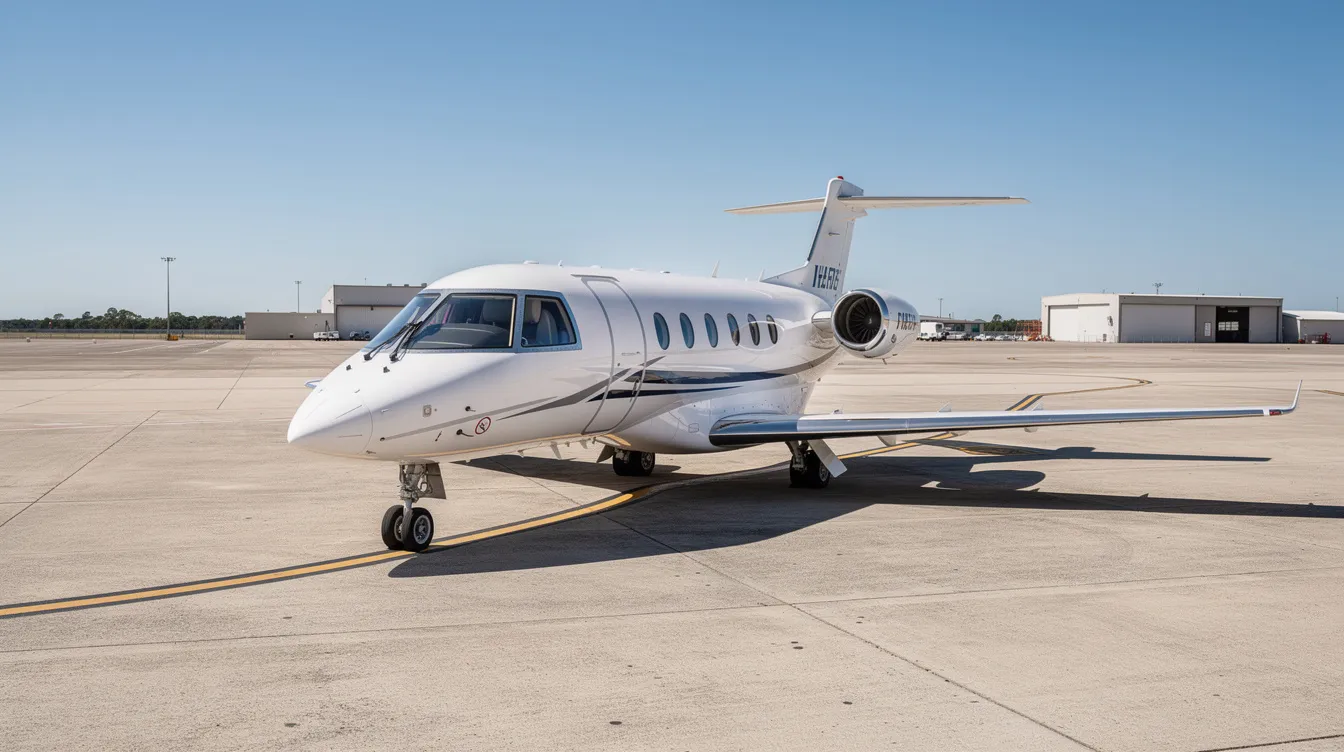
Two professionals in business attire are engaged in reviewing paperwork near a sleek white private jet on the tarmac, highlighting the potential for aviation businesses for sale. Their focused discussion suggests a transaction related to purchasing or financing aviation companies.

Valuation: How Aircraft and Business Value Combine

BusinessJets.com's appraisal expertise with individual aircraft feeds directly into valuing the business as a whole. The approach typically layers three components:

  1. Aircraft market value - appraised individually using market comparables, condition assessments, and program enrollment status. Request an aircraft appraisal through BusinessJets.com for current benchmarks.

  2. Certificate and intangible value - a clean, broad-scope Part 135 certificate can be worth $250,000 to $3 million or more depending on jet approvals, geographic scope, and compliance history, per ExitValue.ai analysis.

  3. Operating business value — derived from normalized EBITDA and applied multiples. In 2026, charter operators trade at roughly 3–5× EBITDA for small-scale (1–5 aircraft), 5–7× for mid-size (6–15 aircraft), 7–9× for boutique managed-fleet businesses, and 9–12× for platform-level strategic or PE acquisitions.

A concrete example: a Northeastern U.S. Part 135 operator with three Pilatus PC-12s, approximately $10 million in annual revenue, and $3 million in EBITDA is listed at $15.5 million — roughly 5.17× EBITDA, including the fleet and certificate.

Financing Options

Many aviation businesses qualify for SBA financing with 10% to 25% down, making acquisitions more accessible than many buyers assume. Beyond SBA 7(a) loans, common financing structures include:

  • Conventional bank financing with lenders experienced in aviation collateral, using the fleet and business assets as security

  • Seller financing where the owner carries 10–40% of the purchase price, often paired with a transition or consulting period

  • Earn-out structures tied to post-closing performance metrics such as revenue growth or student enrollment

  • Hybrid approaches combining bank debt, seller carry, and buyer equity

Model Realistic Scenarios

Buyers should model operating scenarios that factor in crew salaries, insurance premiums, fuel costs, training expenses, hangar rent, and - critically - scheduled heavy maintenance events. A charter business may show strong trailing EBITDA, but a fleet-wide hot-section inspection or landing-gear overhaul in year one can reshape the return profile entirely.

Sourcing Off-Market Deals

Not every deal is publicly listed. BusinessJets.com can quietly source off-market aviation companies for buyers — for example, smaller Florida helicopter operators or boutique detailing firms averaging $1.8 million in revenue — through its global network built over 1,500+ aircraft transactions. Browse current aircraft for sale as a starting point, and contact the team to discuss company-level acquisition criteria.

For buyers ready to move: Contact BusinessJets.com to (1) request a pre-acquisition aircraft and business appraisal, (2) review current aviation businesses for sale that match your criteria, and (3) obtain consulting support on deal structure and negotiation strategy.

Preparing and Selling Your Aviation Company

If you are a charter CEO, flight school founder, or MRO shop principal considering putting your aviation company for sale within the next 6 to 24 months, the work you do before going to market will directly determine your deal value. Sellers who invest in preparation consistently achieve stronger multiples, shorter timelines, and fewer deal-breaking surprises during due diligence.

Acquisition of aviation businesses can involve complex deal structures — and the seller who anticipates buyer concerns and resolves them in advance controls the narrative.

Separate Aircraft Value from Enterprise Value

A professional valuation should clearly distinguish aircraft value from the broader enterprise value. BusinessJets.com conducts private jet appraisals that establish current market value for each airframe, then layers in the operating business — historical and projected earnings, certificate value, customer contracts, and workforce depth — to arrive at a defensible asking price.

Many Part 135 operators have inflated expectations because post-COVID demand suggested their certificate, fleet, and contracts warranted premium pricing. In practice, the market separates these components. The certificate and fleet carry their own values; only the underlying operations earn EBITDA multiples.

Key Preparation Steps

Business brokers facilitate the sale of aviation businesses, but the seller's own preparation is the foundation. Prioritize these areas:

  • Financial records: Organize at least three years of financial statements (ideally audited or reviewed). Normalize earnings by removing one-off items, adjusting owner compensation to market rates, and documenting any add-backs clearly.

  • Maintenance records: Ensure aircraft logbooks are complete, digitized, and current. Confirm compliance with all ADs and SBs. If an overhaul or major inspection is approaching, decide whether to complete it pre-sale or adjust pricing accordingly.

  • Regulatory standing: Verify that all FAA certificates are in good standing. Resolve any open enforcement actions, audit findings, or compliance gaps. Clean regulatory history reduces buyer risk and supports higher multiples.

  • Airport and vendor agreements: Review and organize all leases, fuel contracts, ramp permits, and service agreements. Transfer provisions in these contracts can become sticking points if not addressed early.

Enhance Perceived Value Through Systems

Safety culture and operational history impact the value of aviation companies significantly. Buyers pay more for businesses that demonstrate mature operational systems:

  • A documented safety management system (SMS)

  • Standardized training programs with records of recurrent training

  • Written standard operating procedures (SOPs) covering flight operations, dispatch, and maintenance

  • Clearly defined customer contracts with renewal terms and performance metrics

These systems signal to buyers that the business can operate independently of the founder — a critical factor in any acquisition.

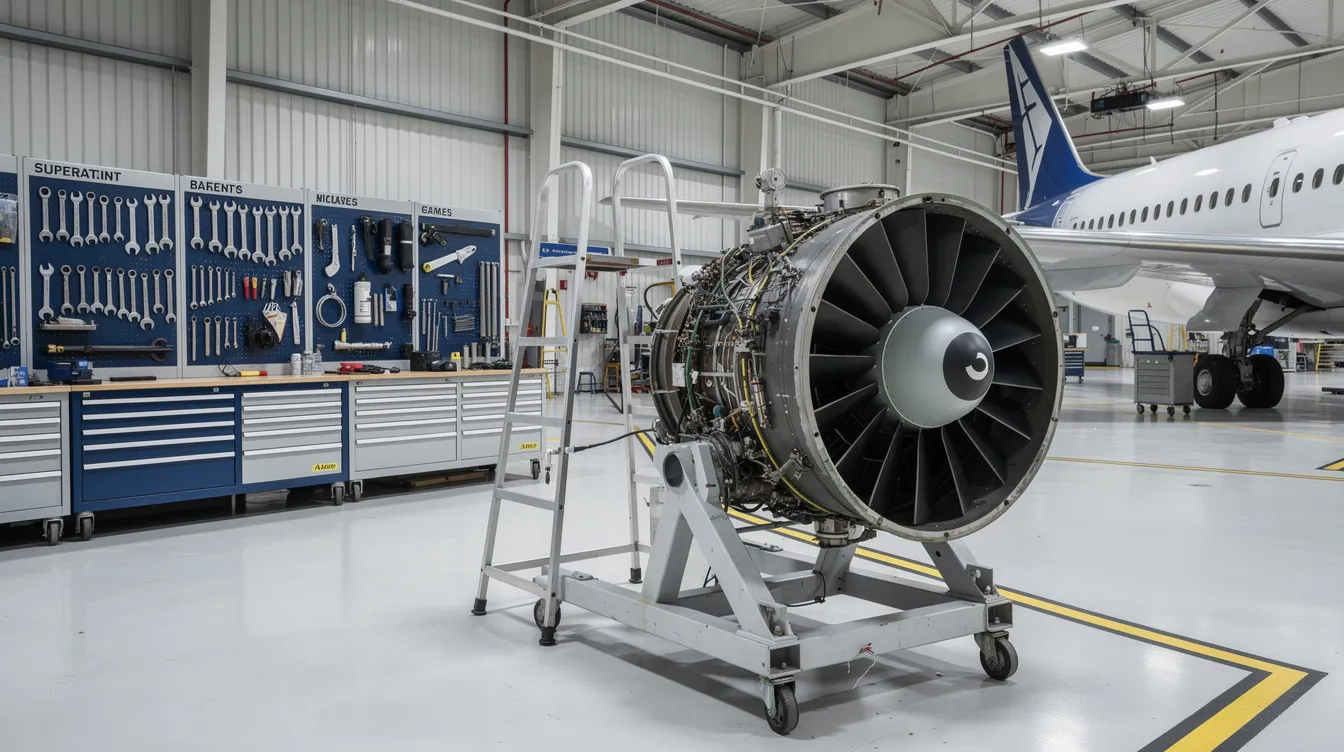
The image depicts the interior of a clean and well-organized aircraft maintenance hangar, featuring various tools and a partially disassembled engine, showcasing the essential services of aviation businesses. This setting highlights the operational aspects of aviation companies, making it an ideal representation for those interested in aviation businesses for sale.

The Marketing Process

Selling an aviation company requires discretion. The typical process looks like this:

  1. Create an anonymized teaser summarizing the business type, size, geographic region, and high-level financial profile — without revealing the company's identity.

  2. Distribute to vetted buyers, including strategic aviation companies, qualified investors, and PE groups with aviation interest. BusinessJets.com's network provides access to these buyers without public exposure.

  3. Execute NDAs and screen interest before releasing a detailed confidential information memorandum (CIM) with financials, fleet specifics, regulatory details, and organizational structure.

  4. Manage site visits and management presentations while maintaining operational normalcy.

Staff, customers, and counterparties are usually not informed until key deal milestones—typically after a letter of intent (LOI) is signed, or closing is imminent. BusinessJets.com handles confidential listings specifically to avoid operational disruption or competitor advantage during the selling process.

Deal Structure Options

Sellers should think beyond the headline price. Common structures include:

  • Asset sale vs. stock sale: An asset sale transfers specific assets (aircraft, certificate, contracts) while a stock sale transfers the legal entity including all liabilities. Tax implications differ materially — consult aviation counsel and tax advisors.

  • Earn-outs: Especially common for growing flight schools and service businesses, earn-outs tie a portion of the purchase price to post-closing performance such as revenue growth or student enrollment.

  • Transition period: Many deals include the seller staying on for 6 to 24 months in a management, consulting, or advisory role to ensure continuity and preserve relationships.

Tax and Regulatory Considerations

Coordinate early with aviation transactional counsel and tax advisors to optimize after-tax proceeds. Key issues include depreciation recapture, capital gains treatment, state and local tax obligations, and — for multi-aircraft charter operators or cross-border aviation businesses — international regulatory and treaty considerations.

For owners ready to explore a sale: Contact BusinessJets.com for a confidential discussion, a formal aircraft and business appraisal, and a go-to-market strategy for listing your aviation company for sale to a curated pool of qualified buyers. Visit the BusinessJets.com blog for ongoing market insights.

FAQ

These FAQs address practical questions that aviation business buyers and sellers commonly raise, but that are not fully covered in the sections above.

How long does it typically take to sell an aviation company?

A well-prepared aviation company — such as a charter operator or flight school with organized financial and maintenance records — often takes 6 to 12 months from the first valuation meeting to closing. More complex or distressed cases can extend to 12 to 18 months, particularly when regulatory reviews are involved, financing takes longer to arrange, or the buyer pool is limited. The single biggest factor in timeline is preparation: sellers who enter the market with clean records, resolved compliance issues, and a clear CIM consistently close faster.

Do I need to sell my aircraft and my aviation business together?

Many owners choose to sell aircraft and operating businesses together to simplify the transaction and present a turnkey operation to buyers. However, it is possible to separate them. For example, a seller might transfer the company's operating certificate and customer base while retaining certain aircraft or placing them under separate management. This approach can make sense when specific airframes carry sentimental value, are under separate financing, or are better suited for a different buyer. BusinessJets.com can help structure and value both scenarios to find the arrangement that maximizes total proceeds.

Are international buyers active in acquiring U.S. aviation businesses for sale?

Yes. International buyers — including groups from Europe, the Middle East, and Asia-Pacific — are active in acquiring U.S.-based aviation businesses, especially those with strong FAA certifications, stable cash flow, and access to busy airports in the jet network of South Florida, Texas, and the Northeast corridor. Cross-border deals require additional regulatory and tax planning, including foreign ownership considerations, trust structures, and compliance with U.S. citizenship requirements for certain certificate types. BusinessJets.com's consulting support is valuable in navigating these complexities.

What information will I need to share under NDA as a seller?

After a signed NDA, sellers usually provide detailed financials (profit and loss statements, balance sheets, cash flow summaries covering at least three years), fleet and maintenance summaries for each aircraft, key customer and supplier overviews, staff and payroll structure, and any material contracts or leases. Highly sensitive data — such as individual client identities or proprietary pricing - is typically redacted until later stages of due diligence or held until a letter of intent is in place. The goal is to give buyers enough information to make an informed decision while protecting the seller's competitive position.

When should I involve BusinessJets.com in my buy or sell process?

Involve BusinessJets.com as early as possible — ideally 6 to 12 months before a planned sale or at the very start of an acquisition search. Early engagement allows the team to perform aircraft appraisals, benchmark business valuation against current market conditions, prepare or review records, and help structure a transaction strategy that aligns with your financial and operational goals. Whether you need to find the right aviation company to acquire or position your own business for maximum value, starting early creates the most options and the best outcomes. Whether you need to find the right aviation company to acquire or position your own business for maximum value, starting early creates the most options and the best outcomes.

Aviation businesses for sale cover a broad spectrum of services and operational models. These include air freight and cargo, charter flights, flight schools, Fixed-Base Operators (FBOs) providing fuel, hangar space, and parking, Maintenance, Repair, and Overhaul (MRO) services addressing aircraft repairs and technical checks, interior completion centers offering specialized refurbishment services, and aerospace manufacturing facilities producing components andprecision-machinedd parts.

Financial performance and regulatory compliance are major considerations in aviation acquisitions. For example, a well-established flight academy in South Florida, with 8 aircraft and 2 locations, is priced at $2,700,000, generating annual revenue of $1,460,546 and net cash flow of $377,745. On the manufacturing side, aerospace manufacturing facilities can have asking prices around $7,500,000, while precision machine shops with annual revenue of $7,500,000 and net cash flow of $2,300,000 illustrate the capital-intensive nature of this segment.

Many aviation businesses qualify for SBA financing with down payments ranging from 10% to 25%, making acquisitions more accessible. However, buyers must be mindful of operational risks, such as environmental compliance, which is a key concern for aviation MROs, and the complexity of unique leasing agreements related to airport operations that many aviation firms rely on.

Aviation companies depend heavily on specialized personnel for critical functions, including certified mechanics, flight instructors, and operational managers. Safety culture and operational history significantly impact the value of these businesses.

When purchasing an aviation business, rigorous due diligence is required across operational, financial, and regulatory factors. FAA operating certificates, such as Part 135 for charter services, do not automatically transfer during sales, necessitating careful planning to ensure continuity. The aviation insurance market is volatile and can be costly, adding another layer of consideration for buyers.

Business brokers play a vital role in facilitating the sale of aviation businesses, which can range widely in price—from a Part 135 charter business in Florida listed at $499,500 to aerospace manufacturing companies valued in the tens of millions. Deal structures can be complex, often involving asset versus stock sales, earn-outs, and transition periods.

Marketplaces exist specifically for advertising aviation businesses for sale, providing buyers and sellers a platform to connect. Whether you are acquiring a flight school, MRO facility, charter operator, or manufacturing business, understanding these dynamics and engaging expert partners like BusinessJets.com can help ensure a successful transaction.

Conclusion

Navigating the purchase or sale of an aviation company in 2026 requires a sophisticated understanding of the industry’s unique operational, regulatory, and financial complexities. Whether acquiring a Part 135 charter operator, a flight school, an MRO facility, or an aerospace manufacturing business, buyers and sellers must prioritize thorough due diligence, accurate valuation, and strategic deal structuring. Engaging experienced advisors like BusinessJets.com, with its proven track record of over 1,500 transactions and deep market insight, can significantly enhance outcomes by ensuring a smooth process, maximizing value, and mitigating risks.

For owners considering a sale, early preparation focused on clean financials, regulatory compliance, and operational transparency is essential to attract qualified buyers and achieve favorable multiples. For buyers, clearly defining acquisition goals and modeling realistic operational scenarios will help secure a sustainable investment. With the right expertise and approach, aviation business transactions can unlock significant growth and diversification opportunities in this dynamic sector.

Contact BusinessJets.com today to request a confidential appraisal, explore aviation companies for sale, or engage expert consulting services tailored to your acquisition or disposition needs.

Aviation Company for Sale: How to Buy or Sell Aviation Businesses in 2026

Jay Franco Ser

Whether you are an operator ready to expand, an investor looking for recurring revenue, or a founder preparing to exit, the aviation M&A market in 2026 presents real opportunity — and real complexity. This guide walks you through the practical steps of buying or selling an aviation company, with current deal data, valuation benchmarks, and risk factors that matter right now.

Key Takeaways

  • This article is a practical guide for buying or selling an aviation company in 2026, written for private jet owners, operators, corporate buyers, and investors who need actionable insight rather than theory.

  • Aviation businesses for sale range from $500,000 to $160,000,000, spanning Part 135 charter operators, MROs, flight schools, FBOs, and aerospace parts distributors — each with distinct valuation drivers and risk profiles.

  • Accurate aircraft and business valuation, clean maintenance and financial records, and a structured sale process are critical to maximizing price and reducing transaction risk on either side of the deal.

  • BusinessJets.com leverages 1,500+ completed aircraft transactions and 5,000+ clients to advise on appraisals, listing strategy, and buyer/seller representation for aviation businesses.

  • Readers are encouraged to request a confidential appraisal, list an aviation company for sale, or engage BusinessJets.com for acquisition and consulting support.

Understanding Aviation Businesses for Sale Today

An aviation company for sale is rarely just an airplane with a price tag. It is typically a bundle: operating certificates (such as FAA Part 135 for charter or Part 141 for flight training), physical assets like hangars, tooling, and inventory, a fleet of aircraft, and intangible value in the form of customer contracts, employee qualifications, brand reputation, and regulatory standing. This layered structure is what makes aviation business transactions fundamentally different from a simple aircraft purchase.

The period from 2024 through 2026 has been notably active for aviation M&A. Post-COVID demand in business aviation rebounded strongly, with global business jet departures rising approximately 4% year-over-year and North American departures up roughly 5% by mid-2026, according to JetNet's market barometer. OEM order backlogs have pushed many operators into the secondary market, and commercial aerospace M&A transaction volume is up over 15% year-to-date in 2026, per Capstone Partners. The result: more interest in acquiring established businesses rather than building from scratch.

What Types of Aviation Businesses Trade Hands?

Aviation businesses include air freight and cargo operations, charter flights, and flight schools — but the category is much broader. Here is a practical overview of the types commonly found on the market:

  • Charter operators (on-demand, membership, or managed fleet models) offering aircraft charter services under Part 135 certificates

  • Aircraft management firms running fleets on behalf of owners

  • Flight schools that offer training as an aviation service, often under Part 141 certification

  • Maintenance, Repair, and Overhaul (MRO) shops that address aircraft repairs and technical checks, including aviation maintenance repair facilities

  • Fixed-Base Operators (FBOs) that provide fuel, hangar space, and parking at airports

  • Interior completion centers providing specialized aviation services such as refurbishments and custom configurations

  • Aerospace manufacturing facilities included in aviation services, covering component production and precision machining

  • Specialized service providers such as aircraft detailing, avionics shops, safety consulting, and parts distributors

Marketplaces exist specifically for aviation businesses advertising sales, and listings span an enormous range. A Part 135 charter business in Florida is currently listed for $499,500, representing a bare or lightly equipped certificate operation. On the other end, a well-established flight academy is priced at $2,700,000 - a South Florida flight academy with 8 aircraft and 2 locations generating annual revenue of $1,460,546 and net cash flow of $377,745. Aerospace manufacturing deals run larger: one aerospace manufacturing facility has an asking price of $7,500,000, while a precision machine shop with annual revenue of $7,500,000 and net cash flow of $2,300,000 illustrates the capital-intensive nature of the manufacturing segment.

Aviation maintenance facilities are also included in business listings, and mid-market deals commonly fall in the $1M–$10M+ range for parts distributors and regional MROs.

An aerial view captures a bustling general aviation airport featuring numerous hangars and a variety of small aircraft parked on the tarmac. This scene highlights the vibrant landscape of aviation businesses, which may include opportunities for buyers interested in aviation companies for sale.

Who Buys Aviation Companies?

Buyers generally fall into four categories:

  • Strategic buyers - existing aviation companies seeking to expand capacity, add geographic coverage, or acquire certificates they do not currently hold

  • Private equity groups - attracted to recurring revenue models, platform acquisitions, and add-on opportunities in the aerospace aftermarket

  • Family offices and high-net-worth individuals - looking for vertical integration or stable cash flow from established operations

  • Entrepreneur-operators - seeking proven cash flow and regulatory certification rather than the lengthy process of starting from zero

Geographic Hotspots

Aviation businesses change hands regularly in South Florida (Miami, Fort Lauderdale, Palm Beach), Arizona (Phoenix, Scottsdale), the Gulf Coast (Louisiana, Texas), and major training hubs across the Southeast. These regions benefit from favorable flying weather, strong airport infrastructure, and dense concentrations of operators. BusinessJets.com supports transactions worldwide, including growing markets in the Middle East, Latin America, and Asia-Pacific.

BusinessJets.com's foundation — over 1,500 aircraft transactions and a network spanning 5,000+ clients - positions the firm as a specialist that increasingly advises on company-level deals surrounding those aircraft. When the sale involves not just a fleet but a certificate, a customer base, and a team of qualified personnel, BusinessJets.com serves as a natural partner for both sides. Explore the full scope of what this looks like through BusinessJets.com's comprehensive aviation services.

How to Buy an Aviation Company

This section walks through the buy-side process: identifying suitable aviation businesses for sale, assessing value and risk, structuring financing, and closing with regulatory and operational continuity in mind. Aviation acquisitions require rigorous due diligence across operational and financial factors — and the acquisition analysis should always consider aspects of operational risk and capital-intensive assets.

Define Your Acquisition Thesis

Before reviewing specific listings, buyers need to be clear about what they are buying and why. Are you entering on-demand charter by acquiring a Part 135 certificate with an established fleet? Expanding into training by acquiring a Gulf Coast flight school with $1.6M in historical revenue? Adding MRO capacity through a Florida maintenance shop? Each path has different valuation drivers, regulatory requirements, and capital needs.

The Typical Buy-Side Process

Once a target is identified, the process generally follows these steps:

  1. Sign a non-disclosure agreement (NDA) with the seller or their representative

  2. Receive a confidential information memorandum (CIM) that includes historical financials, fleet details, certificate scope, employee credentials, and key contracts

  3. Conduct site visits and management meetings to assess operations, culture, and physical assets firsthand

  4. Perform detailed due diligence across aircraft, regulatory, financial, and personnel dimensions

  5. Structure and negotiate the deal, including price, financing, transition terms, and closing conditions

Due Diligence Priorities

Aviation acquisitions demand attention to areas that general business buyers may underestimate:

  • Aircraft pedigrees and maintenance history: Review logbooks for full compliance with service bulletins (SBs) and airworthiness directives (ADs). Verify enrollment in engine programs such as Rolls-Royce CorporateCare or JSSI. A King Air B200 charter business, for example, can look profitable on paper — but upcoming engine overhauls costing hundreds of thousands of dollars can materially affect near-term returns.

  • Employee qualifications: Aviation companies depend on specialized personnel for critical operations. Evaluate the depth of A&P mechanics, certified flight instructors, chief pilots, directors of operations, and directors of maintenance. Key-person dependency is a real risk.

  • Regulatory status: Confirm that FAA Part 135 or Part 141 certificates are in good standing. Review audit history, OpSpecs, and geographic authorizations. Note that FAA operating certificates do not automatically transfer during aviation business sales — the buyer must work with the FAA to ensure continuity.

  • Customer and contract concentration: How much revenue comes from the top three clients? Are contracts recurring or ad hoc? Long-term EMS contracts, for instance, can push helicopter charter businesses to 6–7× EBITDA multiples, while ad hoc revenue earns much less.

  • Vendor and airport agreements: Aviation firms often rely on unique leasing agreements related to airport operations. Verify hangar leases, fuel contracts, and ramp access rights.

  • Environmental compliance: This is a key risk area for aviation MROs. Paint shops, fuel storage, and de-icing operations can carry environmental liabilities that require remediation or ongoing compliance costs.

  • Insurance: The aviation insurance market is volatile and can be costly for aviation businesses, particularly for charter and training operators. Review current policies, claims history, and renewal terms.

Financial performance and regulatory compliance are major considerations in aviation acquisitions. Regulatory compliance is crucial when purchasing an aviation business — a lapsed certificate or unresolved enforcement action can stall or kill a transaction.

Two professionals in business attire are engaged in reviewing paperwork near a sleek white private jet on the tarmac, highlighting the potential for aviation businesses for sale. Their focused discussion suggests a transaction related to purchasing or financing aviation companies.

Valuation: How Aircraft and Business Value Combine

BusinessJets.com's appraisal expertise with individual aircraft feeds directly into valuing the business as a whole. The approach typically layers three components:

  1. Aircraft market value - appraised individually using market comparables, condition assessments, and program enrollment status. Request an aircraft appraisal through BusinessJets.com for current benchmarks.

  2. Certificate and intangible value - a clean, broad-scope Part 135 certificate can be worth $250,000 to $3 million or more depending on jet approvals, geographic scope, and compliance history, per ExitValue.ai analysis.

  3. Operating business value — derived from normalized EBITDA and applied multiples. In 2026, charter operators trade at roughly 3–5× EBITDA for small-scale (1–5 aircraft), 5–7× for mid-size (6–15 aircraft), 7–9× for boutique managed-fleet businesses, and 9–12× for platform-level strategic or PE acquisitions.

A concrete example: a Northeastern U.S. Part 135 operator with three Pilatus PC-12s, approximately $10 million in annual revenue, and $3 million in EBITDA is listed at $15.5 million — roughly 5.17× EBITDA, including the fleet and certificate.

Financing Options

Many aviation businesses qualify for SBA financing with 10% to 25% down, making acquisitions more accessible than many buyers assume. Beyond SBA 7(a) loans, common financing structures include:

  • Conventional bank financing with lenders experienced in aviation collateral, using the fleet and business assets as security

  • Seller financing where the owner carries 10–40% of the purchase price, often paired with a transition or consulting period

  • Earn-out structures tied to post-closing performance metrics such as revenue growth or student enrollment

  • Hybrid approaches combining bank debt, seller carry, and buyer equity

Model Realistic Scenarios

Buyers should model operating scenarios that factor in crew salaries, insurance premiums, fuel costs, training expenses, hangar rent, and - critically - scheduled heavy maintenance events. A charter business may show strong trailing EBITDA, but a fleet-wide hot-section inspection or landing-gear overhaul in year one can reshape the return profile entirely.

Sourcing Off-Market Deals

Not every deal is publicly listed. BusinessJets.com can quietly source off-market aviation companies for buyers — for example, smaller Florida helicopter operators or boutique detailing firms averaging $1.8 million in revenue — through its global network built over 1,500+ aircraft transactions. Browse current aircraft for sale as a starting point, and contact the team to discuss company-level acquisition criteria.

For buyers ready to move: Contact BusinessJets.com to (1) request a pre-acquisition aircraft and business appraisal, (2) review current aviation businesses for sale that match your criteria, and (3) obtain consulting support on deal structure and negotiation strategy.

Preparing and Selling Your Aviation Company

If you are a charter CEO, flight school founder, or MRO shop principal considering putting your aviation company for sale within the next 6 to 24 months, the work you do before going to market will directly determine your deal value. Sellers who invest in preparation consistently achieve stronger multiples, shorter timelines, and fewer deal-breaking surprises during due diligence.

Acquisition of aviation businesses can involve complex deal structures — and the seller who anticipates buyer concerns and resolves them in advance controls the narrative.

Separate Aircraft Value from Enterprise Value

A professional valuation should clearly distinguish aircraft value from the broader enterprise value. BusinessJets.com conducts private jet appraisals that establish current market value for each airframe, then layers in the operating business — historical and projected earnings, certificate value, customer contracts, and workforce depth — to arrive at a defensible asking price.

Many Part 135 operators have inflated expectations because post-COVID demand suggested their certificate, fleet, and contracts warranted premium pricing. In practice, the market separates these components. The certificate and fleet carry their own values; only the underlying operations earn EBITDA multiples.

Key Preparation Steps

Business brokers facilitate the sale of aviation businesses, but the seller's own preparation is the foundation. Prioritize these areas:

  • Financial records: Organize at least three years of financial statements (ideally audited or reviewed). Normalize earnings by removing one-off items, adjusting owner compensation to market rates, and documenting any add-backs clearly.

  • Maintenance records: Ensure aircraft logbooks are complete, digitized, and current. Confirm compliance with all ADs and SBs. If an overhaul or major inspection is approaching, decide whether to complete it pre-sale or adjust pricing accordingly.

  • Regulatory standing: Verify that all FAA certificates are in good standing. Resolve any open enforcement actions, audit findings, or compliance gaps. Clean regulatory history reduces buyer risk and supports higher multiples.

  • Airport and vendor agreements: Review and organize all leases, fuel contracts, ramp permits, and service agreements. Transfer provisions in these contracts can become sticking points if not addressed early.

Enhance Perceived Value Through Systems

Safety culture and operational history impact the value of aviation companies significantly. Buyers pay more for businesses that demonstrate mature operational systems:

  • A documented safety management system (SMS)

  • Standardized training programs with records of recurrent training

  • Written standard operating procedures (SOPs) covering flight operations, dispatch, and maintenance

  • Clearly defined customer contracts with renewal terms and performance metrics

These systems signal to buyers that the business can operate independently of the founder — a critical factor in any acquisition.
The image depicts the interior of a clean and well-organized aircraft maintenance hangar, featuring various tools and a partially disassembled engine, showcasing the essential services of aviation businesses. This setting highlights the operational aspects of aviation companies, making it an ideal representation for those interested in aviation businesses for sale.

The Marketing Process

Selling an aviation company requires discretion. The typical process looks like this:

  1. Create an anonymized teaser summarizing the business type, size, geographic region, and high-level financial profile — without revealing the company's identity.

  2. Distribute to vetted buyers, including strategic aviation companies, qualified investors, and PE groups with aviation interest. BusinessJets.com's network provides access to these buyers without public exposure.

  3. Execute NDAs and screen interest before releasing a detailed confidential information memorandum (CIM) with financials, fleet specifics, regulatory details, and organizational structure.

  4. Manage site visits and management presentations while maintaining operational normalcy.

Staff, customers, and counterparties are usually not informed until key deal milestones—typically after a letter of intent (LOI) is signed, or closing is imminent. BusinessJets.com handles confidential listings specifically to avoid operational disruption or competitor advantage during the selling process.

Deal Structure Options

Sellers should think beyond the headline price. Common structures include:

  • Asset sale vs. stock sale: An asset sale transfers specific assets (aircraft, certificate, contracts) while a stock sale transfers the legal entity including all liabilities. Tax implications differ materially — consult aviation counsel and tax advisors.

  • Earn-outs: Especially common for growing flight schools and service businesses, earn-outs tie a portion of the purchase price to post-closing performance such as revenue growth or student enrollment.

  • Transition period: Many deals include the seller staying on for 6 to 24 months in a management, consulting, or advisory role to ensure continuity and preserve relationships.

Tax and Regulatory Considerations

Coordinate early with aviation transactional counsel and tax advisors to optimize after-tax proceeds. Key issues include depreciation recapture, capital gains treatment, state and local tax obligations, and — for multi-aircraft charter operators or cross-border aviation businesses — international regulatory and treaty considerations.

For owners ready to explore a sale: Contact BusinessJets.com for a confidential discussion, a formal aircraft and business appraisal, and a go-to-market strategy for listing your aviation company for sale to a curated pool of qualified buyers. Visit the BusinessJets.com blog for ongoing market insights.

FAQ

These FAQs address practical questions that aviation business buyers and sellers commonly raise, but that are not fully covered in the sections above.

How long does it typically take to sell an aviation company?

A well-prepared aviation company — such as a charter operator or flight school with organized financial and maintenance records — often takes 6 to 12 months from the first valuation meeting to closing. More complex or distressed cases can extend to 12 to 18 months, particularly when regulatory reviews are involved, financing takes longer to arrange, or the buyer pool is limited. The single biggest factor in timeline is preparation: sellers who enter the market with clean records, resolved compliance issues, and a clear CIM consistently close faster.

Do I need to sell my aircraft and my aviation business together?

Many owners choose to sell aircraft and operating businesses together to simplify the transaction and present a turnkey operation to buyers. However, it is possible to separate them. For example, a seller might transfer the company's operating certificate and customer base while retaining certain aircraft or placing them under separate management. This approach can make sense when specific airframes carry sentimental value, are under separate financing, or are better suited for a different buyer. BusinessJets.com can help structure and value both scenarios to find the arrangement that maximizes total proceeds.

Are international buyers active in acquiring U.S. aviation businesses for sale?

Yes. International buyers — including groups from Europe, the Middle East, and Asia-Pacific — are active in acquiring U.S.-based aviation businesses, especially those with strong FAA certifications, stable cash flow, and access to busy airports in the jet network of South Florida, Texas, and the Northeast corridor. Cross-border deals require additional regulatory and tax planning, including foreign ownership considerations, trust structures, and compliance with U.S. citizenship requirements for certain certificate types. BusinessJets.com's consulting support is valuable in navigating these complexities.

What information will I need to share under NDA as a seller?

After a signed NDA, sellers usually provide detailed financials (profit and loss statements, balance sheets, cash flow summaries covering at least three years), fleet and maintenance summaries for each aircraft, key customer and supplier overviews, staff and payroll structure, and any material contracts or leases. Highly sensitive data — such as individual client identities or proprietary pricing - is typically redacted until later stages of due diligence or held until a letter of intent is in place. The goal is to give buyers enough information to make an informed decision while protecting the seller's competitive position.

When should I involve BusinessJets.com in my buy or sell process?

Involve BusinessJets.com as early as possible — ideally 6 to 12 months before a planned sale or at the very start of an acquisition search. Early engagement allows the team to perform aircraft appraisals, benchmark business valuation against current market conditions, prepare or review records, and help structure a transaction strategy that aligns with your financial and operational goals. Whether you need to find the right aviation company to acquire or position your own business for maximum value, starting early creates the most options and the best outcomes. Whether you need to find the right aviation company to acquire or position your own business for maximum value, starting early creates the most options and the best outcomes.

Aviation businesses for sale cover a broad spectrum of services and operational models. These include air freight and cargo, charter flights, flight schools, Fixed-Base Operators (FBOs) providing fuel, hangar space, and parking, Maintenance, Repair, and Overhaul (MRO) services addressing aircraft repairs and technical checks, interior completion centers offering specialized refurbishment services, and aerospace manufacturing facilities producing components andprecision-machinedd parts.

Financial performance and regulatory compliance are major considerations in aviation acquisitions. For example, a well-established flight academy in South Florida, with 8 aircraft and 2 locations, is priced at $2,700,000, generating annual revenue of $1,460,546 and net cash flow of $377,745. On the manufacturing side, aerospace manufacturing facilities can have asking prices around $7,500,000, while precision machine shops with annual revenue of $7,500,000 and net cash flow of $2,300,000 illustrate the capital-intensive nature of this segment.

Many aviation businesses qualify for SBA financing with down payments ranging from 10% to 25%, making acquisitions more accessible. However, buyers must be mindful of operational risks, such as environmental compliance, which is a key concern for aviation MROs, and the complexity of unique leasing agreements related to airport operations that many aviation firms rely on.

Aviation companies depend heavily on specialized personnel for critical functions, including certified mechanics, flight instructors, and operational managers. Safety culture and operational history significantly impact the value of these businesses.

When purchasing an aviation business, rigorous due diligence is required across operational, financial, and regulatory factors. FAA operating certificates, such as Part 135 for charter services, do not automatically transfer during sales, necessitating careful planning to ensure continuity. The aviation insurance market is volatile and can be costly, adding another layer of consideration for buyers.

Business brokers play a vital role in facilitating the sale of aviation businesses, which can range widely in price—from a Part 135 charter business in Florida listed at $499,500 to aerospace manufacturing companies valued in the tens of millions. Deal structures can be complex, often involving asset versus stock sales, earn-outs, and transition periods.

Marketplaces exist specifically for advertising aviation businesses for sale, providing buyers and sellers a platform to connect. Whether you are acquiring a flight school, MRO facility, charter operator, or manufacturing business, understanding these dynamics and engaging expert partners like BusinessJets.com can help ensure a successful transaction.

Conclusion

Navigating the purchase or sale of an aviation company in 2026 requires a sophisticated understanding of the industry’s unique operational, regulatory, and financial complexities. Whether acquiring a Part 135 charter operator, a flight school, an MRO facility, or an aerospace manufacturing business, buyers and sellers must prioritize thorough due diligence, accurate valuation, and strategic deal structuring. Engaging experienced advisors like BusinessJets.com, with its proven track record of over 1,500 transactions and deep market insight, can significantly enhance outcomes by ensuring a smooth process, maximizing value, and mitigating risks.

For owners considering a sale, early preparation focused on clean financials, regulatory compliance, and operational transparency is essential to attract qualified buyers and achieve favorable multiples. For buyers, clearly defining acquisition goals and modeling realistic operational scenarios will help secure a sustainable investment. With the right expertise and approach, aviation business transactions can unlock significant growth and diversification opportunities in this dynamic sector.

Contact BusinessJets.com today to request a confidential appraisal, explore aviation companies for sale, or engage expert consulting services tailored to your acquisition or disposition needs.


Related Posts