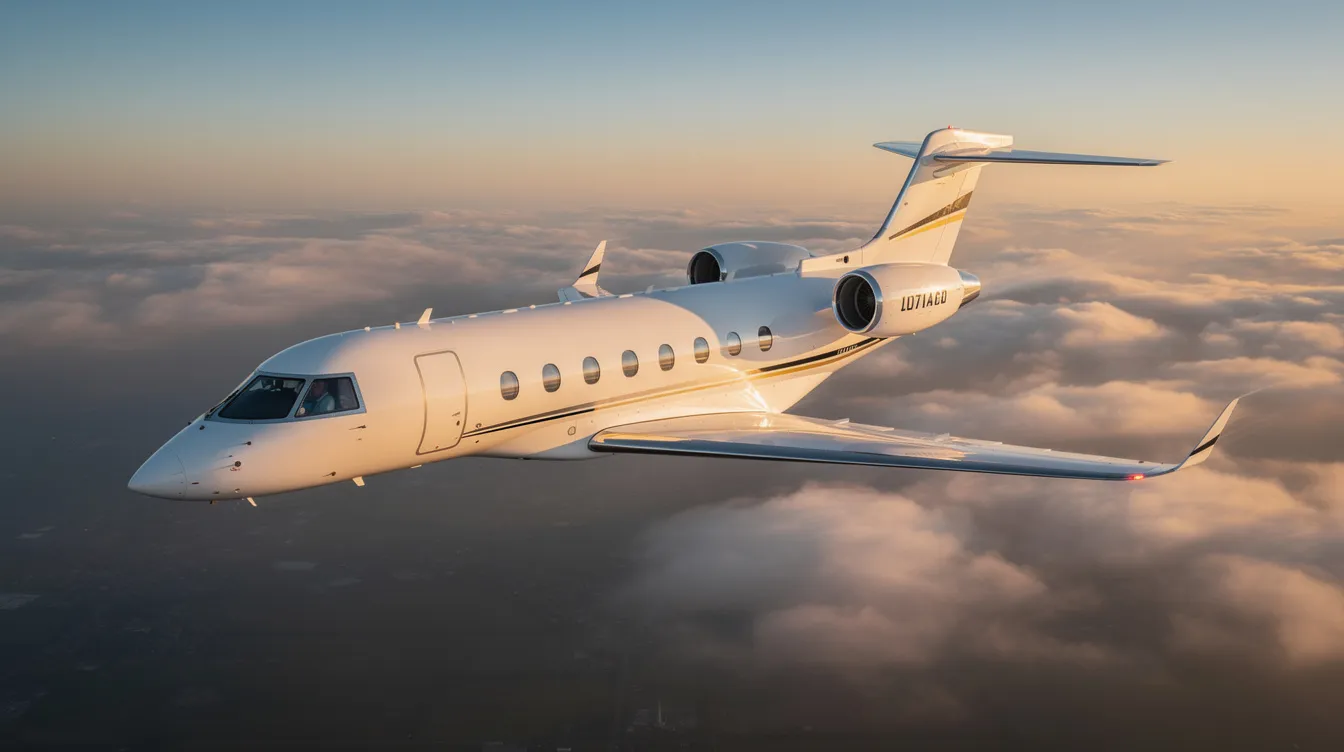
Private Jet for Sale Pakistan: Expert Guide to Buying, Selling & Valuing Business Aircraft
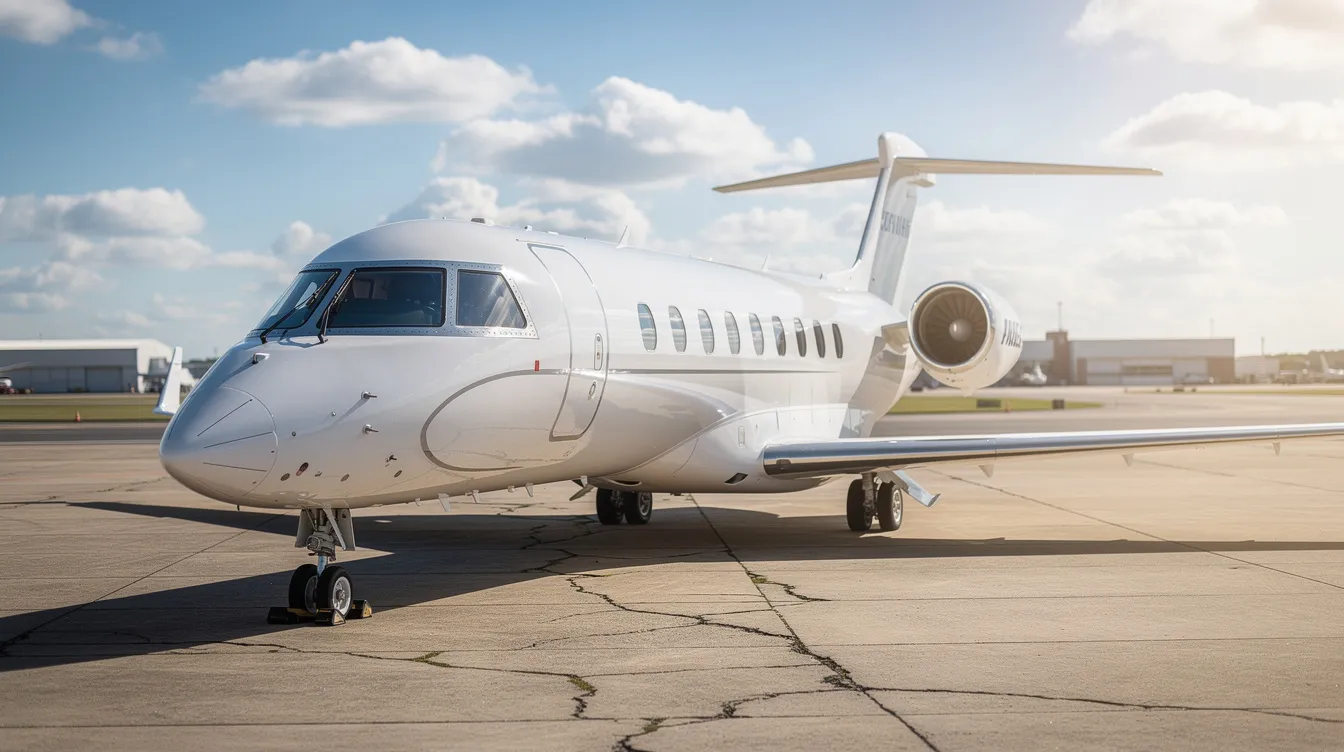
Pakistan's private aviation market is small, specialized, and deeply connected to global inventory. Whether you are a corporate buyer in Karachi, a family office in Lahore, or a Gulf-based investor seeking reliable connectivity into the country, understanding how aircraft are sourced, valued, and transacted is essential to making a sound decision. This guide covers what you need to know.
Key Takeaways
Pakistan has a small but active private jet market centered on Karachi, Lahore, and Islamabad, with most aircraft sourced internationally. Dedicated platforms often show zero permanent local inventory for private jets in Pakistan, so buyers and sellers must think globally.
Most private flights in Pakistan are still charter flights, but consistent demand exists for pre-owned business jets from corporate groups, family offices, and government-related entities. Many transactions for private jets in Pakistan are handled through international brokers.
Accurate aircraft valuation, understanding each aircraft category (light, midsize, long-range), and timing the market are critical to achieving a favorable purchase or sale outcome. Private jet purchase prices range from $300K to $60M.
International connectivity from airports like Islamabad International Airport, Jinnah International Airport, and Allama Iqbal International Airport to the Middle East, Europe, and Southeast Asia is a key driver of jet selection.
BusinessJets.com supports buyers and sellers across this market with appraisals, listing strategy, and acquisition consulting, backed by 1,500+ completed transactions and 5,000+ satisfied clients.
Private Jets in Pakistan: Market Snapshot in 2026
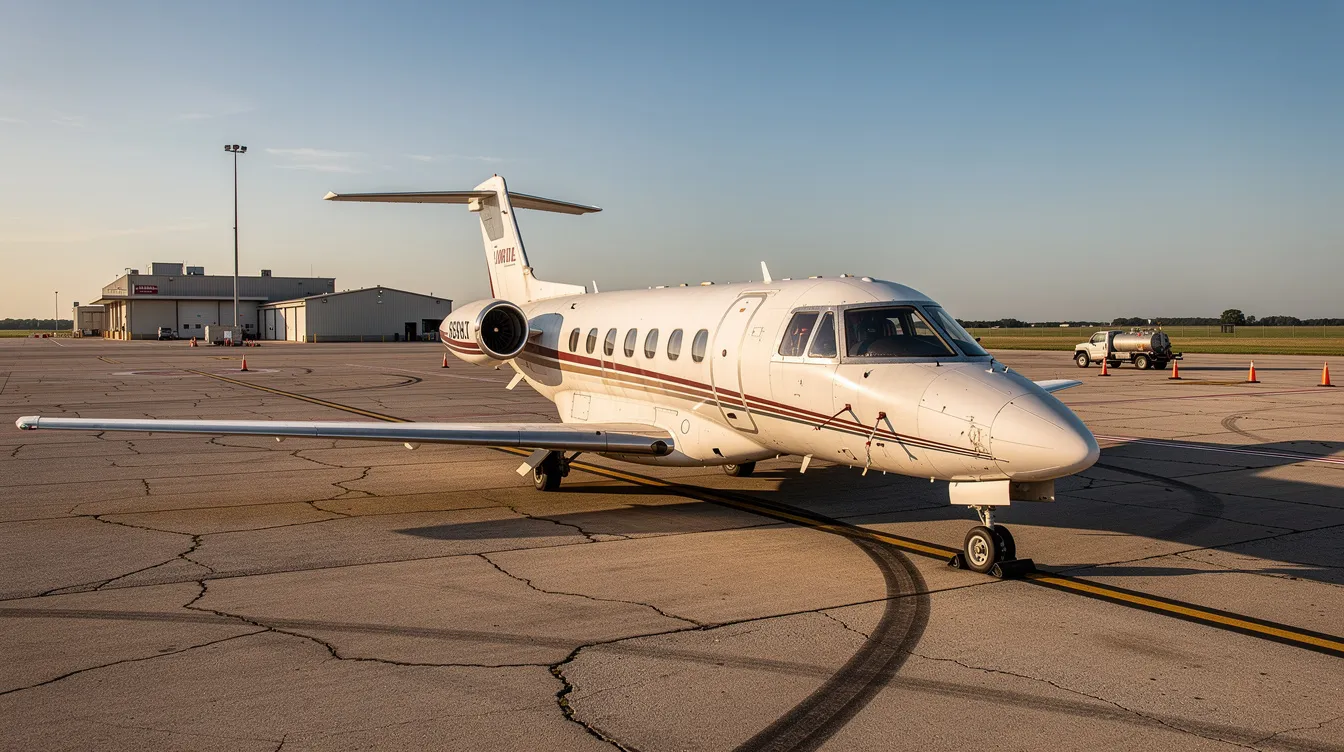
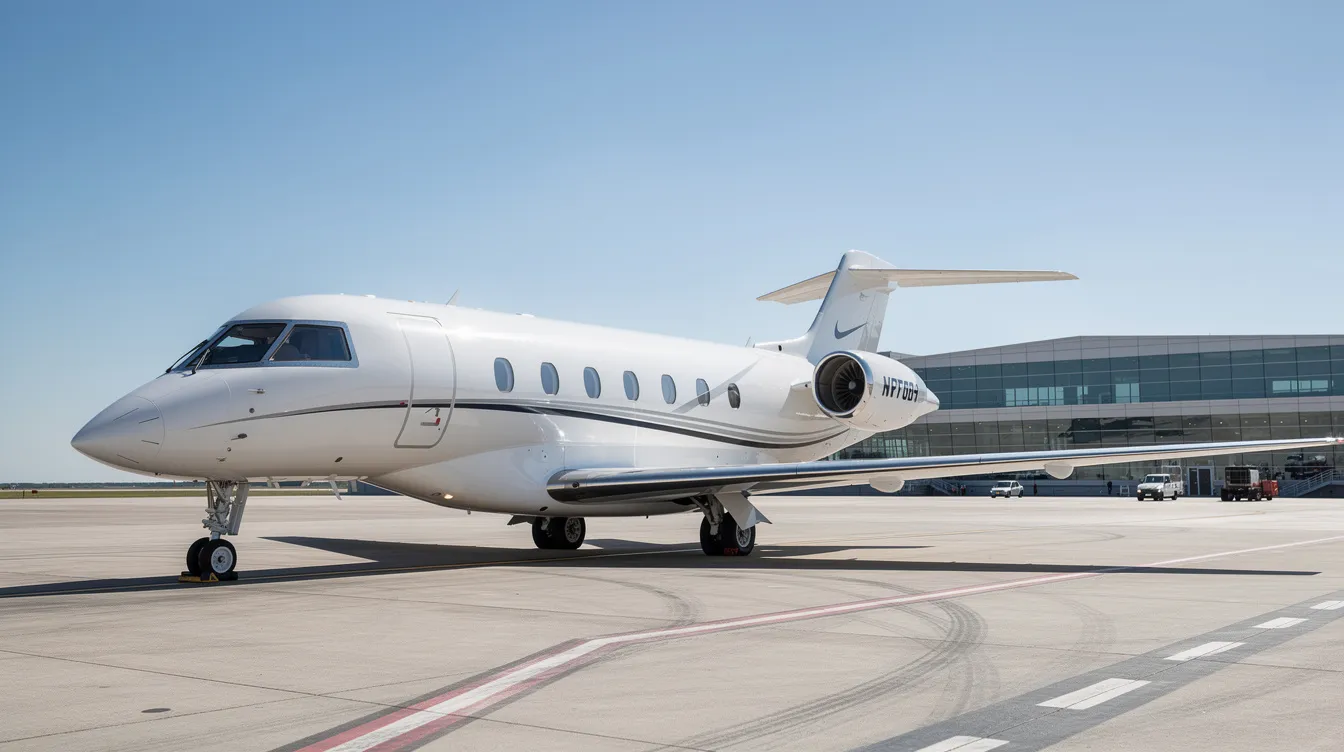
Pakistan's business aviation registry includes a few dozen corporate and business jets plus turboprops, dominated by government VIP transport units and large conglomerates. LAASdata lists over 30–50 registered business aircraft under the AP- prefix, ranging from light jets like the Embraer Phenom 100 to large cabin platforms like the Bombardier Global 6000 and Gulfstream G500, which is a very small fleet by world business aviation standards.
The local market for turbine-powered private jets in Pakistan is extremely niche. When someone searches for a private jet for sale in Pakistan, they are usually looking at pre-owned business jets based in or frequently operating to the country, not browsing a large domestic inventory. Pakistan's private jet market is dominated by charter flights, with whole-aircraft ownership concentrated among a narrow set of buyers.
Typical buyer profiles include:
Local conglomerates in energy, infrastructure, and manufacturing
Family offices with operations spanning Pakistan and the Middle East
Provincial and federal government procurement (e.g., Punjab's 2026 acquisition of a 2019 Gulfstream G500 valued at approximately US$38–42 million)
Gulf-based investors and business owners needing regular Pakistan access
Demand clusters around Karachi, Lahore, and Islamabad, where international airport infrastructure, handling agents, and maintenance support exist. BusinessJets.com routinely works with Pakistani and Gulf-based buyers and sellers even when the aircraft itself is located in Europe, North America, or the Middle East.
Ownership vs. Charter in Pakistan: Which Model Fits Your Mission?
Private charter flight usage still accounts for the majority of private flights in Pakistan. Whole-aircraft ownership remains the exception, typically justified only by high utilization or security requirements. Understanding where your mission falls on this spectrum is the first real decision.
When charter makes sense: Chartering is cost-effective for under 200 flight hours annually. Charter flights provide flexibility without long-term commitments, and chartering a private jet costs $1,000 to $30,000 per hour depending on aircraft size and route. In Pakistan, chartering avoids local crew and hangar obligations, offers flexible private jet access across different aircraft categories, and works well for occasional trips to the Middle East or domestic business tours.
When ownership makes sense: Private jet ownership requires significant upfront purchase costs, but it becomes compelling beyond 200–250 annual hours. Ownership incurs $500K to $2M in annual operating costs depending on aircraft type and usage. Advantages include guaranteed availability during peak seasons (Eid, summer), the ability to configure the cabin for corporate or VIP style, branding, and tighter control over safety and maintenance. Fractional ownership is viable for 200 to 250 flight hours yearly and offers a middle path.
Before committing, conduct a mission analysis covering sectors flown, frequency, average passenger count, and required range. BusinessJets.com's consulting team can model total cost of ownership versus charter and fractional alternatives using your actual route data.
Key Airports for Private Jets in Pakistan
Any private plane purchased for Pakistan operations must suit local runway lengths, handling capabilities, and the typical routes flown from the country's major international airports. Private jets access 10 times more airports than scheduled airlines, but in Pakistan, the infrastructure that matters most is concentrated in three cities.
Islamabad International Airport (ISB): Modern infrastructure with a runway of approximately 3,658 meters, suitable for large-cabin business jets and VIP airliners. High volume of government and diplomatic missions. Common international routes include Islamabad–Dubai and Islamabad–Doha.
Allama Iqbal International Airport (LHE): Lahore's core hub for business and family-office operations, with steady private flights to the Middle East and domestic routes to Karachi and Islamabad. The Lahore Fort, Badshahi Mosque, and the city's Mughal and Sufi heritage- including ornate shrines of Sufi saints-make it a frequent destination for both business and cultural travel.
Jinnah International Airport (KHI): Pakistan's busiest international airport, often the preferred base for corporate-owned fleets serving energy, shipping, and financial sectors.
Major international airports in Pakistan offer dedicated parking and FBO services for private jets. Secondary airports such as Multan, Peshawar, and Faisalabad have shorter runways and fewer handling agents, which can influence aircraft category choice, especially for larger aircraft. Even Gilgit Airport, serving the northern region's historical and modern attractions, presents performance considerations for jet operations due to its elevation and runway constraints.
Choosing the Right Aircraft Category for Pakistan Missions
Aircraft category selection-light jet, midsize, super-midsize, large cabin, VIP airliner-should be driven by mission profile rather than headline purchase price alone. A plane that fits your routes today and tomorrow protects both operational efficiency and residual value.
Category | Typical Pax | Range (nm) | Pakistan Use Case |
|---|---|---|---|
Very light jets | 4–6 | 1,200–1,500 | Short domestic hops |
Light jets | 6–8 | 1,500–2,500 | Lahore–Karachi, Islamabad–Dubai (shorter sectors) |
Midsize jets | 8–10 | 2,500–3,500 | Pakistan–UAE, Pakistan–Saudi Arabia |
Large jets / Ultra-LR | 10–16 | 4,500–7,500+ | Nonstop to London, Frankfurt, Kuala Lumpur |
Private jets can range from $300K to $60M in Pakistan depending on category, age, and condition. Variable costs for large jets can reach $4,500 per flight hour, so operating economics matter as much as acquisition price. Average private jet prices in Pakistan range from $300K to $60M, reflecting the breadth of available inventory from older light jets to late-model ultra-long-range platforms.
Hot-and-high performance during Pakistan's summer months is a genuine operational constraint. Aircraft must deliver adequate thrust margins at elevated density altitudes, particularly at secondary airports. Cabin configuration for 8–14 passengers with generous baggage space is often essential for extended family travel or corporate roadshows, and some buyers also prioritize a passenger forward galley in the layout for longer family or corporate missions.
BusinessJets.com can match specific Pakistan route maps-Karachi–Riyadh, Lahore–London, Islamabad–Bangkok-with optimal aircraft categories using market data and performance tools from top manufacturers.
Popular Business Jets Sought by Pakistani Buyers
Many Pakistani buyers look for proven, supportable aircraft models with strong global fleets and good parts availability. Here are the categories drawing the most interest:
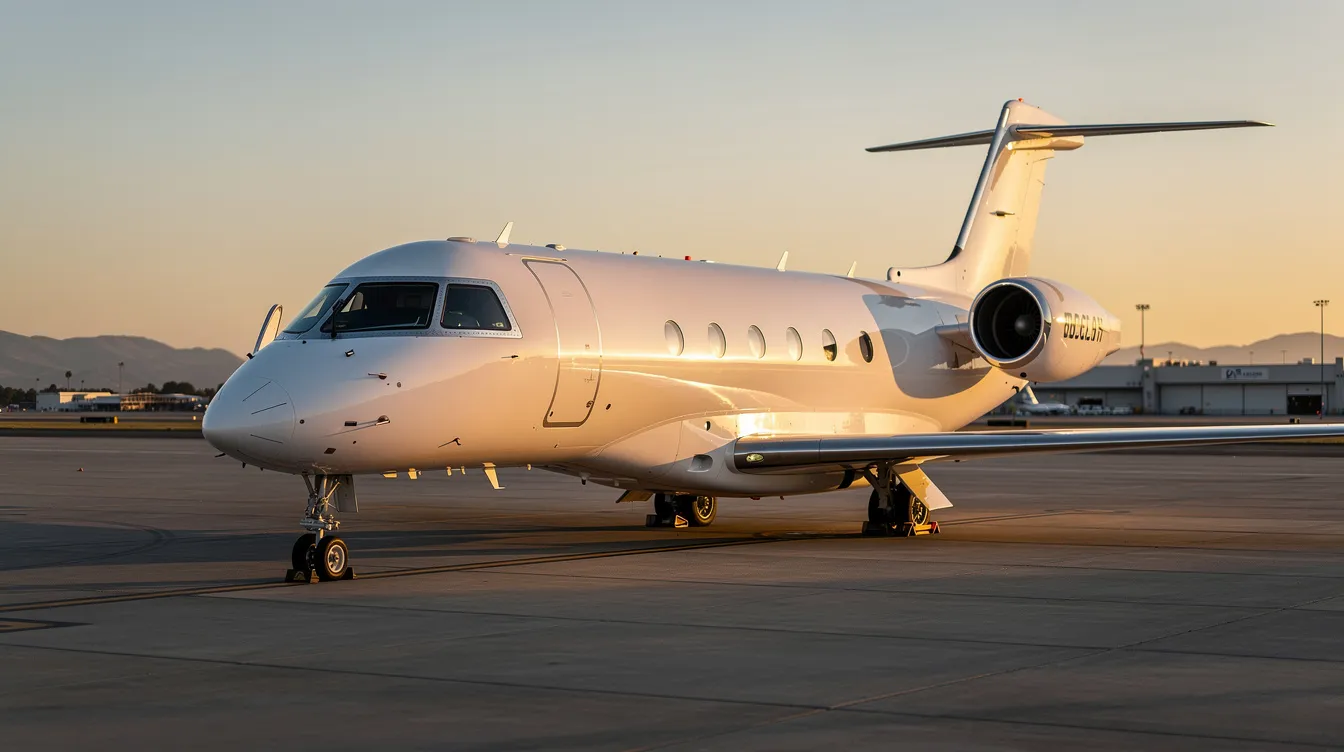
Cessna Citation series (CJ3, Citation Excel/XLS, Citation M2): Cost-efficient for regional and domestic missions. The XLS+ remains one of the most versatile midsize jets in terms of runway performance, operating cost, and passenger comfort.
Dassault Falcon models (Falcon 2000LXS, Falcon 900EX, Falcon 7X): A unique combination of long range, short-field capability, and comfortable cabins. The Dassault Falcon 7X, equipped with three engines enrolled on maintenance programs, performs well on routes from Pakistan to Europe or the Far East.
Bombardier Global family (Global 5000, 6000, 6500, 7500): Preferred by ultra-high-net-worth owners and government entities for nonstop flights from Pakistan to London, Toronto, or Southeast Asia.
Gulfstream (G450, G550, G600): Gulfstream G550 and G650 command premium residual values and consistently hold their position in the market. The G500, as demonstrated by Punjab's 2026 acquisition, is increasingly popular for VIP missions requiring range increase and modern avionics.
Other manufacturers like Boeing offer executive airliner configurations for heads-of-state missions, and Airbus platforms such as the ACJ319 configured for private charter and VIP travel illustrate how airliner-size cabins can be adapted for long-range business use, while helicopter options serve different operational needs. While a Pakistan aircraft may not be physically located in the country, BusinessJets.com routinely sources suitable candidates from North America, Europe, and Asia and arranges ferry flights and import support for Pakistani clients.
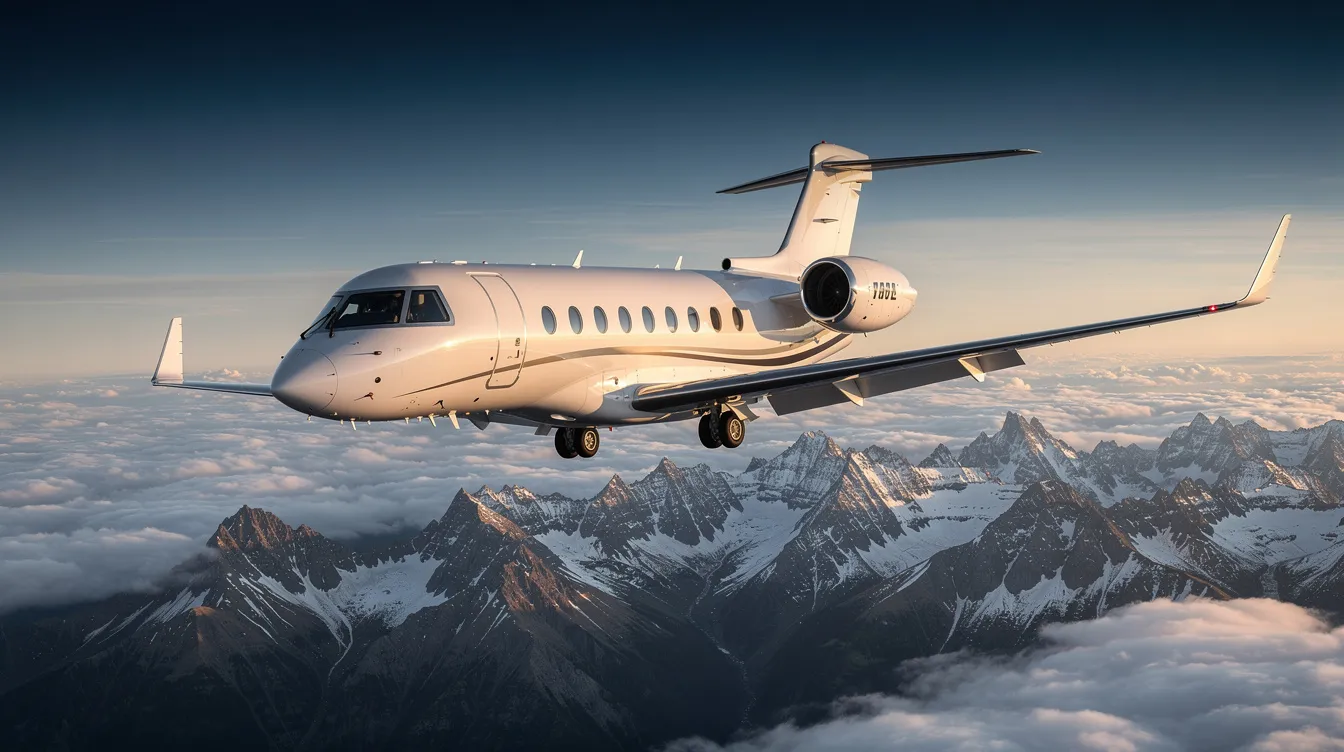
Private Jets for Sale: Where Pakistan-Based Buyers Actually Find Aircraft
The question of how many private jets operate in or for Pakistan matters less than the depth of global inventory. There are 24,270 private jets in operation worldwide, and 581 private jets are currently listed on GlobalAir.com, with average pricing for private jets listed at $10,679,833. The practical pool for Pakistan buyers is global, not local.
Serious buyers typically rely on specialist brokerages like BusinessJets.com, which monitor global listings, off-market opportunities, and time-sensitive sales that rarely appear on public portals. BusinessJets.com uses its history of 1,500+ transactions to benchmark pricing and identify aircraft whose valuation, maintenance status, and pedigree suit Pakistan usage.
A typical Pakistan client engagement looks like this:
Define mission: routes, frequency, passenger count, range requirements
Shortlist aircraft by category, age, budget, and condition
Arrange viewings and inspections at the aircraft's current base
Negotiate price, terms, and delivery through a structured process
Buyers should also consider where the aircraft has been operated and maintained. A jet with a North American or European maintenance history may carry different corrosion risk and avionics compliance status than one based in a humid coastal environment. Explore available aircraft listings to see current inventory.
Valuing a Private Jet for Sale into Pakistan
Accurate aircraft valuation is critical when buying or selling a jet that will operate in or to Pakistan. Currency fluctuations, import duties, and regional demand patterns all shape what a given aircraft is worth to a Pakistani buyer versus a buyer elsewhere. Understanding total ownership costs is vital when purchasing a private jet.
Key valuation inputs include:
Total airframe time and engine cycles: Total airframe time helps assess aircraft utilization history and remaining useful life before major inspections.
Engine program enrollment: Engines enrolled on manufacturer programs (e.g., Rolls-Royce CorporateCare, Pratt & Whitney ESP) significantly affect value.
Interior refurbishment and paint condition: A recent interior refurbishment adds measurable value; deferred cosmetics reduce it.
Avionics status: ADS-B Out compliance, CPDLC capability, and connectivity upgrades (Ka-band, Starlink) are increasingly important.
Known damage history: Any known damage history must be disclosed and is factored into pricing.
Regional demand supports higher values for long-range business jets frequently used on Pakistan–Gulf–Europe routings. Recent G500 market data shows typical transaction prices of $33.7–45 million for that model depending on year and configuration. Annual operating costs for jets can exceed $2M, and fixed costs for midsize jets range from $800K to $1.2M annually-factors that inform what buyers will pay.
Pakistani sellers should request an appraisal before listing to set realistic expectations and avoid extended time-on-market that can stigmatize an aircraft.
End-to-End Acquisition Process for Pakistani Buyers
The aircraft acquisition process typically takes 60 to 120 days from initial brief to closing, even when the aircraft is outside Pakistan. Here are the main stages:
Mission analysis: Define routes, frequency, payload, and passenger count.
Aircraft search and shortlist: Screen global stock by category, condition, and cost.
Preliminary technical screening: Review maintenance history, logbooks, airframe and engine hours.
Offer and letter of intent: A letter of intent typically takes one to two weeks to negotiate.
Pre-purchase inspection: Pre-purchase inspections are crucial when acquiring used jets. Buyers should conduct a pre-buy inspection costing $25,000 to $200,000 depending on aircraft size and scope. Deferred maintenance can cause transaction failures at closing.
Contract negotiation and closing: Payment, documentation transfer, crew setup.
Import and registration: Bringing a private jet into Pakistan requires clearance from the Pakistan Civil Aviation Authority (PCAA). Aircraft registration and import requirements must be met for privately owned aircraft in Pakistan, and aircraft must meet stringent airworthiness and safety standards established by the PCAA.
Aviation tax consultants are advised to navigate customs duties and sales tax implications. Under Pakistan's National Aviation Policy, aircraft and spare parts may qualify for customs duty exemptions under specified conditions. Consultation with specialized local aviation consultants is recommended for dealing with the PCAA on airworthiness certification and operational permits.
Arrange financing or internal capital approvals early to avoid delays once a suitable aircraft is found. BusinessJets.com can coordinate pre-buy inspections at reputable maintenance centers in Europe, North America, or the Middle East.
Selling a Private Jet with a Pakistan Connection
Pakistani owners sometimes hold aircraft through offshore entities or base them abroad, which shapes the best sale strategy. One owner selling through a UAE-based SPV, for example, faces different regulatory and marketing considerations than a locally registered operator.
Key preparatory steps before listing:
Collect complete maintenance records and address open discrepancies
Update cosmetics where cost-effective (paint, carpet, upholstery)
Secure an up-to-date appraisal reflecting global comparables
Confirm all engine and airframe programs are in good standing
Local maintenance facilities for high-end Western or global luxury jets are limited in Pakistan, so sellers should anticipate that buyers will want inspections conducted at recognized MRO centers abroad. Key considerations include operational logistics and maintenance support for private jets throughout the sale process.
Positioning the aircraft near a strong buyer base-Europe, the Middle East, or North America-can shorten time to sale. Marketing messaging should emphasize performance on routes between Pakistan and the Middle East or Asia, any connectivity upgrades, and a refreshed interior. Pakistan-based owners seeking a discreet and efficient sale should engage BusinessJets.com for brokerage, deal structuring, and access to qualified global customers.
Private Flights, Route Patterns, and the Middle East Connection
A large share of private flights linked to Pakistan involve the Middle East-UAE, Saudi Arabia, Qatar, Bahrain-for business, family, and religious travel. South Asia and Central Asia also feature, but the Gulf corridor dominates.
Common routes and their implications:
Route | Approx. Distance | Typical Category |
|---|---|---|
Karachi–Dubai | ~750 nm | Light / Midsize |
Lahore–Riyadh | ~1,600 nm | Midsize / Super-midsize |
Islamabad–Doha | ~1,350 nm | Midsize |
Lahore–London | ~3,700 nm | Large cabin / Ultra-LR |
Karachi–Istanbul | ~2,800 nm | Super-midsize / Large cabin |
Some Pakistani corporates also operate or charter aircraft regularly to London and Kuala Lumpur, requiring higher-performance business jets with comfortable cabins for 6–12 passengers, and occasionally extend their travel to major European hubs such as Paris via long-range private jet charter options. Flying into busy international airports across Europe and Asia demands aircraft with robust dispatch reliability, modern avionics, and operators experienced with overflight permits and slot coordination.
Share your long-term route plans with BusinessJets.com so the recommended aircraft category is aligned with both current and expected future patterns.
How BusinessJets.com Supports Pakistan-Based Clients
BusinessJets.com is an experienced aircraft brokerage and aviation consulting partner for Pakistani owners, buyers, and operators. The firm's services span the full transaction lifecycle.
Core services relevant to this market:
Aircraft acquisition support: Mission matching, global search, inspection coordination, negotiation
Listing and sale of existing jets: Marketing, buyer screening, deal management
Independent aircraft appraisal and valuation: Global comparables, fleet trends, maintenance-adjusted pricing
Operator advisory: Fleet planning, cost modeling, and optimization for clients who operate multiple aircraft
With 1,500+ completed transactions and 5,000+ satisfied clients, BusinessJets.com provides a data-rich foundation for pricing and negotiation across all major business jet manufacturers. The firm operates globally, managing transactions involving aircraft based across continents, and coordinates all technical, legal, and logistical steps for Pakistan-linked deals.
Request an aircraft appraisal, discuss listing a private jet for sale, or schedule a confidential consultation on acquiring a business jet configured for Pakistan and regional missions through BusinessJets.com's services.
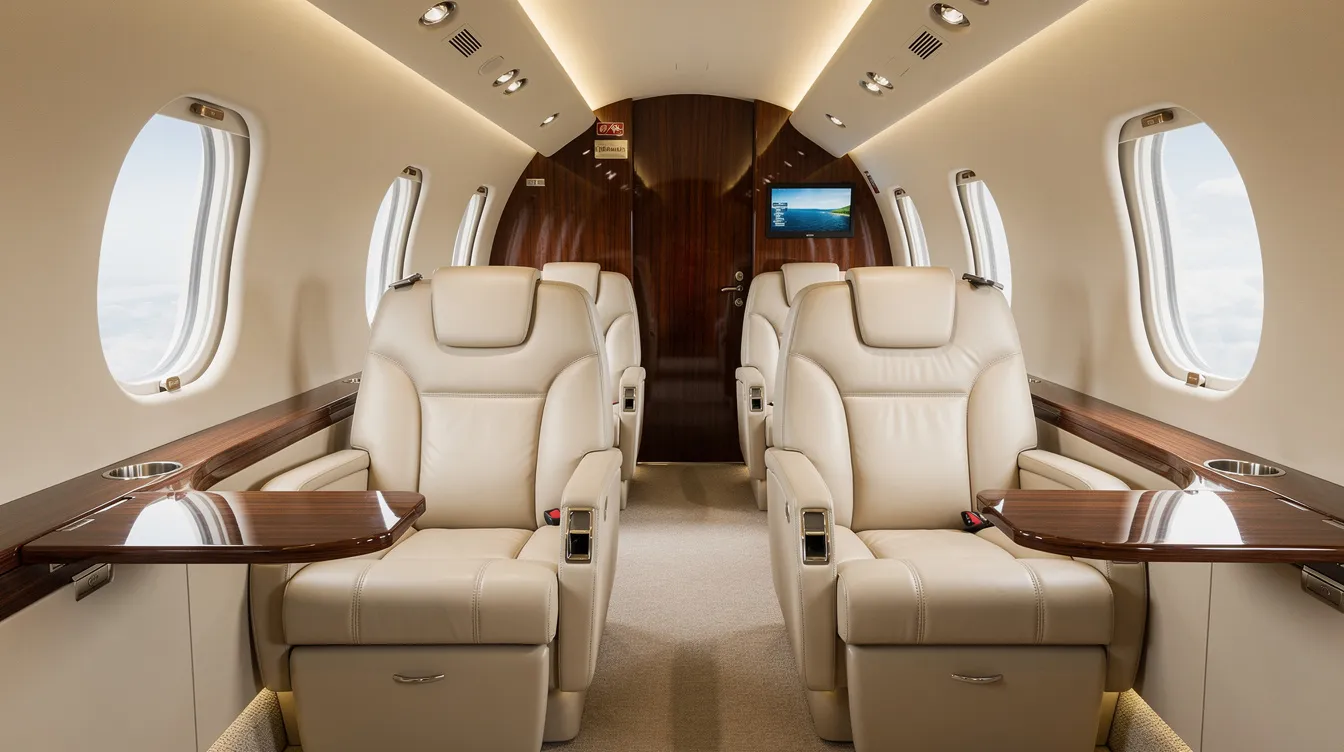
Charter vs. Ownership in Pakistan's Private Jet Market
Chartering remains the dominant model in Pakistan's private jet market, particularly for those flying fewer than 200 hours annually. Charter flights provide flexibility without long-term commitments and cost between $1,000 and $30,000 per hour, depending on aircraft size and route. This approach suits occasional travelers and those preferring operational simplicity without the responsibilities of ownership.
Ownership becomes financially viable for users exceeding 200 to 250 flight hours per year, despite requiring significant upfront purchase costs ranging from $300K to $60M. Annual operating costs for owned jets vary widely, from $500K to over $2 million, with fixed costs for midsize jets alone ranging from $800,000 to $1.2 million. Variable costs for larger jets can reach $4,500 per flight hour. Fractional ownership offers a middle ground, suitable for 200 to 250 annual hours, balancing cost and availability.
Regulatory and Operational Considerations
Bringing a private jet into Pakistan involves regulatory clearance from the Pakistan Civil Aviation Authority (PCAA), including meeting stringent airworthiness and safety standards. Aircraft registration and import requirements must be fulfilled, and aviation tax consultants are often engaged to navigate customs duties and sales tax implications under Pakistan's National Aviation Policy.
Operational logistics and maintenance support are critical factors, especially given the limited local maintenance facilities for high-end Western or global luxury jets. Major international airports like Islamabad International, Jinnah International, and Allama Iqbal International offer dedicated parking and Fixed Base Operator (FBO) services tailored for private jets.
Given the complexity of regulatory compliance, consultation with specialized local aviation consultants is highly recommended to facilitate dealings with the PCAA and ensure smooth importation and operation.
Market Dynamics and Acquisition Process
Dedicated platforms frequently show zero permanent local inventory for private jets in Pakistan, reflecting the niche status of the turbine-powered private jet market. Consequently, many transactions are handled through international brokers who source aircraft globally. Currently, 581 private jets are listed on GlobalAir.com worldwide, with average pricing around $10.68 million.
Private jets access approximately ten times more airports than scheduled airlines, enhancing operational flexibility for Pakistani owners and operators. Popular models such as the Gulfstream G550 and G650 command premium residual values due to their strong global support and fleet size.
The aircraft acquisition process typically spans 60 to 120 days, beginning with mission analysis and aircraft search, followed by technical screening and negotiation of a letter of intent, which usually takes one to two weeks. Pre-purchase inspections, costing between $25,000 and $200,000, are essential to identify maintenance issues, as deferred maintenance can cause transaction failures at closing. Total airframe time is a key metric in assessing aircraft utilization and condition.
Financial and Practical Insights
Understanding total ownership costs is vital. Beyond acquisition, annual fixed costs and variable operating expenses must be carefully modeled to ensure the aircraft fits the intended mission profile and budget. BusinessJets.com offers expert consulting to model these costs accurately.
For sellers, preparing complete maintenance records, addressing cosmetic updates, and obtaining up-to-date appraisals are crucial steps to position the aircraft effectively in the market. Given the limited local maintenance infrastructure, inspections are often arranged at recognized maintenance centers abroad.
BusinessJets.com leverages its extensive transaction history and global network to support Pakistani buyers and sellers, providing tailored brokerage, appraisal, and consulting services to navigate this specialized market efficiently.
Frequently Asked Questions: Private Jet for Sale Pakistan
How many private jets are currently operating in or for Pakistan?
Official registry numbers fluctuate, but there are typically only a few dozen business jets and larger turboprops closely tied to Pakistan, including government, corporate-owned, and privately held aircraft. Many Pakistan-focused owners base aircraft in the UAE or other Middle East hubs for operational efficiency, so practical private jet access is larger than the Pakistan registry alone suggests. Focus on whether global inventory fits your mission rather than the small domestic pool. BusinessJets.com sources aircraft from multiple continents for Pakistan-based clients.
Can I base a newly purchased private jet at Islamabad International Airport or Allama Iqbal International Airport?
From an infrastructure perspective, both Islamabad International Airport and Allama Iqbal International Airport in Lahore can handle modern business jets, including large-cabin and ultra-long-range models. Owners must work with local operators, handling agents, and the Pakistan Civil Aviation Authority to secure parking, hangarage where available, and necessary approvals. BusinessJets.com can coordinate with local partners to evaluate basing options in Pakistan versus positioning the aircraft at a nearby Middle East hub.
Are aircraft like Dassault Falcon or Cessna Citation suitable for Pakistan operations?
Both Dassault Falcon and Cessna Citation families are widely used in hot climates and on regional routes similar to Pakistan–Middle East and domestic sectors. Lighter Cessna Citation models can efficiently handle shorter domestic trips, while larger Falcon variants are well suited to longer-range missions to Europe and Asia. Work with BusinessJets.com to match a specific model to your runway requirements, range needs, and typical passenger loads.
What should a Pakistan-based owner budget annually beyond the purchase price?
Annual operating costs span from the low hundreds of thousands of USD for a light jet to well over $1–2 million for a large-cabin or ultra-long-range jet. Annual fixed costs for midsize jets range from $800,000 to $1.2 million. High-level cost categories include crew salaries, maintenance and inspections, hangarage and parking at international airports, insurance, fuel, navigation and handling fees on international routes, and periodic upgrades. A custom cost model prepared by BusinessJets.com's consulting team, using your actual routes and utilization assumptions, is recommended before committing to ownership.
How do I start if I want to list my private jet for sale with a Pakistan connection?
Contact BusinessJets.com, share aircraft details (make, model, year, serial number, current base, logbook highlights), and request an appraisal and sale strategy discussion. Next steps typically include pricing guidance, marketing plan definition, positioning advice on whether to keep the aircraft in Pakistan or relocate for sale, and agreement on representation terms. BusinessJets.com handles marketing, buyer screening, negotiation, and coordination of pre-buy inspections and closing, helping Pakistan-based owners achieve a discreet and efficient sale. Visit the Aviation Blog for additional market insights and transaction guidance. Visit the Aviation Blog for additional market insights and transaction guidance.
Conclusion
Navigating the private jet market in Pakistan requires a nuanced understanding of global inventory, local regulatory frameworks, and operational realities. With a highly specialized and niche market, Pakistani buyers and sellers benefit from expert guidance to identify suitable aircraft, accurately value assets, and execute transactions efficiently. Whether opting for charter, fractional ownership, or full ownership, aligning aircraft selection with mission needs and total cost considerations is essential.
BusinessJets.com stands ready to support clients across Pakistan and the broader region with comprehensive brokerage, appraisal, and consulting services. Leveraging extensive market data and a proven track record, BusinessJets.com helps ensure informed decisions, optimal pricing, and seamless acquisition or sale processes. For private jet owners, corporate buyers, and fleet managers seeking reliable access to business aircraft tailored to Pakistan’s unique market dynamics, partnering with an experienced aviation consultant is a critical step toward success.
Request an aircraft appraisal or contact BusinessJets.com today to explore tailored solutions for your private jet needs in Pakistan and beyond.