Private Jets Affordable: How to Access, Buy, or Operate Smarter in 2026

Jay Franco Ser
August 26, 2026

In 2026, the question is no longer whether private aviation is accessible-it's how to access it without overspending. With approximately 24,270 private jets in operation worldwide and a growing pre-owned market, the path to flying privately has never offered more options. But "affordable" in private aviation demands more than finding the cheapest private jet on the market. It demands matching the right aircraft, access model, and cost structure to the way you actually fly.

This guide breaks down every realistic avenue-from full private jet ownership to on-demand charter, fractional shares, and empty leg flights-with current pricing, operating cost ranges, and the decision frameworks that separate smart buyers from regretful ones.

Key Takeaways

  • In 2026, "affordable private" means aligning aircraft type and access model (charter, fractional ownership, or full ownership) with your actual annual flight hours and budget. Very light jets and light jets-especially pre-owned models like the Eclipse 500, Cirrus Vision Jet, Citation Mustang, and Phenom 100-represent the most realistic entry points to an affordable private jet.

  • Pre-owned VLJs typically trade between $1M and $2.5M, with annual operating costs for small jets often ranging from $300K to $600K. Private jet rental costs range from $2,300 to $17,000 per hour depending on aircraft category and mission profile. Low-cost private jets offer flexibility in travel schedules and destinations that commercial airlines simply cannot match.

  • The cheapest purchase price is rarely the most affordable option over a 5 6 year ownership horizon. Operating costs, maintenance program enrollment, aircraft age, and utilization rates are the factors that determine whether a private jet is truly economical-or a financial burden.

  • Private aviation includes various cost-effective options such as jet cards, fractional ownership, empty leg flights, and on-demand charter, each suited to different utilization levels and budgets.

  • BusinessJets.com provides independent aircraft brokerage, appraisals, and aviation consulting to help buyers and owners model total cost of ownership, source the right aircraft for sale, and structure cost-efficient access strategies backed by data from 1,500+ transactions.

What "Affordable Private Jets" Really Means in 2026

The media occasionally promotes the idea that anyone earning $200,000 per year can own a private plane. That narrative is misleading. In practice, the threshold where private jet ownership begins to make financial sense depends on net worth, mission profile, and-most critically-expected annual flight hours.

An affordable private jet, defined in business terms, is one whose total cost of ownership (acquisition, operating costs, fixed ownership costs, depreciation, and eventual resale) can be absorbed by the owner's business or personal finances without disproportionate strain. For most buyers, the ownership break-even band falls around 150 250 flight hours per year. Below that, charter or shared models tend to be more efficient.

What drives affordability is rarely the headline purchase price. Operating costs per hour, the aircraft's residual value over a planned ownership period, and how often the aircraft actually flies matter far more. Two-thirds of business jet passengers report increased productivity in-flight-a real economic benefit-but that benefit only pencils out when the total cost structure is sound.

BusinessJets.com focuses on helping corporate buyers, operators, and HNW private jet owners model this total cost of ownership before they commit capital, using real transaction data and current market intelligence rather than promotional estimates.

How to Access Private Jets Affordably: Ownership vs Charter vs Shared Models

Affordable private travel often starts with choosing the right access model, not immediately buying an entire aircraft.

Full private jet ownership suits those flying 200 or more hours per year. It delivers maximum control and availability, but fixed costs-hangar fees, pilot and crew salaries, insurance, and scheduled inspections-continue whether the aircraft flies or sits idle. Annual flight hours often dictate the most economical choice between ownership and alternative models.

On-demand charter is typically the most cost-effective route for those flying under roughly 100 hours per year. On-demand charters have variable pricing and no long-term contracts, making them suitable for infrequent travel. You pay for flight time and crew only when you need them, with zero capital commitment.

Fractional ownership and jet cards occupy the middle ground, generally fitting the 50 150 hours per year range. Fractional ownership allows you to buy a share of a private jet and receive a set number of flight hours, spreading fixed costs across multiple owners. Jet cards function similarly in structure but without conferring ownership interest.

BusinessJets.com can benchmark these options for clients using recent transaction and operating cost data, comparing charter, fractional, and ownership economics against a client's actual flight profile.

Overview of Private Jet Categories and Their Cost Profiles

Private jets span a wide spectrum of capability and cost. Understanding where each aircraft category sits helps buyers avoid over-spending on capability they don't need-or under-buying and facing costly operational compromises.

Category

Seats

Range (nm)

Typical Pre-Owned Price (2026)

Operating Cost per Hour (Approx.)

Very Light Jets (VLJs)

4-6

1,000-1,300

$1M - $2.5M

$800 - $1,600

Light Jets

6-8

1,200-2,000

$2M - $7M

$1,200 - $3,800

Midsize Jets

7-9

2,000-3,000

$4M - $10M

$2,000 - $4,500

Super Midsize Jets

8-10

3,000-4,000

$7M - $15M

$3,000 - $6,000

Large Jets

10-16

3,000+

$8M - $70M+

$5,000 - $10,000+

Ultra Long Range Jets

12-19

4,000+

$15M - $75M+

$7,000 - $15,000+

Lighter aircraft categories are often considered the most realistic path to affordable private aviation for most owner-operators, small corporate flight departments, and private aviation enthusiasts exploring first-time ownership. The very light jet category and light jet category deliver the best balance of capability and cost for the majority of domestic and short international flights.

Very Light Jets (VLJs): The Most Affordable Private Jet Segment

Very light jets are 4 6 seat, typically single-pilot-capable aircraft designed for efficiency and affordability on short regional missions. They represent the most affordable private jets available in 2026 and are increasingly popular due to their lower costs relative to larger business jets.

Pre-owned VLJs generally cost between $1M and $2.5M, with lower fuel burn and simpler systems than anything else in the jet category. Fuel efficiency is a standout advantage: most VLJs burn 80 120 gallons per hour of Jet A, compared to 150 250+ gallons per hour for light jets and far more for midsize or large jets.

Typical VLJ missions include routes like New York to Chicago, Los Angeles to Aspen, or similar regional hops of up to about 1,000 1,200 nm. These are the routes where VLJs excel, connecting city pairs efficiently without requiring a heavy, expensive aircraft.

A significant advantage: private jets access around ten times more airports than commercial airlines, and smaller aircraft like VLJs can operate from regional airports closer to final destinations, saving time on ground transportation. Airport accessibility is a significant advantage of using smaller jets in private aviation and often eliminates the need for long surface transfers that eat into the time savings of a private flight.

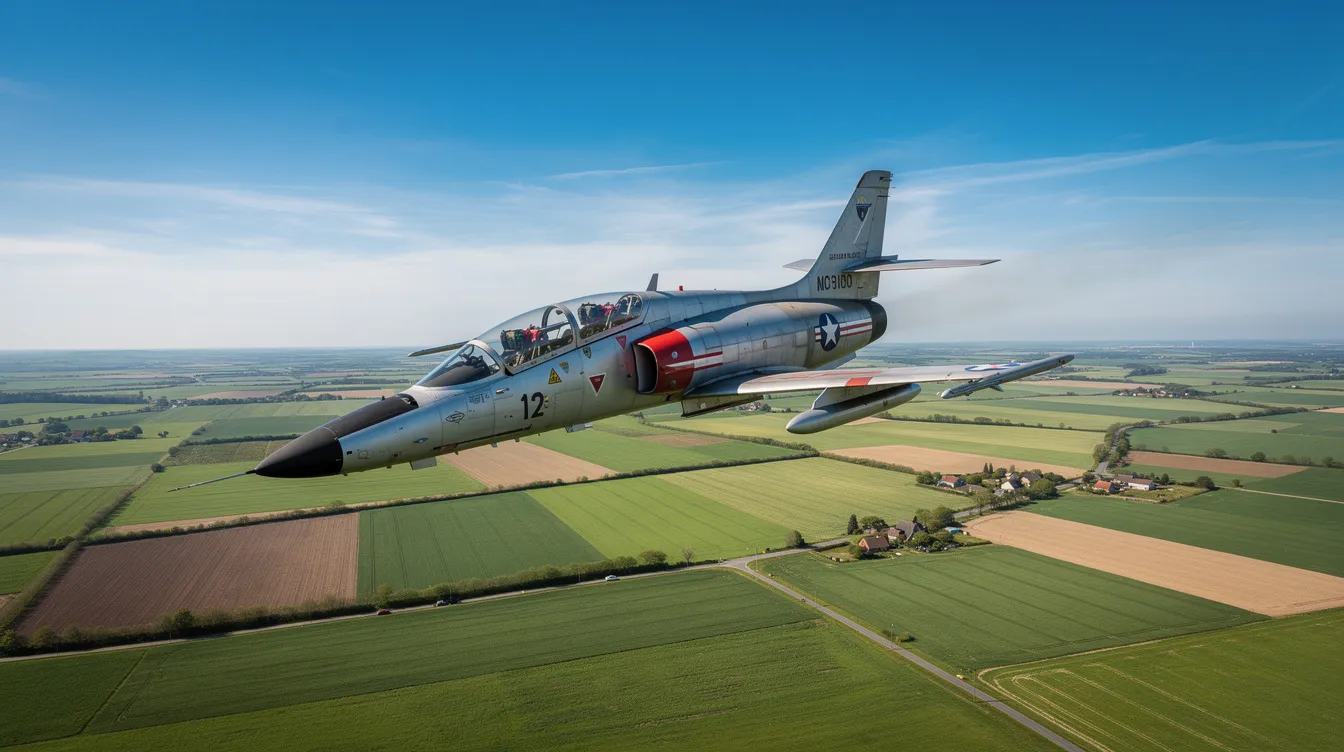
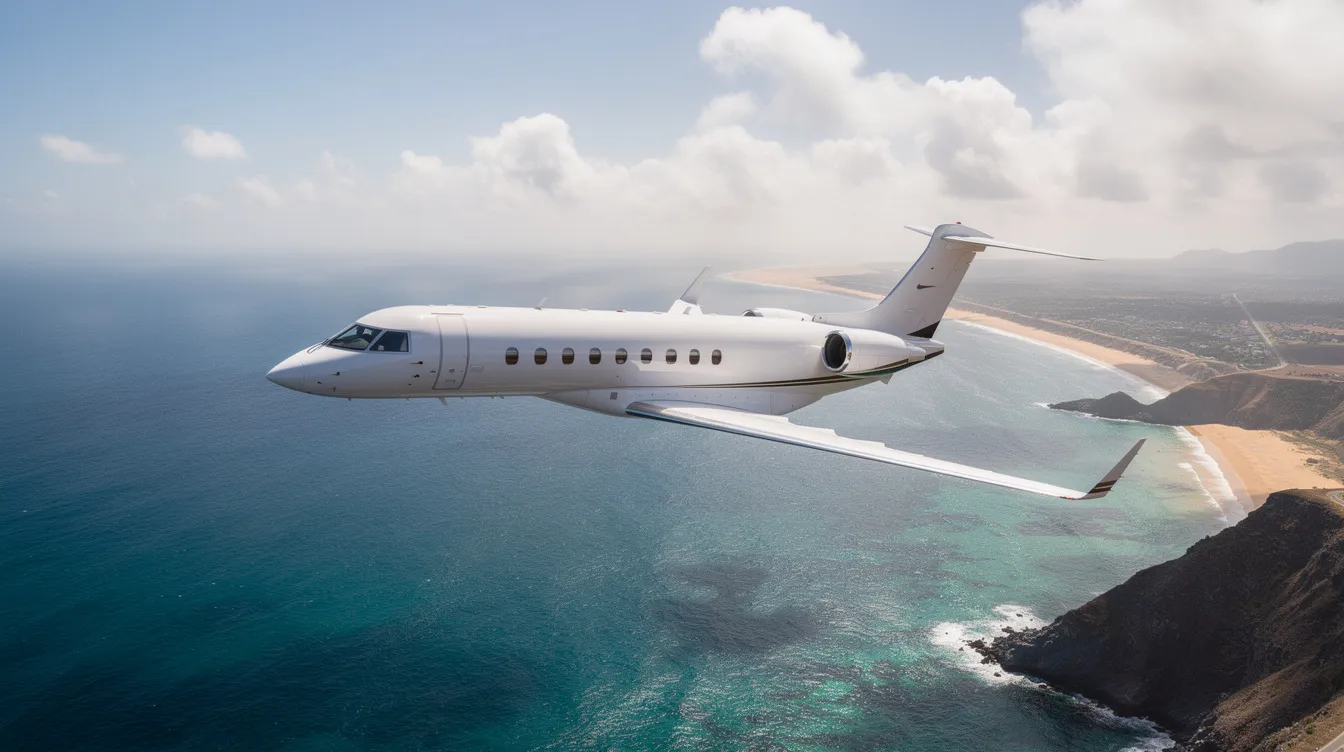
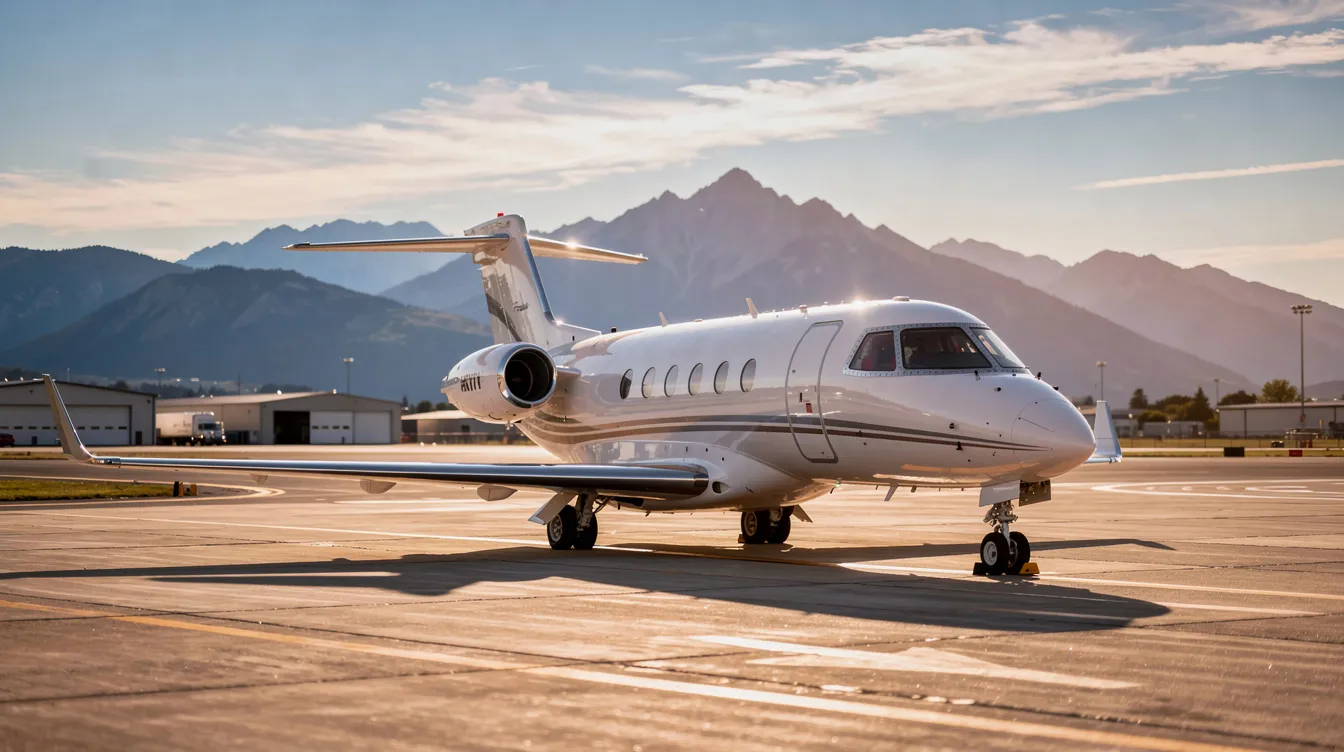
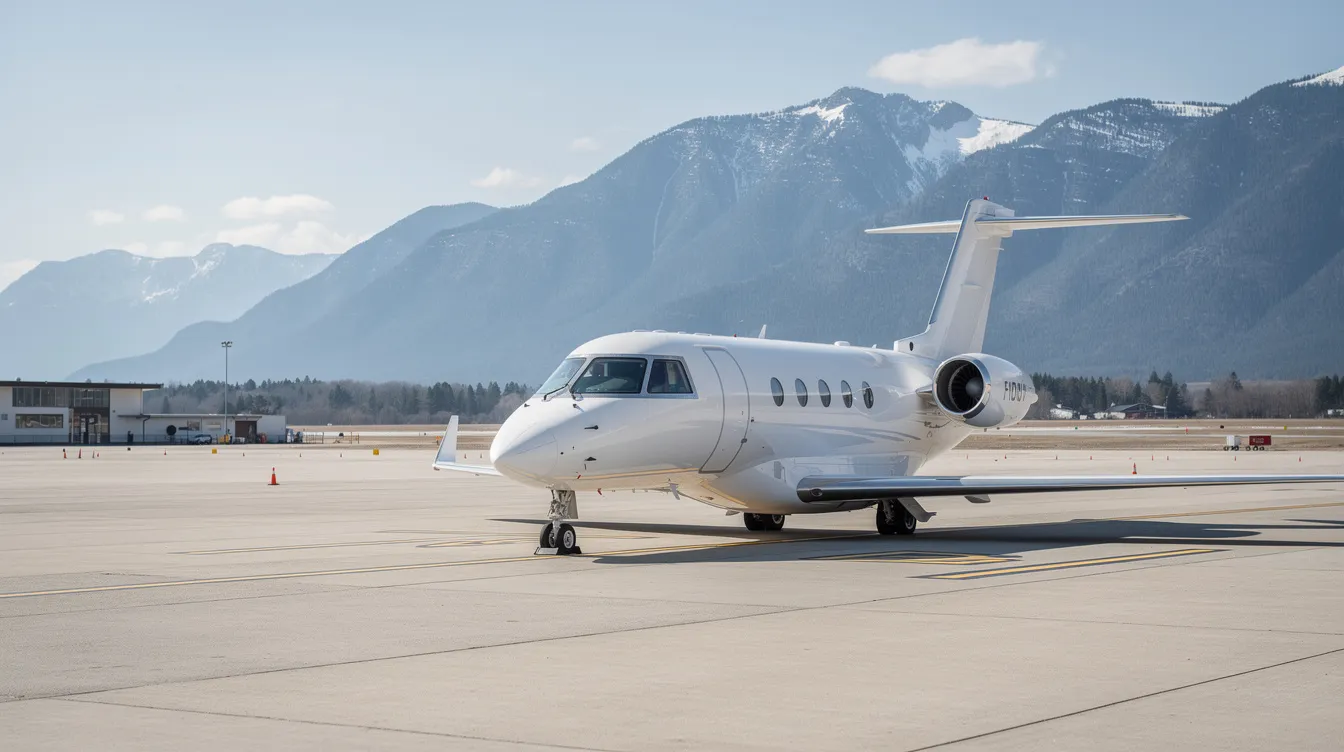
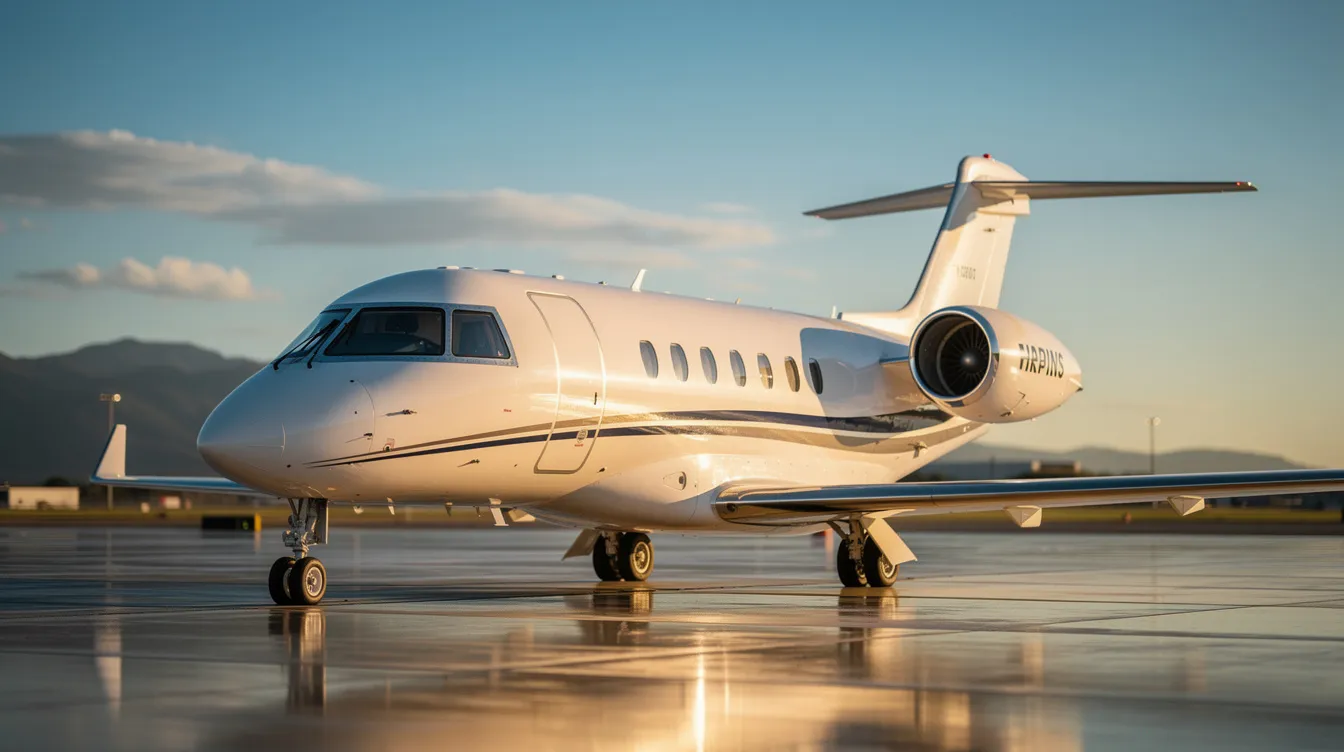
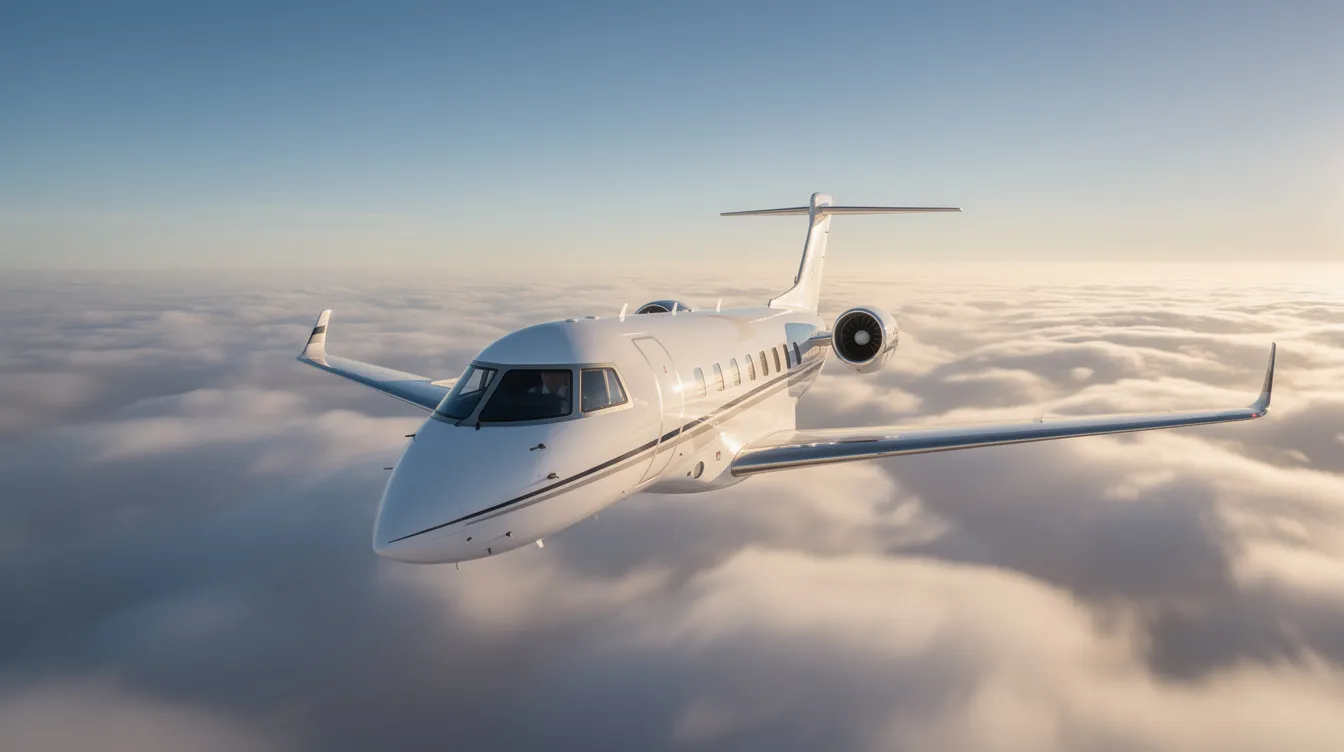
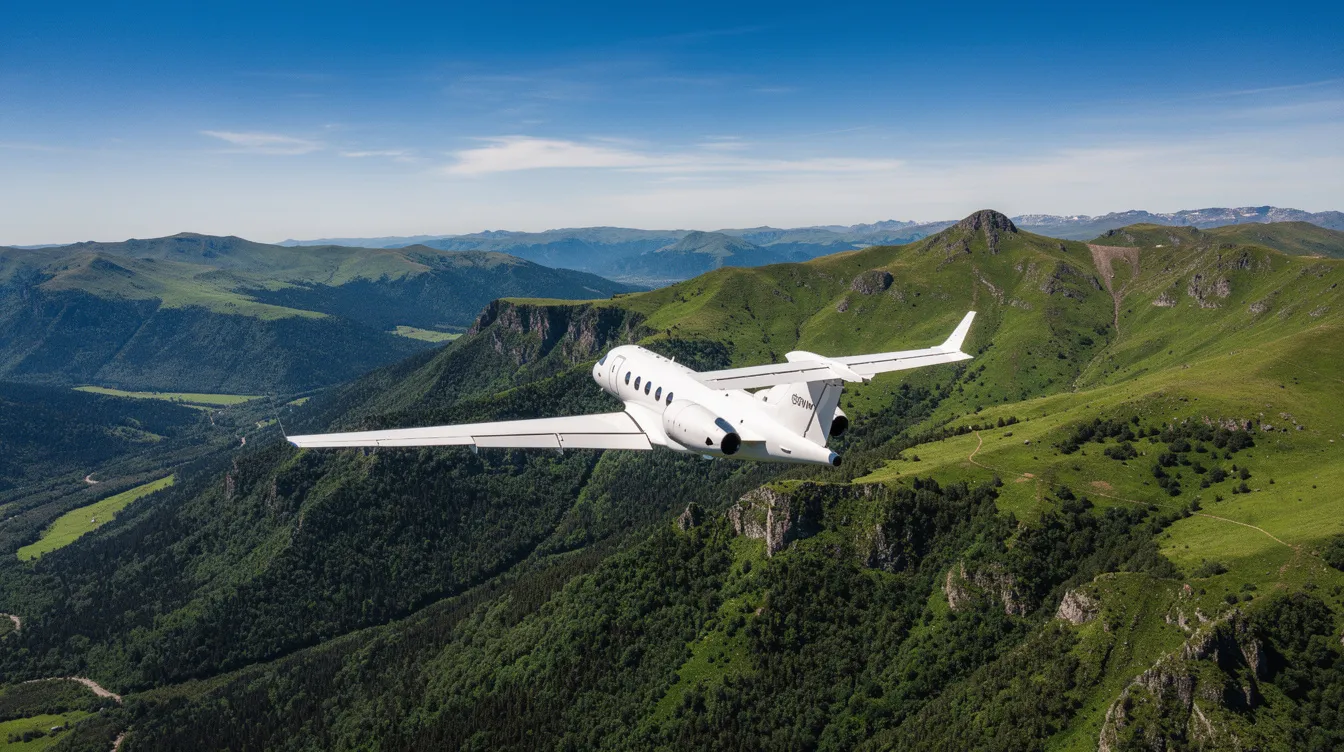
A very light jet soars gracefully over lush green mountains on a clear day, showcasing the beauty of private aviation and the efficiency of economical private jets. The aircraft, part of the very light jet category, exemplifies the modern design and fuel efficiency that appeals to private jet owners and enthusiasts alike.

Light Jets: When You Need More Space but Still Care About Costs

Light jets seat 6 8 passengers and typically offer 1,200 2,000 nm of range, making them ideal for small corporate teams, family travel, or missions where cabin space compared to a VLJ feels too tight. Models like the HondaJet HA-420, which trades in the $3 million to $4 million range pre-owned, straddle the upper boundary of the light jet category with features that blur the line into midsize territory.

Purchase prices for well-used light jets-aircraft 5 to 15 years old-usually fall in the $2M to $7M range depending on model, total hours, and configuration. Operating costs per hour are higher than VLJs, driven by greater fuel burn, more complex maintenance, and in many cases the need for professional crews rather than owner-pilots.

However, light jets may deliver a lower cost per seat-mile when carrying 5 7 passengers compared to running a VLJ with 2 3 people aboard. The math depends on mission specifics.

Many light jets are popular in charter fleets, making them a key affordable private jet choice without owning. For frequent flyers who need a spacious cabin but fly fewer than 150 hours per year, chartering a light jet often makes more sense than purchasing one outright.

Representative Affordable Private Jet Models in 2026

This section profiles specific aircraft models that regularly appear in lists of the most affordable private jets, with current market context for 2026. All prices and operating cost figures are approximate ranges and can vary significantly by serial number, maintenance history, engine program enrollment, and avionics configuration.

Each aircraft model receives its own subsection covering approximate purchase price, range, seating, and operating costs.

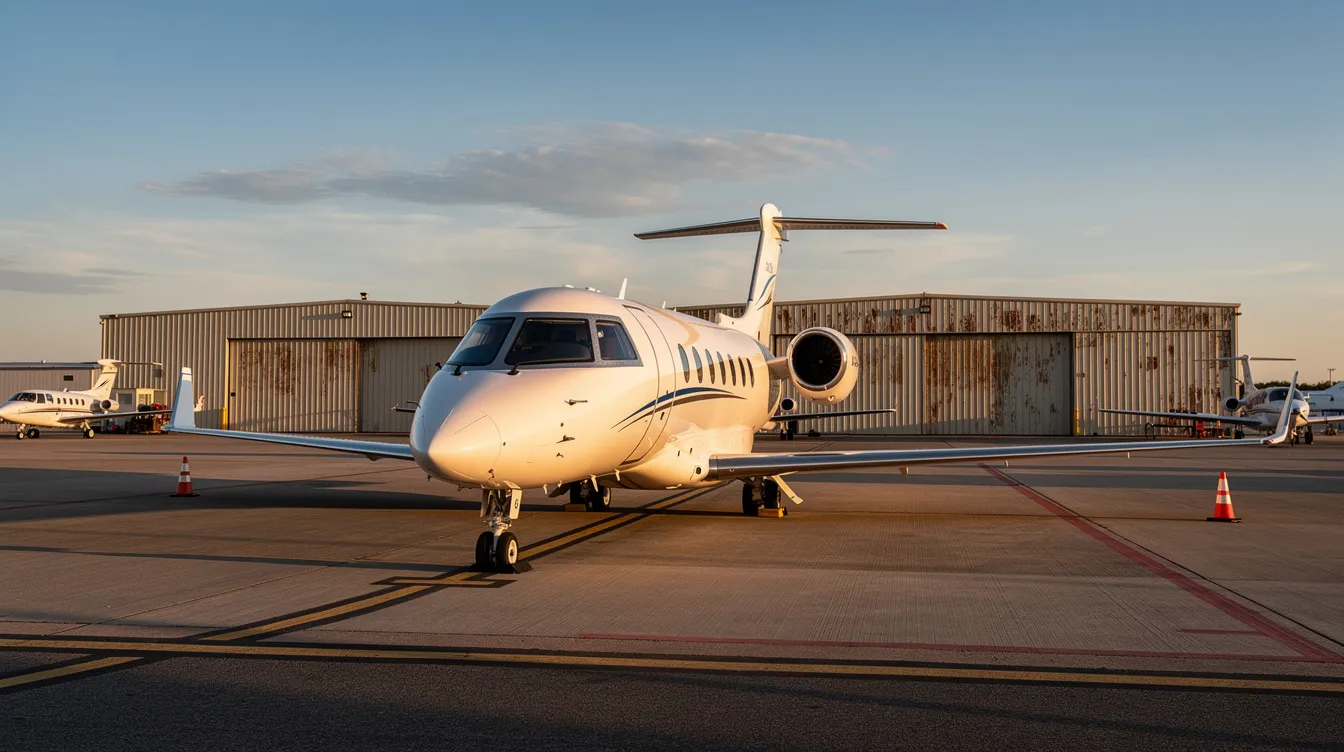
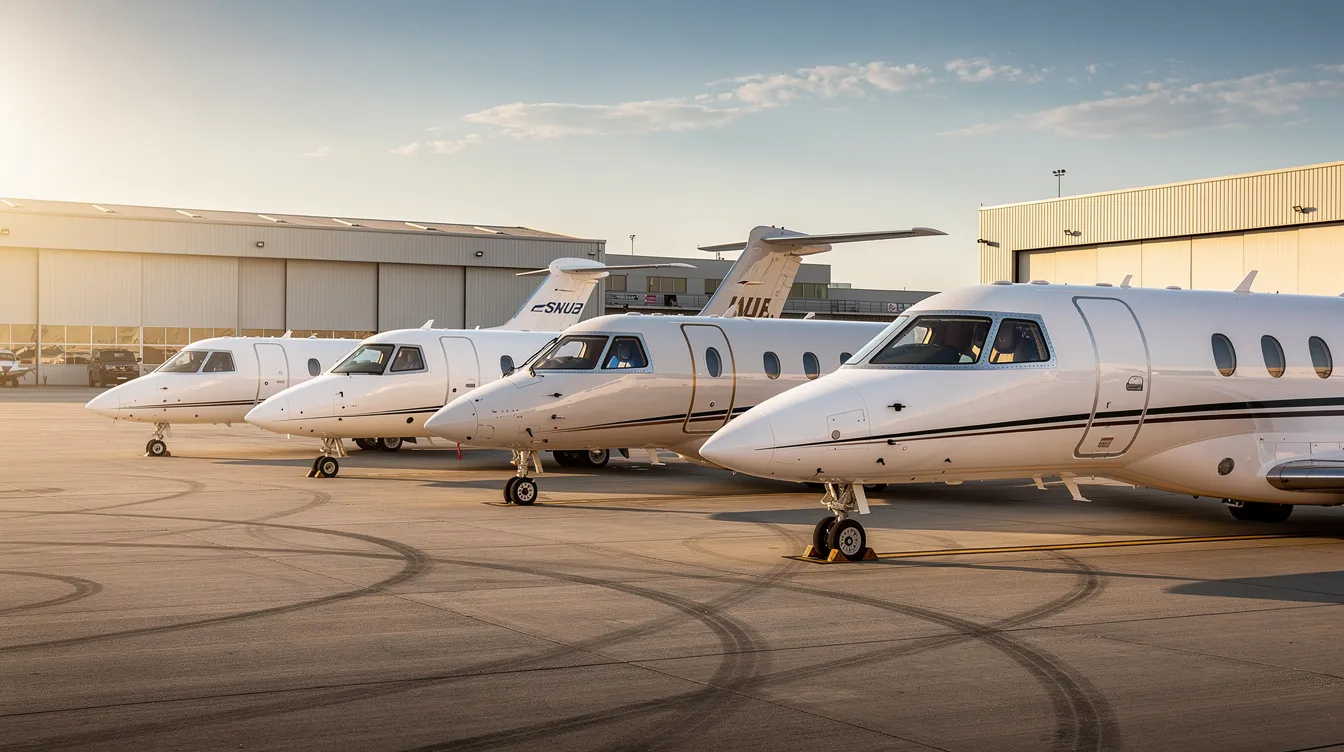
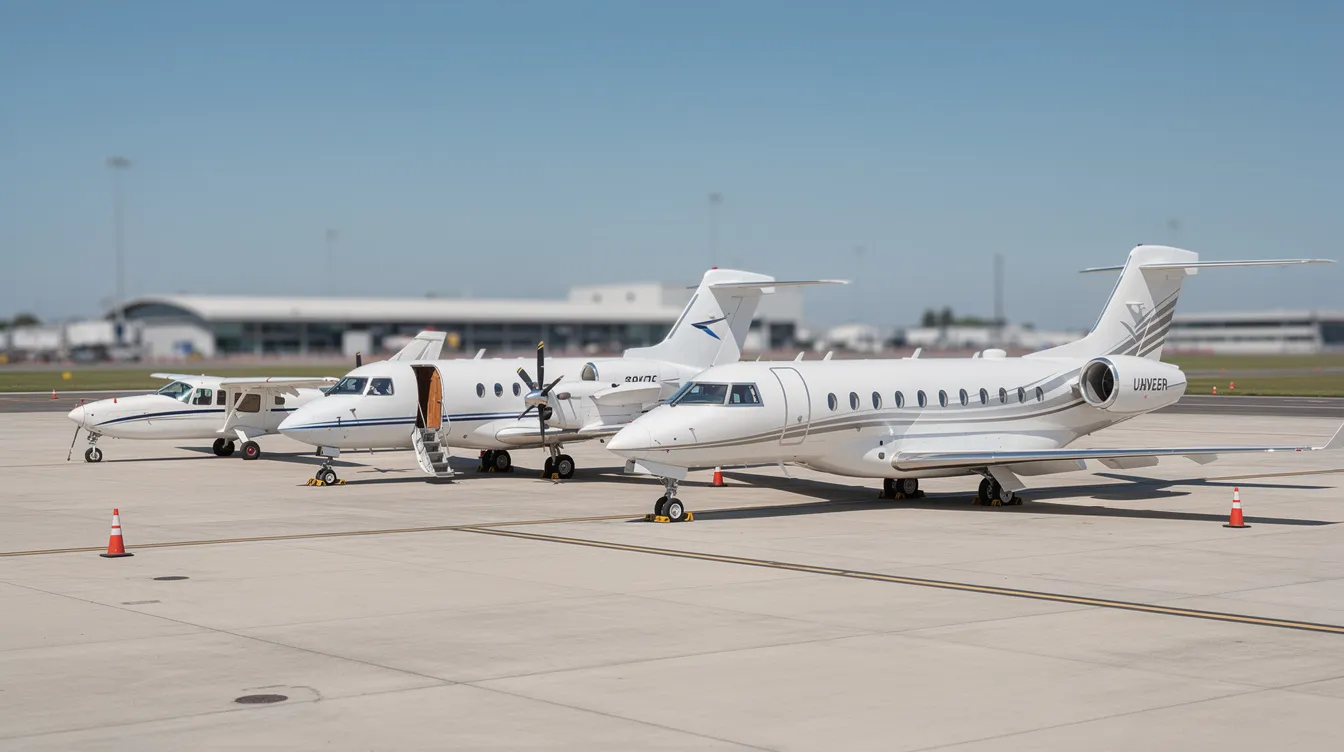
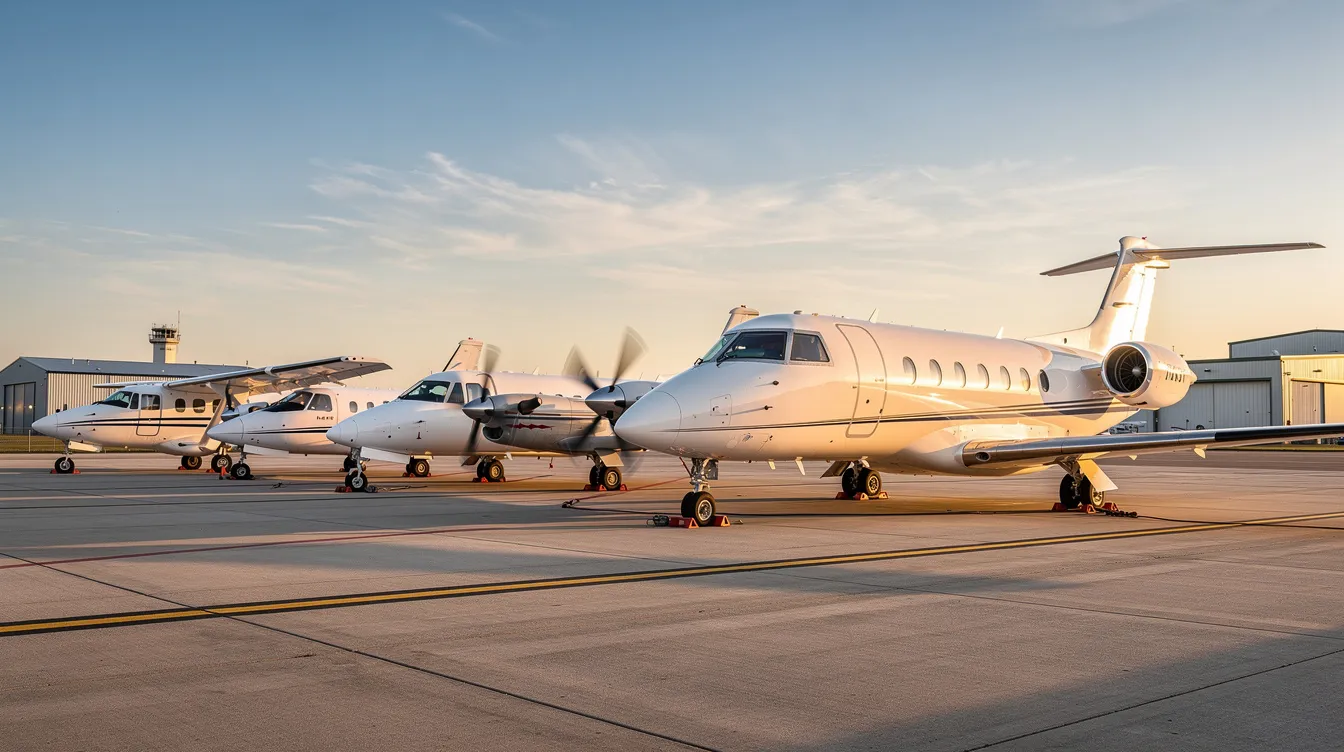
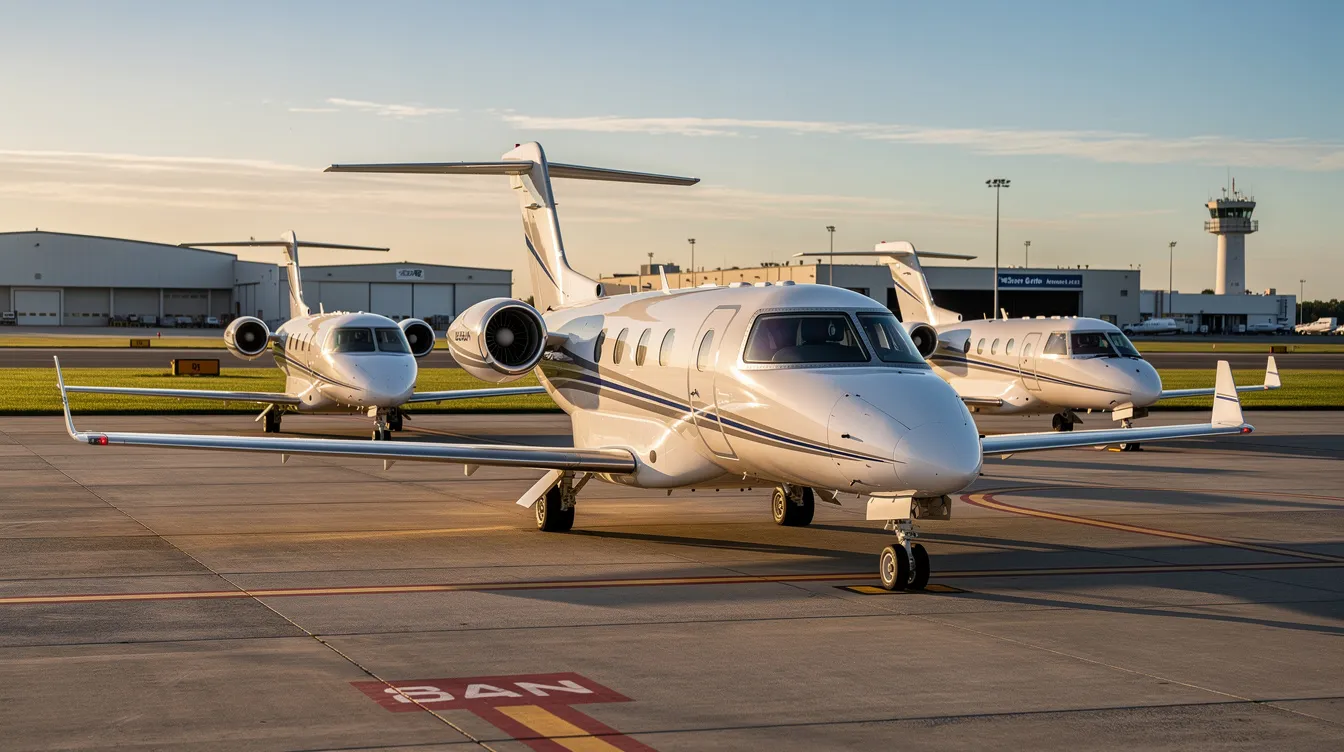
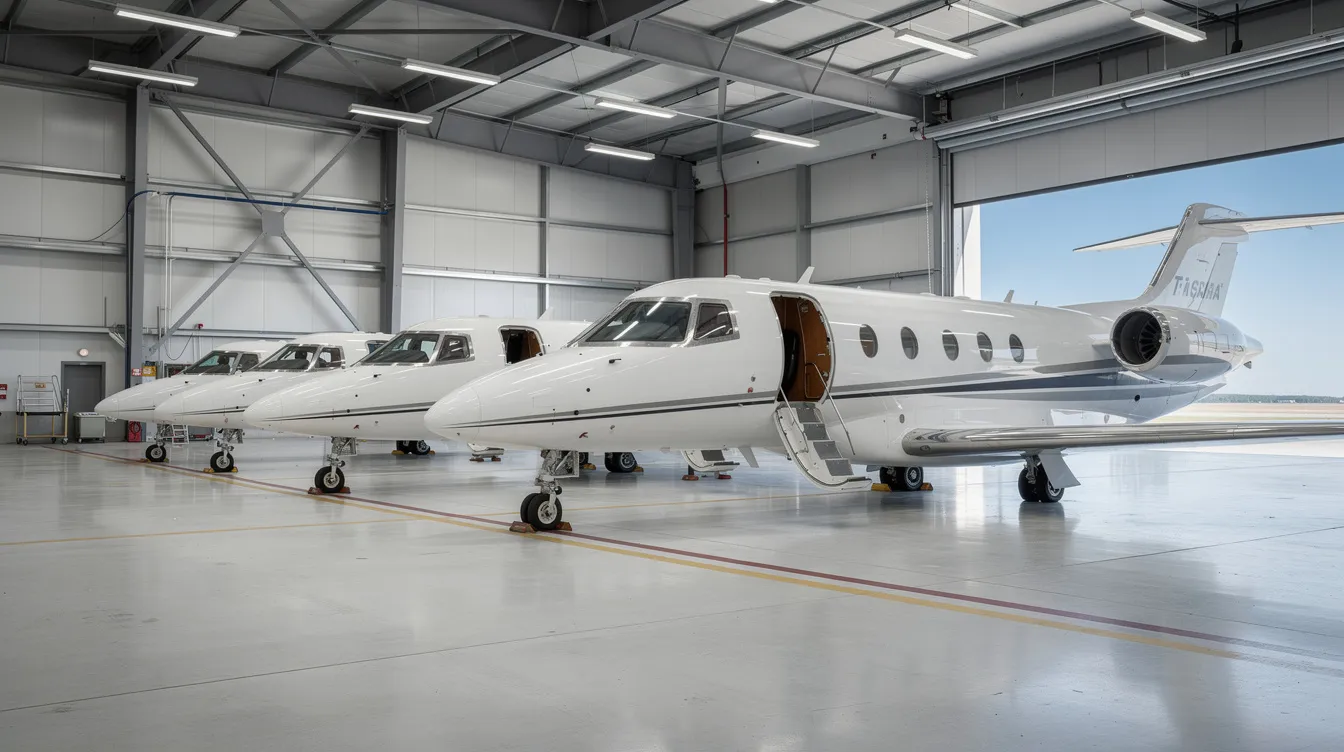
The image shows a row of small business jets, including very light jets and light jets, parked inside a well-lit aircraft hangar, highlighting the appeal of affordable private aviation options for private jet owners. The spacious environment emphasizes the modern design and efficiency of these economical private jets.

Eclipse 500: The Ultra-Budget Very Light Jet

The Eclipse 500 is one of the absolute lowest-purchase-price private jets on the 2026 market. The Eclipse 500 costs $1 million to $1.5 million for maintained examples, making it the entry-level option in the economical private jets segment.

Key specs include 4 5 seats, roughly 1,100 1,200 nm range, and typical operating costs in the $800 1,200 per hour band. The aircraft was designed as an efficient aircraft for point-to-point regional travel, and its twin-engine configuration provides redundancy that single-engine VLJs lack.

Trade-offs are real. The cabin is tight with limited baggage capacity. The fleet is aging, and parts availability for certain components requires careful sourcing. Avionics upgrades-particularly to meet modern avionics standards like ADS-B Out and advanced approach capabilities-can add meaningful cost.

BusinessJets.com can help assess specific Eclipse 500s via detailed appraisals and maintenance record reviews, identifying whether a particular aircraft is a genuine value or a liability waiting to surface.

Cirrus Vision Jet SF50: The Entry-Level Single-Engine Jet

The Cirrus Vision Jet is one of the most affordable brand-new private jets available. The Cirrus Vision Jet costs around $2 million new for early G2 variants, with recent G2+ builds commanding higher prices.

The aircraft seats 5 adults plus 2 children in a comfortable if compact cabin. The Cirrus Vision Jet has a range of 1,200 nautical miles, making it capable of missions like Dallas to Miami or similar medium-length domestic routes. It features advanced avionics from Garmin and a whole-aircraft parachute system-a feature unique in the jet category.

The Vision Jet is ideal for owner-pilots who experience private aviation on regional routes frequently, with manageable operating costs compared to twin-engine jets. Its single Williams FJ33 engine delivers strong fuel efficiency but does require pilots and passengers to accept the single-engine risk profile.

BusinessJets.com can compare late-model pre-owned Vision Jets versus new orders to quantify savings, lead times, and residual value expectations for first-time jet owners considering this aircraft model.

Cessna Citation Mustang: Proven VLJ Workhorse

Cessna Citation Mustang prices range from $1.5 million to $2.5 million in the 2026 pre-owned market for 2008 16 examples, depending on total hours and engine program status.

The Mustang seats 4 passengers in a light but functional cabin, with approximately 1,000 1,150 nm range and single-pilot certification. Its Pratt & Whitney PW615F engines and Garmin G1000 avionics are well-supported, creating a strong ecosystem for parts and service.

Operating costs for the Cessna Citation Mustang are estimated at $1,000 to $1,200 per hour, making it one of the more predictable VLJs from a cost perspective. The type is popular with both charter operators and private owners, and its Textron support network helps maintain cost stability.

When evaluating any Mustang, checking engine program enrollment (such as Williams International programs) and reviewing the full maintenance history is critical. BusinessJets.com routinely performs these assessments during pre-purchase appraisals.

Embraer Phenom 100: Affordable with a Larger-Cabin Feel

The Embraer Phenom 100 typically costs between $1.75 million and $2.5 million pre-owned, with newer Phenom 100EV variants commanding higher prices. The purchase price for a new Embraer Phenom 100 is around $4.5 million, which contextualizes the value available in the pre-owned market.

The Phenom 100 seats up to 6 7 passengers in what many consider the best cabin in the very light jet category, with a range of approximately 1,178 nm, cruise speed near 390 knots, and the modern Prodigy flight deck based on Garmin avionics. Cabin space compared to other VLJs is noticeably more generous.

Hourly operating costs often fall in the $1,200 1,600 band, with good support from Embraer's global service network. BusinessJets.com often sees strong resale demand for well-maintained Phenom 100s with complete records and enrolled engine programs, which aids long-term affordability and exit strategy.

Dassault Falcon 50 (Older Models): Large Jet Capability at Depreciated Prices

Older Dassault Falcon 50 jets can be found for as low as $1 million for 1980s-era airframes, offering an inexpensive entry into large jets. More modern Falcon 50EX variants from the mid-1990s to 2008 trade in the $2.5M to $ 5.5 M range.

The Falcon 50 seats 8 10 passengers with a 3,000+ nm range, good short-field performance, and a tri-jet configuration that provides operational flexibility for international flights and challenging airports. For those who need a longer-range aircraft with a generous cabin, the Falcon 50 can seem compelling at its depreciated purchase price.

However, operating costs are significantly higher than VLJs or light jets. Fuel burn runs roughly 220 340 gallons per hour across three engines, and variable costs can reach $3,750 4,150 per hour. Annual total cost for 200 hours of flying often exceeds $1.2 million when fixed and variable costs are combined.

BusinessJets.com can model whether an older large jet like the Falcon 50 is truly affordable after factoring in engine overhauls, required avionics upgrades, and regulatory compliance-or whether chartering a similar large cabin aircraft for the same missions would prove more economical.

Cost Breakdown: Purchase Price vs Operating Costs vs Ownership Costs

Evaluating an affordable private jet requires separating the initial acquisition cost from ongoing operating and ownership costs. These three cost layers behave differently and must be modeled independently.

Purchase price is the one-time acquisition outlay, heavily influenced by aircraft age, total airframe time, engine program status, and the condition of the cabin and avionics. Pre-owned prices for older jets can depreciate to below $2 million, but a low initial purchase price can mask expensive upcoming maintenance events.

Operating costs are direct expenses incurred per hour flown: fuel, maintenance reserves, engine program contributions, crew costs per trip, and landing and handling fees. These are the costs that scale with utilization.

Ownership costs are the annual fixed expenses that continue regardless of flight hours: hangar fees, insurance, management fees, database subscriptions, and depreciation. For many private jet owners, these fixed costs are the line items that surprise them most in year one.

BusinessJets.com uses real transaction data and current market trends to produce realistic cost-of-ownership models for clients, covering all three layers across a planned 5 10 year ownership horizon.

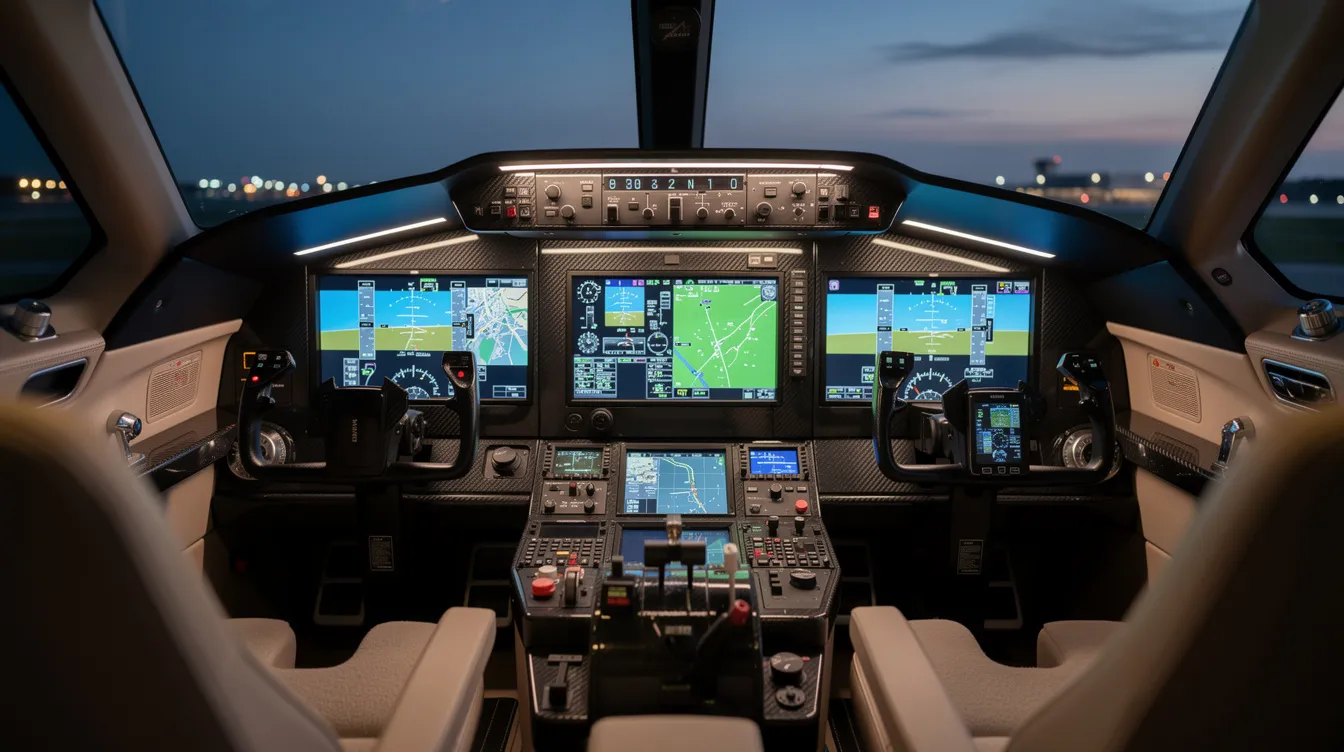
The image depicts a modern private jet cockpit featuring illuminated glass panel avionics displays, showcasing advanced technology used in private aviation. The sleek design emphasizes the sophistication of private jets, making it an ideal setting for experienced pilots and private jet owners.

Operating Costs: What You'll Spend to Fly Each Hour

Operating costs can easily exceed the annual finance payment on an affordable aircraft. For many owners, the hourly cost of flying is the number that determines whether private jet ownership remains sustainable.

The main variable cost components include:

  • Fuel: approximately $300 700 per hour for VLJs and light jets at 2026 Jet A prices ($5 7/gallon depending on location), rising substantially for midsize and large jets

  • Maintenance reserves: contributions to engine overhaul and airframe inspection funds, typically $200 600 per hour depending on program and aircraft type

  • Engine programs: enrollment in programs like JSSI or OEM plans that smooth major overhaul costs into predictable hourly payments

  • Crew expenses: for non-owner-pilots, crew salaries range from roughly $80,000 to $200,000 per year per pilot in 2026, plus training, travel, and benefits

  • Landing and handling fees: variable by airport, but a consistent line item on every trip, plus fuel surcharges and repositioning fees when applicable

Operating costs for ownership can number in the hundreds of thousands of dollars annually, even for small jets. Annual operating costs for a midsize jet can total hundreds of thousands of dollars beyond what light jet and VLJ owners face. BusinessJets.com refines these figures by tail number during an appraisal, replacing industry averages with aircraft-specific estimates.

Ownership Costs: The Fixed Expenses Many New Buyers Underestimate

Hangar fees, insurance premiums, and scheduled inspections continue whether the aircraft flies zero hours or three hundred. These ongoing costs are the silent budget-eaters that catch many first-time jet owners off guard.

Typical annual hangar costs range from roughly $1,000 to $3,000 per month across most U.S. locations, with rates significantly higher at major metropolitan airports and international hubs. Aircraft insurance runs $15,000 to $ 40,000+ annually depending on aircraft value, use profile, and crew qualifications.

Calendar-driven inspections-events triggered by time rather than flight hours-add another layer. Avionics database subscriptions (navigation, terrain, charts) run several thousand dollars per year. Management company fees, if you engage a professional manager for crew staffing, scheduling, and maintenance oversight, typically add $3,000 to $ 6,000 per month.

Depreciation functions as both a cost and a potential tax planning tool. Under current U.S. tax code provisions, accelerated depreciation can offset significant income in early ownership years, but the economics must be coordinated with qualified tax advisors. Federal excise tax obligations on aircraft acquisition also require careful structuring. BusinessJets.com coordinates with client tax and legal advisors when modeling these scenarios to ensure the full financial picture is accurate.

Fractional Ownership and Co-Ownership: Lower Capital, Shared Costs

Fractional ownership involves purchasing a share-typically 1/16, 1/8, or 1/4-of a professionally managed aircraft, with guaranteed flight hours and defined contract terms. Contracts generally span 3 5 years and involve an upfront acquisition fee, monthly management fees, and hourly occupied flight charges.

For buyers whose expected annual flight hours fall in the 50 150 range, fractional ownership can deliver the private jet experience without the full capital exposure of owning an entire aircraft. The trade-off is reduced scheduling control and less flexibility compared to sole ownership.

Co-ownership or private partnerships-where two or three companies or individuals share a VLJ or light jet-offer similar cost-sharing with more customizable governance structures. However, these arrangements require clear agreements on scheduling priority, cost allocation for major inspections, and exit terms.

BusinessJets.com can advise on appropriate share size, aircraft type, and fair value of a fractional or co-ownership interest through independent appraisals, helping all parties start from a defensible baseline.

Charter, Jet Cards, and Empty Legs: Affordable Private Jet Access Without Owning

For many executives, the most affordable private solution is to avoid private jet ownership entirely. Chartering private jets eliminates the costs of ownership and maintenance, converting aviation spending into a purely variable expense.

On-demand charter offers per-trip pricing with broad aircraft choice. In 2026, rates run roughly $2,300 3,500 per hour for turboprop aircraft and VLJs, $3,750 4,600 per hour for light jets, and substantially more for midsize, super midsize jets, and large cabin aircraft. Private jet rental costs range from $2,300 to $17,000 per hour across the full spectrum. Private jet charter pricing can vary widely and should account for hidden fees beyond hourly rates-including fuel surcharges, repositioning fees, overnight crew expenses, and landing fees. Safety ratings and operator certification should always be verified; aircraft operators should hold a valid ARGUS or Wyvern safety rating to confirm high operational safety standards.

Jet cards allow you to pre-purchase flight hours at fixed hourly rates without initiation fees, often removing repositioning fees and fuel surcharges within defined service areas. They suit frequent flyers who want cost predictability without ownership. Booking flexibility in jet charter can lead to lower costs but increases the risk of schedule changes-a trade-off cardholders and charter clients should weigh honestly.

Empty leg flights-deeply discounted repositioning legs when an aircraft is flying without passengers-can offer discounts of up to 75% off standard charter prices. They require flexibility in timing and routing but can make a private flight remarkably affordable for leisure travelers or those with adaptable schedules, including those planning trips to major destinations such as private jet charter to Paris.

Turboprop aircraft are often more economical than jets for short flights under 500 nm, and models like the King Air series offer budget-friendly regional capability with low operating costs for short-haul missions, while larger VIP airliners such as the Airbus ACJ319 private jet serve ultra-high-end, long-range missions at a very different price point.

BusinessJets.com can help operators and owners evaluate whether placing their aircraft on charter with qualified charter operators reduces net ownership costs, or whether clients are better served as charter customers.

Choosing the Right Jet Size for Affordable Missions

Over-sizing the aircraft-flying a large cabin aircraft for a 2-passenger, 500 nm trip-erodes affordability faster than almost any other mistake. Flight distance and passenger count are the key factors in choosing the appropriate aircraft size.

Matching mission profiles to the right category:

  • 2 4 executives on 600 800 nm routes: VLJs or light jets deliver the mission at the lowest total cost

  • 6 8 passengers regularly covering 1,800 2,000 nm: midsize jets provide the range and cabin space without jumping to large jet economics

  • Frequent transatlantic or transpacific missions with 8+ passengers: large jets or ultra-long-range aircraft become necessary, and the cost premium is justified by time savings and capability

Smaller aircraft can access regional airports closer to destinations, providing time savings on ground transportation that passengers on scheduled airlines simply cannot achieve.

The most productive first step is documenting 12 24 months of planned missions-trip length, frequency, destinations, and passenger counts-and letting an independent advisor run a mission-profile analysis across aircraft categories. BusinessJets.com routinely performs this analysis for clients considering their first or next aircraft.

Pre-Owned vs New: Finding Value in the Current Aircraft Market

In 2026, most affordable private jet strategies center on high-quality pre-owned aircraft. Pre-owned private jet prices have doubled in recent years across several categories, driven by supply constraints and sustained demand, but well-priced opportunities remain-particularly in the VLJ and light jet segments where the total number of available aircraft continues to grow. Global Jet Capital's market outlook projects the VLJ slice of the pre-owned market increasing to approximately 21.4% by 2026.

New aircraft offer the latest technology, full warranty, and custom specification-but at a significantly higher initial purchase price and steeper early depreciation. A new Phenom 100EV, for example, costs roughly $4.5M versus $1.75M to $ 2.5 M for a well-maintained pre-owned example.

The sweet spot for value frequently lies in 8- to 15-year-old VLJs and light jets with clean maintenance records, up-to-date avionics, and enrolled engine programs. Pre-owned prices for older jets can drop below $2 million in this segment, placing private jet ownership within reach of a much broader buyer pool.

BusinessJets.com uses market intelligence from 1,500+ transactions to benchmark asking prices and negotiate fair deals on behalf of buyers, ensuring clients pay market-appropriate prices for the aircraft they acquire. Explore current aircraft for sale listings to see what's available.

How Aircraft Valuation and Appraisals Protect Your Budget

Paying too much up front-or underestimating upcoming maintenance-can quickly make an otherwise affordable aircraft unsustainable. A professional private jet appraisal is the single most effective safeguard against both risks.

A thorough appraisal includes market comparables, detailed maintenance status review, engine program valuation, upcoming inspection costs, avionics upgrade requirements, and cabin condition assessment. It examines logbooks, maintenance tracking systems, and damage or incident history for any aircraft under consideration.

For sellers, an independent appraisal defends the asking price with data. For buyers, it identifies hidden costs and provides negotiating leverage.

BusinessJets.com's appraisal and valuation services support both sides of a transaction, helping buyers and sellers defend pricing and plan capital expenditures. To start the process, request an aircraft appraisal before engaging with any seller.

Controlling Operating Costs Over the Life of the Aircraft

Buying the right jet is only the first step. Disciplined cost control through the ownership period is what makes affordable private jet ownership sustainable over five, ten, or more years.

Key tactics include:

  • Negotiating hangar and maintenance contracts competitively, especially in markets with multiple FBO options

  • Enrolling in appropriate engine and parts programs early to avoid unbudgeted overhaul events

  • Optimizing routing to minimize repositioning and reduce unnecessary cycles on the airframe

  • Using an efficient aircraft management company for crew staffing, scheduling, and maintenance oversight-services that typically cost $3,000 6,000 per month but can prevent far more expensive oversights

BusinessJets.com provides consulting to benchmark a client's operating costs against peer operators and identify specific savings opportunities. Explore comprehensive aviation services for details on how this advisory works in practice.

When Large or Ultra Long Range Jets Can Still Be "Affordable"

Large jets and ultra long range aircraft like the Gulfstream G600 or Bombardier Global 6000 are rarely "cheap" by any measure, but they can be economically justified in specific scenarios.

Multinational corporations flying frequent intercontinental routes-where per-seat cost and time savings relative to commercial airlines compound over dozens of annual round-trip missions- can find that the total cost of a large jet is offset by productivity gains and logistical simplification.

Some older large jets trade at relatively low purchase prices ($5M 10M or even less), but their operating costs and upcoming capital events (engine overhauls, structural inspections, avionics mandates) must be modeled carefully. The annual budget for operating a large or ultra-long-range jet at 200 300 hours per year routinely exceeds $2 million.

BusinessJets.com regularly advises fleet managers on whether to retain, upgrade, or replace large jets based on current market values, operating cost trajectories, and the client's evolving mission profile.

Case Scenarios: What Level of Access Fits Different Annual Budgets?

Connecting budgets and flight hours to suitable solutions requires specifics, not generalizations. Here are three representative scenarios.

Scenario 1: Small business, 40 60 hours per year, domestic legs of 1 3 hours. This profile points toward on-demand charter on very light jets or turboprop aircraft as the most affordable solution. Ownership at this utilization level means paying fixed costs on an aircraft that sits idle most of the year. Charter keeps spending purely variable, and empty leg availability on common routes can reduce costs further.

Scenario 2: Regional firm, 120 180 hours per year, 4 6 executives, 800 1,500 nm routes. This utilization level sits at the crossover point. A pre-owned light jet (such as a Phenom 100 or Citation CJ3) may pencil out against chartering when total cost is modeled over 5 years, especially if the aircraft can be managed efficiently. Selective charter of midsize jets for occasional longer missions fills capability gaps without requiring a larger, more expensive owned aircraft.

Scenario 3: Global company, 300 400+ hours per year, regular transatlantic and cross-continental missions. At this volume, a large or ultra-long-range jet can be justified financially, possibly complemented by charter or fractional lift for overflow periods or routes where the primary aircraft is in maintenance. The key is realistic modeling of all costs-not aspirational projections.

BusinessJets.com can turn these high-level scenarios into detailed financial models tailored to specific clients, comparing multiple aircraft types and access models side by side.

How BusinessJets.com Helps You Find and Maintain an Affordable Private Jet Strategy

BusinessJets.com operates as an independent aircraft brokerage and aviation consulting partner-not a single-solution provider pushing one aircraft or access model.

Core services include sourcing and listing private jets for sale, performing aircraft appraisals and valuations, and advising on acquisition, disposal, and fleet strategy. The firm's track record spans 1,500+ aircraft transactions and 5,000+ satisfied customers in operation worldwide, providing a depth of market insight that underpins every recommendation.

Whether you're a first time jet owner exploring your first affordable private jet or an experienced operator optimizing fleet mix and timing market cycles, BusinessJets.com supports the full decision lifecycle-from initial mission analysis through acquisition, ongoing cost management, and eventual resale.

Ready to take the next step? Request an aircraft appraisal, explore current aircraft for sale, or engage BusinessJets.com for a private jet service consultation before committing to your next aircraft decision.

Frequently Asked Questions About Affordable Private Jets

Below are answers to questions that come up frequently among buyers and operators evaluating affordable private jet options in 2026.

Can a $2 million budget really buy a usable private jet in 2026?

Yes. A $2M budget can typically secure a well-maintained VLJ or early-model light jet-examples include the Eclipse 500, an older Cirrus Vision Jet, an early Citation Mustang, or a Phenom 100 with moderate hours. However, buyers must also budget several hundred thousand dollars per year for operating and ownership costs beyond the purchase price. A professional appraisal and pre-purchase inspection are essential to avoid aircraft with deferred maintenance or expensive upcoming inspections that would push the total cost well beyond budget.

Is it cheaper to buy a very light jet or to keep chartering light jets?

For under roughly 150 100 flight hours per year, chartering or using a jet card is usually more economical once total ownership costs-hangar, insurance, crew, maintenance, depreciation-are included. Above that utilization threshold, ownership can become cheaper per hour, but only if the aircraft is carefully selected and well-managed. BusinessJets.com can prepare side-by-side models comparing charter, fractional ownership, and full ownership for a client's actual flight profile and geography.

How risky is it to buy an older "cheap" large jet like a Falcon 50 or Learjet 60?

While acquisition prices for these older jets can be surprisingly low, the risk lies in higher fuel burn, major upcoming inspections, avionics upgrade requirements, and potential parts obsolescence. Buyers should only proceed with full transparency on engine status, maintenance program enrollment, and regulatory compliance upgrades-ideally with independent advisory support. BusinessJets.com routinely evaluates these opportunities and may recommend chartering similar large jets instead if total projected costs exceed the client's budget.

Can chartering out my jet make ownership truly affordable?

Placing an aircraft on charter can offset a portion of fixed costs, but it rarely turns a jet into a profit center after factoring in additional wear, engine cycles, management fees, and the private jet service standards expected by charter clients. The economics vary significantly by aircraft type, aircraft age, home base location, and regional charter demand. Realistic modeling-rather than optimistic revenue projections-is essential. BusinessJets.com can help owners evaluate charter potential and structure a strategy that balances revenue generation with asset preservation.

What is the first step if I want to explore affordable private jet ownership?

Start by documenting your last 12 to 24 months of flying-or realistic projections-in terms of trip length, frequency, destinations, and passenger counts. Then engage an independent advisor such as BusinessJets.com to translate that mission profile into aircraft options, cost models, and a shortlist of suitable jets for appraisal. Taking this step before contacting sellers helps you avoid overpaying or choosing an aircraft that doesn't match your long-term needs. Request an initial consultation to begin the process.

Conclusion: Making Private Jets Affordable and Accessible in 2026

Affordable private jets in 2026 are not about simply finding the lowest sticker price but about aligning your travel needs, budget, and access model to achieve real value. Whether through ownership, fractional shares, jet cards, or on-demand charter, the key advantages of flying private�9flexibility, privacy, productivity, and access to smaller airports�9can be realized without overspending.

BusinessJets.com offers expert guidance backed by extensive market data and transaction experience to help you navigate the complexities of aircraft acquisition, valuation, and ongoing cost management. By focusing on realistic mission profiles and total cost of ownership, buyers and operators can avoid common pitfalls and ensure their private aviation strategy delivers practical benefits and sustainable affordability.

Explore your options with a trusted partner who understands the nuances of the market and can tailor solutions to your unique requirements. Whether you seek to buy, sell, or optimize your private jet usage, BusinessJets.com stands ready to support your journey toward smarter, more affordable private aviation.

Take the next step: Request an aircraft appraisal, browse current aircraft for sale, or contact BusinessJets.com for personalized aviation consulting today.

Private Jets Affordable: How to Access, Buy, or Operate Smarter in 2026
Jay Franco Ser

In 2026, the question is no longer whether private aviation is accessible-it's how to access it without overspending. With approximately 24,270 private jets in operation worldwide and a growing pre-owned market, the path to flying privately has never offered more options. But "affordable" in private aviation demands more than finding the cheapest private jet on the market. It demands matching the right aircraft, access model, and cost structure to the way you actually fly.

This guide breaks down every realistic avenue-from full private jet ownership to on-demand charter, fractional shares, and empty leg flights-with current pricing, operating cost ranges, and the decision frameworks that separate smart buyers from regretful ones.

Key Takeaways

  • In 2026, "affordable private" means aligning aircraft type and access model (charter, fractional ownership, or full ownership) with your actual annual flight hours and budget. Very light jets and light jets-especially pre-owned models like the Eclipse 500, Cirrus Vision Jet, Citation Mustang, and Phenom 100-represent the most realistic entry points to an affordable private jet.

  • Pre-owned VLJs typically trade between $1M and $2.5M, with annual operating costs for small jets often ranging from $300K to $600K. Private jet rental costs range from $2,300 to $17,000 per hour depending on aircraft category and mission profile. Low-cost private jets offer flexibility in travel schedules and destinations that commercial airlines simply cannot match.

  • The cheapest purchase price is rarely the most affordable option over a 5 6 year ownership horizon. Operating costs, maintenance program enrollment, aircraft age, and utilization rates are the factors that determine whether a private jet is truly economical-or a financial burden.

  • Private aviation includes various cost-effective options such as jet cards, fractional ownership, empty leg flights, and on-demand charter, each suited to different utilization levels and budgets.

  • BusinessJets.com provides independent aircraft brokerage, appraisals, and aviation consulting to help buyers and owners model total cost of ownership, source the right aircraft for sale, and structure cost-efficient access strategies backed by data from 1,500+ transactions.

What "Affordable Private Jets" Really Means in 2026

The media occasionally promotes the idea that anyone earning $200,000 per year can own a private plane. That narrative is misleading. In practice, the threshold where private jet ownership begins to make financial sense depends on net worth, mission profile, and-most critically-expected annual flight hours.

An affordable private jet, defined in business terms, is one whose total cost of ownership (acquisition, operating costs, fixed ownership costs, depreciation, and eventual resale) can be absorbed by the owner's business or personal finances without disproportionate strain. For most buyers, the ownership break-even band falls around 150 250 flight hours per year. Below that, charter or shared models tend to be more efficient.

What drives affordability is rarely the headline purchase price. Operating costs per hour, the aircraft's residual value over a planned ownership period, and how often the aircraft actually flies matter far more. Two-thirds of business jet passengers report increased productivity in-flight-a real economic benefit-but that benefit only pencils out when the total cost structure is sound.

BusinessJets.com focuses on helping corporate buyers, operators, and HNW private jet owners model this total cost of ownership before they commit capital, using real transaction data and current market intelligence rather than promotional estimates.

How to Access Private Jets Affordably: Ownership vs Charter vs Shared Models

Affordable private travel often starts with choosing the right access model, not immediately buying an entire aircraft.

Full private jet ownership suits those flying 200 or more hours per year. It delivers maximum control and availability, but fixed costs-hangar fees, pilot and crew salaries, insurance, and scheduled inspections-continue whether the aircraft flies or sits idle. Annual flight hours often dictate the most economical choice between ownership and alternative models.

On-demand charter is typically the most cost-effective route for those flying under roughly 100 hours per year. On-demand charters have variable pricing and no long-term contracts, making them suitable for infrequent travel. You pay for flight time and crew only when you need them, with zero capital commitment.

Fractional ownership and jet cards occupy the middle ground, generally fitting the 50 150 hours per year range. Fractional ownership allows you to buy a share of a private jet and receive a set number of flight hours, spreading fixed costs across multiple owners. Jet cards function similarly in structure but without conferring ownership interest.

BusinessJets.com can benchmark these options for clients using recent transaction and operating cost data, comparing charter, fractional, and ownership economics against a client's actual flight profile.

Overview of Private Jet Categories and Their Cost Profiles

Private jets span a wide spectrum of capability and cost. Understanding where each aircraft category sits helps buyers avoid over-spending on capability they don't need-or under-buying and facing costly operational compromises.

Category

Seats

Range (nm)

Typical Pre-Owned Price (2026)

Operating Cost per Hour (Approx.)

Very Light Jets (VLJs)

4-6

1,000-1,300

$1M - $2.5M

$800 - $1,600

Light Jets

6-8

1,200-2,000

$2M - $7M

$1,200 - $3,800

Midsize Jets

7-9

2,000-3,000

$4M - $10M

$2,000 - $4,500

Super Midsize Jets

8-10

3,000-4,000

$7M - $15M

$3,000 - $6,000

Large Jets

10-16

3,000+

$8M - $70M+

$5,000 - $10,000+

Ultra Long Range Jets

12-19

4,000+

$15M - $75M+

$7,000 - $15,000+

Lighter aircraft categories are often considered the most realistic path to affordable private aviation for most owner-operators, small corporate flight departments, and private aviation enthusiasts exploring first-time ownership. The very light jet category and light jet category deliver the best balance of capability and cost for the majority of domestic and short international flights.

Very Light Jets (VLJs): The Most Affordable Private Jet Segment

Very light jets are 4 6 seat, typically single-pilot-capable aircraft designed for efficiency and affordability on short regional missions. They represent the most affordable private jets available in 2026 and are increasingly popular due to their lower costs relative to larger business jets.

Pre-owned VLJs generally cost between $1M and $2.5M, with lower fuel burn and simpler systems than anything else in the jet category. Fuel efficiency is a standout advantage: most VLJs burn 80 120 gallons per hour of Jet A, compared to 150 250+ gallons per hour for light jets and far more for midsize or large jets.

Typical VLJ missions include routes like New York to Chicago, Los Angeles to Aspen, or similar regional hops of up to about 1,000 1,200 nm. These are the routes where VLJs excel, connecting city pairs efficiently without requiring a heavy, expensive aircraft.

A significant advantage: private jets access around ten times more airports than commercial airlines, and smaller aircraft like VLJs can operate from regional airports closer to final destinations, saving time on ground transportation. Airport accessibility is a significant advantage of using smaller jets in private aviation and often eliminates the need for long surface transfers that eat into the time savings of a private flight.
A very light jet soars gracefully over lush green mountains on a clear day, showcasing the beauty of private aviation and the efficiency of economical private jets. The aircraft, part of the very light jet category, exemplifies the modern design and fuel efficiency that appeals to private jet owners and enthusiasts alike.

Light Jets: When You Need More Space but Still Care About Costs

Light jets seat 6 8 passengers and typically offer 1,200 2,000 nm of range, making them ideal for small corporate teams, family travel, or missions where cabin space compared to a VLJ feels too tight. Models like the HondaJet HA-420, which trades in the $3 million to $4 million range pre-owned, straddle the upper boundary of the light jet category with features that blur the line into midsize territory.

Purchase prices for well-used light jets-aircraft 5 to 15 years old-usually fall in the $2M to $7M range depending on model, total hours, and configuration. Operating costs per hour are higher than VLJs, driven by greater fuel burn, more complex maintenance, and in many cases the need for professional crews rather than owner-pilots.

However, light jets may deliver a lower cost per seat-mile when carrying 5 7 passengers compared to running a VLJ with 2 3 people aboard. The math depends on mission specifics.

Many light jets are popular in charter fleets, making them a key affordable private jet choice without owning. For frequent flyers who need a spacious cabin but fly fewer than 150 hours per year, chartering a light jet often makes more sense than purchasing one outright.

Representative Affordable Private Jet Models in 2026

This section profiles specific aircraft models that regularly appear in lists of the most affordable private jets, with current market context for 2026. All prices and operating cost figures are approximate ranges and can vary significantly by serial number, maintenance history, engine program enrollment, and avionics configuration.

Each aircraft model receives its own subsection covering approximate purchase price, range, seating, and operating costs.
The image shows a row of small business jets, including very light jets and light jets, parked inside a well-lit aircraft hangar, highlighting the appeal of affordable private aviation options for private jet owners. The spacious environment emphasizes the modern design and efficiency of these economical private jets.

Eclipse 500: The Ultra-Budget Very Light Jet

The Eclipse 500 is one of the absolute lowest-purchase-price private jets on the 2026 market. The Eclipse 500 costs $1 million to $1.5 million for maintained examples, making it the entry-level option in the economical private jets segment.

Key specs include 4 5 seats, roughly 1,100 1,200 nm range, and typical operating costs in the $800 1,200 per hour band. The aircraft was designed as an efficient aircraft for point-to-point regional travel, and its twin-engine configuration provides redundancy that single-engine VLJs lack.

Trade-offs are real. The cabin is tight with limited baggage capacity. The fleet is aging, and parts availability for certain components requires careful sourcing. Avionics upgrades-particularly to meet modern avionics standards like ADS-B Out and advanced approach capabilities-can add meaningful cost.

BusinessJets.com can help assess specific Eclipse 500s via detailed appraisals and maintenance record reviews, identifying whether a particular aircraft is a genuine value or a liability waiting to surface.

Cirrus Vision Jet SF50: The Entry-Level Single-Engine Jet

The Cirrus Vision Jet is one of the most affordable brand-new private jets available. The Cirrus Vision Jet costs around $2 million new for early G2 variants, with recent G2+ builds commanding higher prices.

The aircraft seats 5 adults plus 2 children in a comfortable if compact cabin. The Cirrus Vision Jet has a range of 1,200 nautical miles, making it capable of missions like Dallas to Miami or similar medium-length domestic routes. It features advanced avionics from Garmin and a whole-aircraft parachute system-a feature unique in the jet category.

The Vision Jet is ideal for owner-pilots who experience private aviation on regional routes frequently, with manageable operating costs compared to twin-engine jets. Its single Williams FJ33 engine delivers strong fuel efficiency but does require pilots and passengers to accept the single-engine risk profile.

BusinessJets.com can compare late-model pre-owned Vision Jets versus new orders to quantify savings, lead times, and residual value expectations for first-time jet owners considering this aircraft model.

Cessna Citation Mustang: Proven VLJ Workhorse

Cessna Citation Mustang prices range from $1.5 million to $2.5 million in the 2026 pre-owned market for 2008 16 examples, depending on total hours and engine program status.

The Mustang seats 4 passengers in a light but functional cabin, with approximately 1,000 1,150 nm range and single-pilot certification. Its Pratt & Whitney PW615F engines and Garmin G1000 avionics are well-supported, creating a strong ecosystem for parts and service.

Operating costs for the Cessna Citation Mustang are estimated at $1,000 to $1,200 per hour, making it one of the more predictable VLJs from a cost perspective. The type is popular with both charter operators and private owners, and its Textron support network helps maintain cost stability.

When evaluating any Mustang, checking engine program enrollment (such as Williams International programs) and reviewing the full maintenance history is critical. BusinessJets.com routinely performs these assessments during pre-purchase appraisals.

Embraer Phenom 100: Affordable with a Larger-Cabin Feel

The Embraer Phenom 100 typically costs between $1.75 million and $2.5 million pre-owned, with newer Phenom 100EV variants commanding higher prices. The purchase price for a new Embraer Phenom 100 is around $4.5 million, which contextualizes the value available in the pre-owned market.

The Phenom 100 seats up to 6 7 passengers in what many consider the best cabin in the very light jet category, with a range of approximately 1,178 nm, cruise speed near 390 knots, and the modern Prodigy flight deck based on Garmin avionics. Cabin space compared to other VLJs is noticeably more generous.

Hourly operating costs often fall in the $1,200 1,600 band, with good support from Embraer's global service network. BusinessJets.com often sees strong resale demand for well-maintained Phenom 100s with complete records and enrolled engine programs, which aids long-term affordability and exit strategy.

Dassault Falcon 50 (Older Models): Large Jet Capability at Depreciated Prices

Older Dassault Falcon 50 jets can be found for as low as $1 million for 1980s-era airframes, offering an inexpensive entry into large jets. More modern Falcon 50EX variants from the mid-1990s to 2008 trade in the $2.5M to $ 5.5 M range.

The Falcon 50 seats 8 10 passengers with a 3,000+ nm range, good short-field performance, and a tri-jet configuration that provides operational flexibility for international flights and challenging airports. For those who need a longer-range aircraft with a generous cabin, the Falcon 50 can seem compelling at its depreciated purchase price.

However, operating costs are significantly higher than VLJs or light jets. Fuel burn runs roughly 220 340 gallons per hour across three engines, and variable costs can reach $3,750 4,150 per hour. Annual total cost for 200 hours of flying often exceeds $1.2 million when fixed and variable costs are combined.

BusinessJets.com can model whether an older large jet like the Falcon 50 is truly affordable after factoring in engine overhauls, required avionics upgrades, and regulatory compliance-or whether chartering a similar large cabin aircraft for the same missions would prove more economical.

Cost Breakdown: Purchase Price vs Operating Costs vs Ownership Costs

Evaluating an affordable private jet requires separating the initial acquisition cost from ongoing operating and ownership costs. These three cost layers behave differently and must be modeled independently.

Purchase price is the one-time acquisition outlay, heavily influenced by aircraft age, total airframe time, engine program status, and the condition of the cabin and avionics. Pre-owned prices for older jets can depreciate to below $2 million, but a low initial purchase price can mask expensive upcoming maintenance events.

Operating costs are direct expenses incurred per hour flown: fuel, maintenance reserves, engine program contributions, crew costs per trip, and landing and handling fees. These are the costs that scale with utilization.

Ownership costs are the annual fixed expenses that continue regardless of flight hours: hangar fees, insurance, management fees, database subscriptions, and depreciation. For many private jet owners, these fixed costs are the line items that surprise them most in year one.

BusinessJets.com uses real transaction data and current market trends to produce realistic cost-of-ownership models for clients, covering all three layers across a planned 5 10 year ownership horizon.
The image depicts a modern private jet cockpit featuring illuminated glass panel avionics displays, showcasing advanced technology used in private aviation. The sleek design emphasizes the sophistication of private jets, making it an ideal setting for experienced pilots and private jet owners.

Operating Costs: What You'll Spend to Fly Each Hour

Operating costs can easily exceed the annual finance payment on an affordable aircraft. For many owners, the hourly cost of flying is the number that determines whether private jet ownership remains sustainable.

The main variable cost components include:

  • Fuel: approximately $300 700 per hour for VLJs and light jets at 2026 Jet A prices ($5 7/gallon depending on location), rising substantially for midsize and large jets

  • Maintenance reserves: contributions to engine overhaul and airframe inspection funds, typically $200 600 per hour depending on program and aircraft type

  • Engine programs: enrollment in programs like JSSI or OEM plans that smooth major overhaul costs into predictable hourly payments

  • Crew expenses: for non-owner-pilots, crew salaries range from roughly $80,000 to $200,000 per year per pilot in 2026, plus training, travel, and benefits

  • Landing and handling fees: variable by airport, but a consistent line item on every trip, plus fuel surcharges and repositioning fees when applicable

Operating costs for ownership can number in the hundreds of thousands of dollars annually, even for small jets. Annual operating costs for a midsize jet can total hundreds of thousands of dollars beyond what light jet and VLJ owners face. BusinessJets.com refines these figures by tail number during an appraisal, replacing industry averages with aircraft-specific estimates.

Ownership Costs: The Fixed Expenses Many New Buyers Underestimate

Hangar fees, insurance premiums, and scheduled inspections continue whether the aircraft flies zero hours or three hundred. These ongoing costs are the silent budget-eaters that catch many first-time jet owners off guard.

Typical annual hangar costs range from roughly $1,000 to $3,000 per month across most U.S. locations, with rates significantly higher at major metropolitan airports and international hubs. Aircraft insurance runs $15,000 to $ 40,000+ annually depending on aircraft value, use profile, and crew qualifications.

Calendar-driven inspections-events triggered by time rather than flight hours-add another layer. Avionics database subscriptions (navigation, terrain, charts) run several thousand dollars per year. Management company fees, if you engage a professional manager for crew staffing, scheduling, and maintenance oversight, typically add $3,000 to $ 6,000 per month.

Depreciation functions as both a cost and a potential tax planning tool. Under current U.S. tax code provisions, accelerated depreciation can offset significant income in early ownership years, but the economics must be coordinated with qualified tax advisors. Federal excise tax obligations on aircraft acquisition also require careful structuring. BusinessJets.com coordinates with client tax and legal advisors when modeling these scenarios to ensure the full financial picture is accurate.

Fractional Ownership and Co-Ownership: Lower Capital, Shared Costs

Fractional ownership involves purchasing a share-typically 1/16, 1/8, or 1/4-of a professionally managed aircraft, with guaranteed flight hours and defined contract terms. Contracts generally span 3 5 years and involve an upfront acquisition fee, monthly management fees, and hourly occupied flight charges.

For buyers whose expected annual flight hours fall in the 50 150 range, fractional ownership can deliver the private jet experience without the full capital exposure of owning an entire aircraft. The trade-off is reduced scheduling control and less flexibility compared to sole ownership.

Co-ownership or private partnerships-where two or three companies or individuals share a VLJ or light jet-offer similar cost-sharing with more customizable governance structures. However, these arrangements require clear agreements on scheduling priority, cost allocation for major inspections, and exit terms.

BusinessJets.com can advise on appropriate share size, aircraft type, and fair value of a fractional or co-ownership interest through independent appraisals, helping all parties start from a defensible baseline.

Charter, Jet Cards, and Empty Legs: Affordable Private Jet Access Without Owning

For many executives, the most affordable private solution is to avoid private jet ownership entirely. Chartering private jets eliminates the costs of ownership and maintenance, converting aviation spending into a purely variable expense.

On-demand charter offers per-trip pricing with broad aircraft choice. In 2026, rates run roughly $2,300 3,500 per hour for turboprop aircraft and VLJs, $3,750 4,600 per hour for light jets, and substantially more for midsize, super midsize jets, and large cabin aircraft. Private jet rental costs range from $2,300 to $17,000 per hour across the full spectrum. Private jet charter pricing can vary widely and should account for hidden fees beyond hourly rates-including fuel surcharges, repositioning fees, overnight crew expenses, and landing fees. Safety ratings and operator certification should always be verified; aircraft operators should hold a valid ARGUS or Wyvern safety rating to confirm high operational safety standards.

Jet cards allow you to pre-purchase flight hours at fixed hourly rates without initiation fees, often removing repositioning fees and fuel surcharges within defined service areas. They suit frequent flyers who want cost predictability without ownership. Booking flexibility in jet charter can lead to lower costs but increases the risk of schedule changes-a trade-off cardholders and charter clients should weigh honestly.

Empty leg flights-deeply discounted repositioning legs when an aircraft is flying without passengers-can offer discounts of up to 75% off standard charter prices. They require flexibility in timing and routing but can make a private flight remarkably affordable for leisure travelers or those with adaptable schedules, including those planning trips to major destinations such as private jet charter to Paris.

Turboprop aircraft are often more economical than jets for short flights under 500 nm, and models like the King Air series offer budget-friendly regional capability with low operating costs for short-haul missions, while larger VIP airliners such as the Airbus ACJ319 private jet serve ultra-high-end, long-range missions at a very different price point.

BusinessJets.com can help operators and owners evaluate whether placing their aircraft on charter with qualified charter operators reduces net ownership costs, or whether clients are better served as charter customers.

Choosing the Right Jet Size for Affordable Missions

Over-sizing the aircraft-flying a large cabin aircraft for a 2-passenger, 500 nm trip-erodes affordability faster than almost any other mistake. Flight distance and passenger count are the key factors in choosing the appropriate aircraft size.

Matching mission profiles to the right category:

  • 2 4 executives on 600 800 nm routes: VLJs or light jets deliver the mission at the lowest total cost

  • 6 8 passengers regularly covering 1,800 2,000 nm: midsize jets provide the range and cabin space without jumping to large jet economics

  • Frequent transatlantic or transpacific missions with 8+ passengers: large jets or ultra-long-range aircraft become necessary, and the cost premium is justified by time savings and capability

Smaller aircraft can access regional airports closer to destinations, providing time savings on ground transportation that passengers on scheduled airlines simply cannot achieve.

The most productive first step is documenting 12 24 months of planned missions-trip length, frequency, destinations, and passenger counts-and letting an independent advisor run a mission-profile analysis across aircraft categories. BusinessJets.com routinely performs this analysis for clients considering their first or next aircraft.

Pre-Owned vs New: Finding Value in the Current Aircraft Market

In 2026, most affordable private jet strategies center on high-quality pre-owned aircraft. Pre-owned private jet prices have doubled in recent years across several categories, driven by supply constraints and sustained demand, but well-priced opportunities remain-particularly in the VLJ and light jet segments where the total number of available aircraft continues to grow. Global Jet Capital's market outlook projects the VLJ slice of the pre-owned market increasing to approximately 21.4% by 2026.

New aircraft offer the latest technology, full warranty, and custom specification-but at a significantly higher initial purchase price and steeper early depreciation. A new Phenom 100EV, for example, costs roughly $4.5M versus $1.75M to $ 2.5 M for a well-maintained pre-owned example.

The sweet spot for value frequently lies in 8- to 15-year-old VLJs and light jets with clean maintenance records, up-to-date avionics, and enrolled engine programs. Pre-owned prices for older jets can drop below $2 million in this segment, placing private jet ownership within reach of a much broader buyer pool.

BusinessJets.com uses market intelligence from 1,500+ transactions to benchmark asking prices and negotiate fair deals on behalf of buyers, ensuring clients pay market-appropriate prices for the aircraft they acquire. Explore current aircraft for sale listings to see what's available.

How Aircraft Valuation and Appraisals Protect Your Budget

Paying too much up front-or underestimating upcoming maintenance-can quickly make an otherwise affordable aircraft unsustainable. A professional private jet appraisal is the single most effective safeguard against both risks.

A thorough appraisal includes market comparables, detailed maintenance status review, engine program valuation, upcoming inspection costs, avionics upgrade requirements, and cabin condition assessment. It examines logbooks, maintenance tracking systems, and damage or incident history for any aircraft under consideration.

For sellers, an independent appraisal defends the asking price with data. For buyers, it identifies hidden costs and provides negotiating leverage.

BusinessJets.com's appraisal and valuation services support both sides of a transaction, helping buyers and sellers defend pricing and plan capital expenditures. To start the process, request an aircraft appraisal before engaging with any seller.

Controlling Operating Costs Over the Life of the Aircraft

Buying the right jet is only the first step. Disciplined cost control through the ownership period is what makes affordable private jet ownership sustainable over five, ten, or more years.

Key tactics include:

  • Negotiating hangar and maintenance contracts competitively, especially in markets with multiple FBO options

  • Enrolling in appropriate engine and parts programs early to avoid unbudgeted overhaul events

  • Optimizing routing to minimize repositioning and reduce unnecessary cycles on the airframe

  • Using an efficient aircraft management company for crew staffing, scheduling, and maintenance oversight-services that typically cost $3,000 6,000 per month but can prevent far more expensive oversights

BusinessJets.com provides consulting to benchmark a client's operating costs against peer operators and identify specific savings opportunities. Explore comprehensive aviation services for details on how this advisory works in practice.

When Large or Ultra Long Range Jets Can Still Be "Affordable"

Large jets and ultra long range aircraft like the Gulfstream G600 or Bombardier Global 6000 are rarely "cheap" by any measure, but they can be economically justified in specific scenarios.

Multinational corporations flying frequent intercontinental routes-where per-seat cost and time savings relative to commercial airlines compound over dozens of annual round-trip missions- can find that the total cost of a large jet is offset by productivity gains and logistical simplification.

Some older large jets trade at relatively low purchase prices ($5M 10M or even less), but their operating costs and upcoming capital events (engine overhauls, structural inspections, avionics mandates) must be modeled carefully. The annual budget for operating a large or ultra-long-range jet at 200 300 hours per year routinely exceeds $2 million.

BusinessJets.com regularly advises fleet managers on whether to retain, upgrade, or replace large jets based on current market values, operating cost trajectories, and the client's evolving mission profile.

Case Scenarios: What Level of Access Fits Different Annual Budgets?

Connecting budgets and flight hours to suitable solutions requires specifics, not generalizations. Here are three representative scenarios.

Scenario 1: Small business, 40 60 hours per year, domestic legs of 1 3 hours. This profile points toward on-demand charter on very light jets or turboprop aircraft as the most affordable solution. Ownership at this utilization level means paying fixed costs on an aircraft that sits idle most of the year. Charter keeps spending purely variable, and empty leg availability on common routes can reduce costs further.

Scenario 2: Regional firm, 120 180 hours per year, 4 6 executives, 800 1,500 nm routes. This utilization level sits at the crossover point. A pre-owned light jet (such as a Phenom 100 or Citation CJ3) may pencil out against chartering when total cost is modeled over 5 years, especially if the aircraft can be managed efficiently. Selective charter of midsize jets for occasional longer missions fills capability gaps without requiring a larger, more expensive owned aircraft.

Scenario 3: Global company, 300 400+ hours per year, regular transatlantic and cross-continental missions. At this volume, a large or ultra-long-range jet can be justified financially, possibly complemented by charter or fractional lift for overflow periods or routes where the primary aircraft is in maintenance. The key is realistic modeling of all costs-not aspirational projections.

BusinessJets.com can turn these high-level scenarios into detailed financial models tailored to specific clients, comparing multiple aircraft types and access models side by side.

How BusinessJets.com Helps You Find and Maintain an Affordable Private Jet Strategy

BusinessJets.com operates as an independent aircraft brokerage and aviation consulting partner-not a single-solution provider pushing one aircraft or access model.

Core services include sourcing and listing private jets for sale, performing aircraft appraisals and valuations, and advising on acquisition, disposal, and fleet strategy. The firm's track record spans 1,500+ aircraft transactions and 5,000+ satisfied customers in operation worldwide, providing a depth of market insight that underpins every recommendation.

Whether you're a first time jet owner exploring your first affordable private jet or an experienced operator optimizing fleet mix and timing market cycles, BusinessJets.com supports the full decision lifecycle-from initial mission analysis through acquisition, ongoing cost management, and eventual resale.

Ready to take the next step? Request an aircraft appraisal, explore current aircraft for sale, or engage BusinessJets.com for a private jet service consultation before committing to your next aircraft decision.

Frequently Asked Questions About Affordable Private Jets

Below are answers to questions that come up frequently among buyers and operators evaluating affordable private jet options in 2026.

Can a $2 million budget really buy a usable private jet in 2026?

Yes. A $2M budget can typically secure a well-maintained VLJ or early-model light jet-examples include the Eclipse 500, an older Cirrus Vision Jet, an early Citation Mustang, or a Phenom 100 with moderate hours. However, buyers must also budget several hundred thousand dollars per year for operating and ownership costs beyond the purchase price. A professional appraisal and pre-purchase inspection are essential to avoid aircraft with deferred maintenance or expensive upcoming inspections that would push the total cost well beyond budget.

Is it cheaper to buy a very light jet or to keep chartering light jets?

For under roughly 150 100 flight hours per year, chartering or using a jet card is usually more economical once total ownership costs-hangar, insurance, crew, maintenance, depreciation-are included. Above that utilization threshold, ownership can become cheaper per hour, but only if the aircraft is carefully selected and well-managed. BusinessJets.com can prepare side-by-side models comparing charter, fractional ownership, and full ownership for a client's actual flight profile and geography.

How risky is it to buy an older "cheap" large jet like a Falcon 50 or Learjet 60?

While acquisition prices for these older jets can be surprisingly low, the risk lies in higher fuel burn, major upcoming inspections, avionics upgrade requirements, and potential parts obsolescence. Buyers should only proceed with full transparency on engine status, maintenance program enrollment, and regulatory compliance upgrades-ideally with independent advisory support. BusinessJets.com routinely evaluates these opportunities and may recommend chartering similar large jets instead if total projected costs exceed the client's budget.

Can chartering out my jet make ownership truly affordable?

Placing an aircraft on charter can offset a portion of fixed costs, but it rarely turns a jet into a profit center after factoring in additional wear, engine cycles, management fees, and the private jet service standards expected by charter clients. The economics vary significantly by aircraft type, aircraft age, home base location, and regional charter demand. Realistic modeling-rather than optimistic revenue projections-is essential. BusinessJets.com can help owners evaluate charter potential and structure a strategy that balances revenue generation with asset preservation.

What is the first step if I want to explore affordable private jet ownership?

Start by documenting your last 12 to 24 months of flying-or realistic projections-in terms of trip length, frequency, destinations, and passenger counts. Then engage an independent advisor such as BusinessJets.com to translate that mission profile into aircraft options, cost models, and a shortlist of suitable jets for appraisal. Taking this step before contacting sellers helps you avoid overpaying or choosing an aircraft that doesn't match your long-term needs. Request an initial consultation to begin the process.

Conclusion: Making Private Jets Affordable and Accessible in 2026

Affordable private jets in 2026 are not about simply finding the lowest sticker price but about aligning your travel needs, budget, and access model to achieve real value. Whether through ownership, fractional shares, jet cards, or on-demand charter, the key advantages of flying private�9flexibility, privacy, productivity, and access to smaller airports�9can be realized without overspending.

BusinessJets.com offers expert guidance backed by extensive market data and transaction experience to help you navigate the complexities of aircraft acquisition, valuation, and ongoing cost management. By focusing on realistic mission profiles and total cost of ownership, buyers and operators can avoid common pitfalls and ensure their private aviation strategy delivers practical benefits and sustainable affordability.

Explore your options with a trusted partner who understands the nuances of the market and can tailor solutions to your unique requirements. Whether you seek to buy, sell, or optimize your private jet usage, BusinessJets.com stands ready to support your journey toward smarter, more affordable private aviation.

Take the next step: Request an aircraft appraisal, browse current aircraft for sale, or contact BusinessJets.com for personalized aviation consulting today.

Related Posts