Passenger Airplanes for Sale: Market Overview, Models, and Buying Strategy

Buying a passenger aircraft is significantly different from purchasing general aviation aircraft. This guide is intended for airline operators, charter companies, and corporate buyers evaluating passenger airplanes for sale. Understanding the market is crucial; making informed decisions in this market can optimize operational efficiency and asset value. The following sections cover the models, market dynamics, and acquisition strategies that matter most for operators considering passenger airplanes for sale between 2024 and 2026.
Key Takeaways
Demand for regional jets and converted business jets for charter operations remains strong in 2024–2026.
Mid-life airliners from fleet renewals are increasing supply on the secondary market.
BusinessJets.com acts as a brokerage and consulting partner for private jets and regional passenger aircraft, not a classifieds site, with over 1,500 completed transactions.
Core buyer decisions focus on seating capacity, mission profile, range, and operating costs (fuel, maintenance, insurance).
Accurate aircraft valuation, technical due diligence, and market timing are critical to avoid overpaying or inheriting costly maintenance liabilities.
Readers can request an appraisal, list an aircraft for sale, or engage BusinessJets.com for acquisition support at any stage of the purchase process.
1. Passenger Airplanes for Sale Today: What's on the Market?
The 2024–2026 market is shaped by two parallel forces: strong demand for regional jets and shuttle-configured business jets, and increased availability of mid-life airliners as major carriers renew fleets. The commercial aerospace market is primarily dominated by Airbus and Boeing, and purchasing a commercial passenger airplane involves evaluating major manufacturing families from both OEMs as well as Embraer and ATR. Narrow-body aircraft are the most frequently traded commercial airliners, while wide-body airliners feature twin-aisle configurations for transcontinental routes and trade through different channels.
Commercial passenger airplanes are generally split into categories based on capacity and range. Aircraft categories are determined by travel distance and seating requirements, ranging from 19-seat commuter turboprops to 189-seat narrow-bodies. Major online aviation marketplaces offer comprehensive listings for aircraft; for example, GlobalAir.com lists 9 commercial aircraft models for sale, with seating capacity of listed commercial aircraft ranging from 12 to 189 and cruise speeds of commercial aircraft ranging from 197 to 470 knots. Transactions for commercial passenger airliners often occur through specialized brokerage and acquisition firms rather than simple classified platforms.
Typical passenger-focused aircraft for sale in 2024–2026 include:
2008 Airbus A318 converted for VVIP or high-density shuttle use, under 5,000 hours TT, suitable for Europe–Middle East missions.
Late-1990s and early-2000s Embraer ERJ-145LR aircraft (37–50 seats) actively traded for regional routes and ACMI operations.
Beechcraft 1900D and similar 19-seat turboprops are popular for thin regional routes and corporate shuttles.
While BusinessJets.com primarily lists private jets and regional aircraft for sale, its acquisition team can source larger passenger airplanes off-market through its global network, covering the USA, Europe, Asia, Australia, China, England, Kazakhstan, and the Middle East. Before shortlisting any passenger airplanes from the aircraft listed on reputable brokerage platforms, buyers should clearly define their seating and range requirements and filter options by mission profile.
2. Key Categories: From Regional Passenger Aircraft to Private Jets
Passenger airplanes for sale fall into several categories, each serving different buyer profiles: airlines, charter operators, corporate buyers, and governments. Eight-seater aircraft include jets and helicopters, and platforms like AvPay list eight-seater aircraft from various manufacturers. These aircraft are available globally across multiple continents, and buyers can contact brokers directly for eight-seater aircraft. Models from Beechcraft and Cessna bridge the gap between light general aviation and dedicated passenger service.

The main categories with concrete examples and typical use cases are:
Regional Jets: 30–110-seat aircraft (e.g., Embraer ERJ-135/145, Embraer 170/190, Airbus A318) for regional airline routes, charter, and corporate shuttle operations.
Turboprop Passenger Aircraft: 9–30 seat models (e.g., Beechcraft 1900C/D, ATR 42, L410 UVP-E20) for short runways, remote areas, and fuel-efficient lower-yield routes.
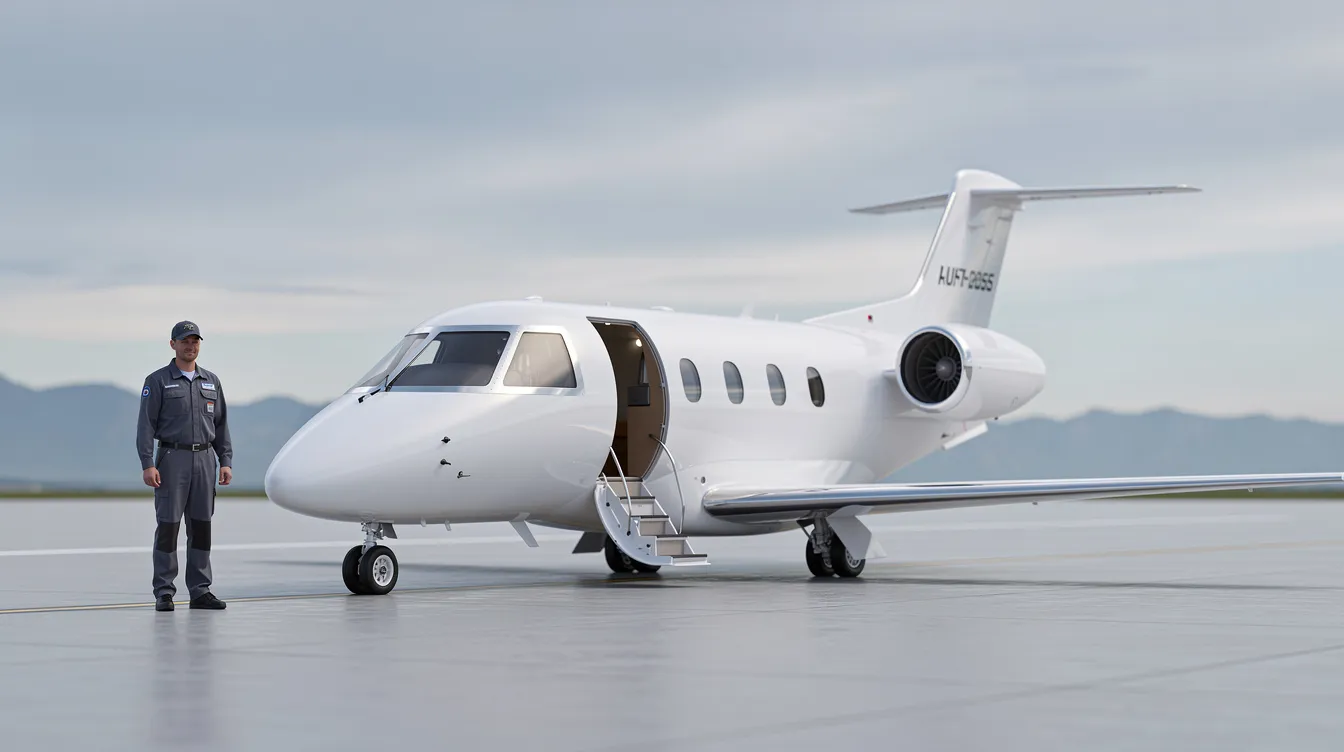
Private Jets Configured for Passenger Shuttle: Business jets (e.g., Bombardier Challenger 604/650, Embraer Legacy 600, Gulfstream G280) set up for 10–16 passengers, often used by corporations or governments.
Airliner-Class VIP and Corporate Conversions: Airbus ACJ TwoTwenty, Airbus ACJ319 VIP configurations, and similar narrow-body airframes converted for 15–25 pax in VIP layouts.
Although private jets are not technically "airliners," they are a major part of the passenger-carrying aircraft for sale segment, especially for high-net-worth individuals, family offices, and corporate flight departments.
BusinessJets.com typically positions each category for clients as follows:
Regional jets for operators who prioritize seat-mile cost and scheduled services.
Large-cabin private jets for clients prioritizing privacy, range, and productivity.
Turboprops and commuter aircraft for operators focused on yield management and access to secondary airports.
Mixed fleets are increasingly common, and BusinessJets.com offers consulting to help fleet managers balance passenger capacity, utilization, and maintenance complexity across different aircraft types.
3. Evaluating Passenger Aircraft for Sale: Technical, Financial, and Regulatory Checks
Buying a passenger airplane demands deeper due diligence than a light private jet acquisition. Higher seat counts mean more complex regulatory oversight, and larger lifecycle costs require thorough inspection. Aircraft condition is critical for determining its value and operational readiness, and inspection and test flight are crucial steps before purchasing an aircraft.
Technical evaluation steps buyers should expect:
Review Total Time (TT) and cycles: Mid-life regional jets commonly show 20,000–50,000 flight hours. For reference, a 2006 Embraer EMB-190 has a total time of 47,472 hours, while a 2001 Embraer ERJ 135 has a total time of 23,155 hours. Maintenance status and cycles are critical factors during aircraft acquisition; both flight hours and pressurization cycles drive structural fatigue.
Assess major structural items: Fuselage, wings, landing gear, and high-value components such as engines, APU, and avionics system upgrades. Engine thrust ratings and enrollment in programs like Pratt & Whitney's MSP Gold can significantly affect residual value and maintenance exposure.
Verify Airworthiness Directives (ADs) and Service Bulletins (SBs) compliance: Especially important for older 1980s–1990s airframes where missing compliance can ground the aircraft.
Maintenance history and documentation matter enormously. Maintenance history impacts aircraft resale value significantly, and complete and meticulously maintained logbooks are essential for pre-owned aircraft. Buyers should verify the status of heavy checks (C, D, or equivalent inspections), noting the cost and downtime impact if a heavy check is due within 12–24 months. Evidence of major refurbishments such as 2022–2025 interior upgrades, paint, or avionics modernizations including ADS-B Out, WAAS/LPV, TCAS II, and FANS 1/A adds measurable value.
Financial and valuation considerations tie directly into BusinessJets.com's appraisal expertise:
Market demand, age, configuration (single-class vs. mixed class), and upcoming maintenance events influence appraised value.
Aircraft age, flight hours, and maintenance status can affect its market value substantially.
Cirium data shows single-aisle market values approximately 15% above base value, and for older types nearing retirement, that premium reaches roughly 160%.
Independent aircraft valuation establishes a realistic price band before entering negotiations.
Popular airframes hold their value better compared to rare or older regional models.
Aircraft types with large global fleets generally have better liquidity in the resale market.
Buyers who focus only on acquisition prices rather than total cost of ownership risk significant downstream exposure.
Regulatory and operational checks include:
Certification basis: Whether FAA, EASA, or another authority acts as the primary certifying body, with implications for cross-border operations and ownership rights transfer.
Noise and emissions compliance: Particularly for operations into Europe, North America, and select Asian markets after 2025. Aircraft are subject to strict oversight from regulatory agencies like the FAA or EASA.
Operational certificate requirements: Configuration thresholds (e.g., 19-seat vs. 30-seat) change regulatory requirements between Part 121, Part 135, and corporate/private use.
Buyers should engage an experienced brokerage and technical team, such as BusinessJets.com's network of inspectors, appraisers, and legal counsel, to manage pre-purchase inspections and contract risk allocation. Accredited dealers adhere to strict industry standards for aircraft listings, which protects both parties.
4. Choosing the Right Passenger Airplane: Capacity, Range, and Mission Profile
This section serves as a decision-making framework for airlines, charter operators, and corporations comparing several passenger aircraft for sale at once. Mission profile determines the required number of passengers and typical flight range, and operators need strategic guidance and market intelligence when acquiring or disposing of aircraft.

Key selection criteria:
Passenger Capacity: Compare use cases for 8–10 seat private jets (e.g., Cessna Citation M2 Gen2), 15–19 seat turboprops (e.g., Beechcraft 1900D, L410 UVP-E20), 30–50 seat regional jets (e.g., ERJ-135/145), and 100+ seat narrow-body airliners (e.g., Airbus A318 or Boeing 737 variants) depending on route demand and load-factor assumptions.
Range and Mission: Range requirements- 400–600 nm commuter hops versus 2,000–4,200 nm continental sectors- influence the choice between turboprops, regional jets, and ACJ-class aircraft.
Airport Infrastructure: Infrastructure requirements dictate specific runway lengths and capacities for larger aircraft. Runway length, field elevation, and pavement strength constraints may make certain turboprops or short-field-capable jets more suitable than standard airliners.
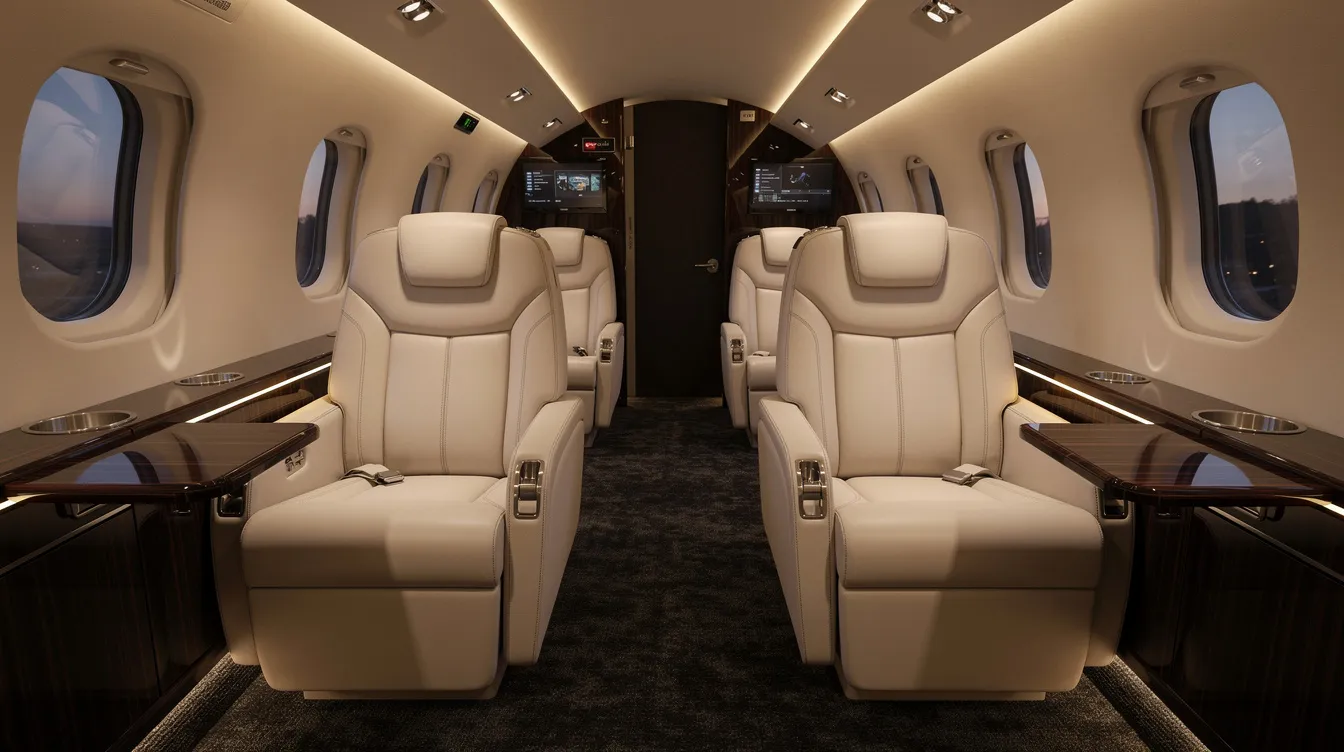
Cabin and Passenger Experience: Seat pitch, noise levels, baggage capacity, and in-flight connectivity matter for premium shuttle operations. Interior quality between economy and VIP configurations directly affects yield.
Operational economics to consider:
Cost per available seat mile (CASM) differences between turboprops and jets on routes under 300–400 nm.
Impact of fuel burn, maintenance hour-to-cycle ratios, and crew requirements on unit costs.
How reconfiguring a former airline aircraft (e.g., 49-seat regional jet to a 30–36 seat premium charter layout) can improve yields at the expense of raw seat count.
BusinessJets.com supports this decision through fleet and route modeling for operators comparing multiple aircraft for sale, scenario analysis on utilization (e.g., 800 vs. 1,500 hours per year) to show break-even thresholds, and advisory on whether to acquire a single larger airplane or multiple smaller aircraft to diversify operating risk and increase scheduling flexibility.
Buyers should prepare a written mission profile and financial model before entering serious negotiations. BusinessJets.com can co-develop these documents as part of its aviation consulting services.
Passenger Aircraft Comparison Table
Aircraft Type | Typical Seating | Range (nm) | Typical Use Case | Notable Models |
|---|---|---|---|---|
Private Jets | 8–16 | 1,200–3,000 | Corporate shuttle, VIP transport | Cessna Citation M2 Gen2, Gulfstream G280 |
Turboprop Passenger Aircraft | 9–30 | 400–1,200 | Short runways, regional, fuel-efficient | Beechcraft 1900D, ATR 42, L410 UVP-E20 |
Regional Jets | 30–110 | 600–2,000 | Regional airline routes, charter | Embraer ERJ-135/145, Embraer 170/190, Airbus A318 |
Airliner-Class VIP | 15–25 | 2,000–4,200 | VIP/corporate conversions, long-range | Airbus ACJ TwoTwenty, ACJ319 |
5. How BusinessJets.com Helps Buy, Sell, and Value Passenger Aircraft
BusinessJets.com is a specialist in private jets and regional passenger aircraft, with over 1,500 completed transactions and more than 5,000 satisfied clients worldwide. We are pleased to offer a view of the full market, not just what is publicly listed, through our global brokerage network.
For buyers, BusinessJets.com sources on-market and off-market passenger aircraft that meet defined seat, range, and budget requirements. The team coordinates technical inspections, appraisals, and contract negotiations, and manages closing logistics for cross-border transactions involving multiple civil aviation authorities. Whether you search for a guardian jet for corporate shuttle duty or a regional fleet of ERJ-145s, our acquisition process covers every detail.
For sellers, BusinessJets.com prepares data rooms with technical summaries, high-quality photography, and competitive positioning against comparable aircraft listed globally. The structured sale process includes controlled access, confidentiality for corporate or government sellers, and qualified buyer screening. Prices are benchmarked using up-to-date market intelligence.
Valuation and appraisal services use recent sales data, market trends, and technical condition to derive a defensible valuation range. Independent appraisals matter for financing, insurance, partnership buyouts, or internal capital allocation decisions. Appraisals cover both classic private jets and regional passenger aircraft operated on commercial certificates.
Consulting and advisory capabilities include fleet strategy reviews for airlines and charter operators deciding whether to phase in or out specific passenger aircraft types between 2024 and 2028, market entry studies incorporating aircraft performance and competitive dynamics, and support for lease vs. purchase decisions with residual value risk analysis.
Ready to take the next step?
Owners and operators: request an aircraft appraisal or portfolio review.
Sellers: contact BusinessJets.com to list passenger aircraft for sale via a confidential brokerage mandate. Email our team or call directly.
Buyers exploring multiple passenger airplane types: schedule a consulting engagement to develop a tailored acquisition plan through our comprehensive services.
FAQ: Passenger Airplanes for Sale
How long does it typically take to complete a passenger aircraft purchase?
Timelines vary by aircraft type and regulatory complexity. A straightforward regional jet or large private jet acquisition usually takes 60–120 days from signed letter of intent to closing, assuming no major technical surprises.
Deals involving older airliners, complex financing, or cross-border export/import approvals can extend beyond 4–6 months. Early planning with a brokerage and legal team can reduce delays and help ensure a smoother process.
Can a corporate buyer operate a former airline regional jet as a private aircraft?
Many corporations and governments convert former airline aircraft (e.g., ERJ-135/145, Airbus A318) into corporate or shuttle configurations. The process involves cabin refurbishment, regulatory re-approval, and updated maintenance programs.
BusinessJets.com can help evaluate whether converting an offer on a former airline airframe is more economical than purchasing an aircraft already configured for corporate or charter use. Each option has unique cost and timeline considerations.
What financing options are available for passenger airplanes?
Typical options include secured loans from aviation-focused lenders, operating or finance leases, and in some cases export credit support for newer aircraft. Lenders closely scrutinize aircraft age, maintenance status, appraised value, and operator profile.
A professional appraisal from BusinessJets.com can support a stronger financing package and help you find favorable terms. Financing structures can be tailored to the buyer’s operational and financial needs.
Are there advantages to buying multiple similar aircraft types at once?
Economies of scale in training, spares, tooling, and maintenance emerge when building a fleet around one or two common aircraft families. However, over-concentration in a single type creates risk if model-specific ADs or technical issues arise.
BusinessJets.com's operator advisory services can model optimal fleet mix strategies based on projected utilization. Diversifying the fleet can help mitigate operational risks.
How do I get started with BusinessJets.com if I am exploring passenger aircraft options?
Follow a simple three-step path:
Share your mission and fleet requirements with the BusinessJets.com team.
Request an initial market and valuation briefing.
Mandate BusinessJets.com to either source aircraft for sale or prepare an existing aircraft for listing.
All discussions are handled confidentially and tailored to the needs of private owners, corporations, airlines, and operators worldwide.
Conclusion
Navigating the market for passenger airplanes for sale requires a strategic approach grounded in technical expertise, financial prudence, and operational insight. Whether acquiring regional jets, turboprops, or converted airliner-class aircraft, buyers must carefully evaluate aircraft condition, maintenance history, mission fit, and total cost of ownership.
With over 1,500 completed transactions and a commitment to discretion and professionalism, BusinessJets.com stands ready to assist private owners, corporate buyers, and operators in making informed decisions that align with their operational goals and financial parameters. Explore our aircraft acquisition and aircraft valuation services, or request an appraisal to begin your journey.