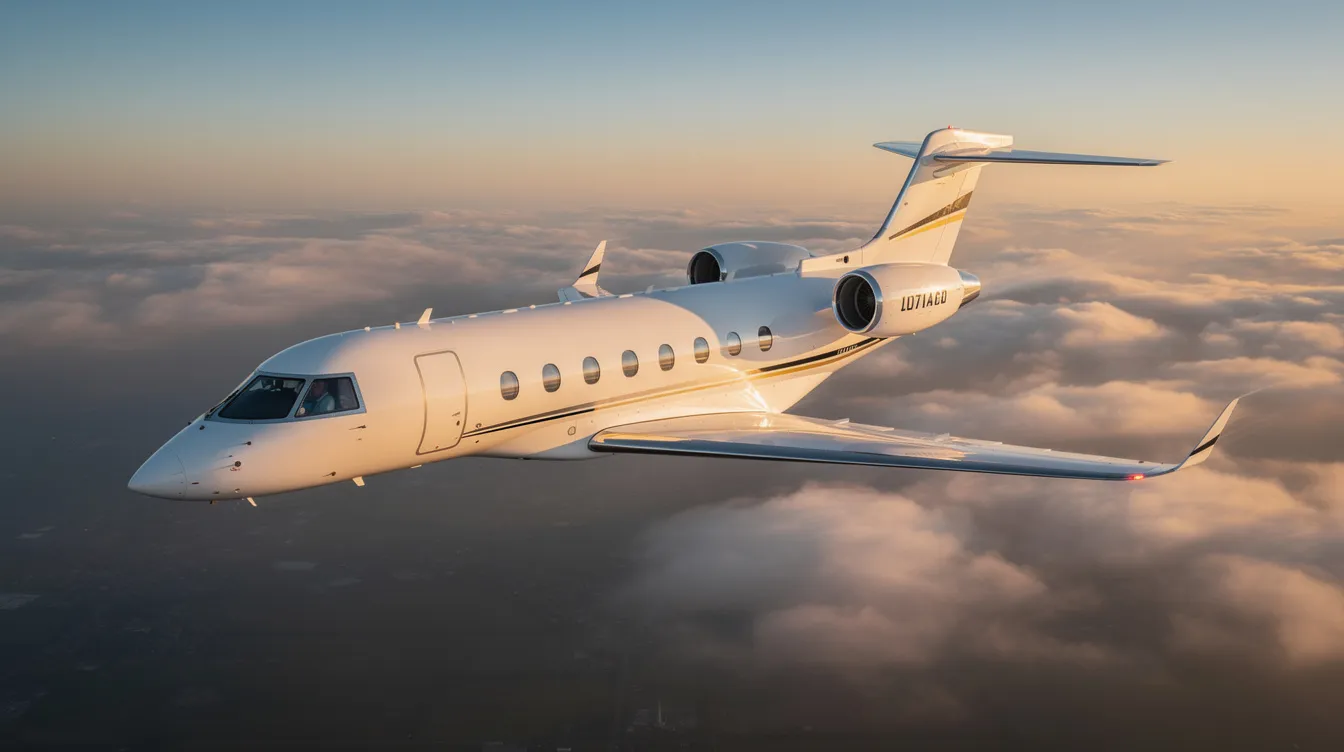
Buying a Jet: A Practical Guide for Private Buyers and Corporate Operators

Purchasing a private jet is a major decision that extends beyond the allure of luxury and convenience. It involves a strategic evaluation of your travel needs, budget, and long-term operational goals. Whether you represent a corporate flight department, a family office, or are a private individual seeking greater control over your travel, understanding the complexities of buying a jet is essential. This guide provides practical insights into the types of aircraft available, cost considerations, the buying process, and key factors to ensure your investment aligns with your mission. With over 1,500 aircraft transactions facilitated, BusinessJets.com offers expert guidance to help you navigate the private jet market confidently and efficiently.
Key Takeaways
Most qualified buyers today evaluate high-quality pre-owned jets before factory-new aircraft, often to optimize capital, shorten delivery time, and gain access to upgraded aircraft already in service.
Range, passenger capacity, airport access, and mission profile should be defined before reviewing popular models or private jets for sale.
A thorough pre-purchase inspection, full logbook review, and verification of maintenance records are non-negotiable steps in buying a jet.
The initial purchase price is only one part of the decision; annual operating costs, crew salaries, fuel, insurance, maintenance, and exit value determine the real ownership experience.
BusinessJets.com supports buyers end-to-end, from aircraft appraisal and search to negotiation, due diligence, closing, and entry into service.
Buying a jet requires balancing financial reality with operational needs. For the right owner, a private jet can improve productivity, security, privacy, and access. For the wrong mission or budget, the same aircraft can become an inefficient asset. This guide is written for a serious target audience: corporate flight departments, family offices, fleet managers, and private buyers evaluating ownership with a practical lens.
Why Buy a Private Jet Now?
The private aviation market remains active in 2024–2026 despite changing interest rates, labor costs, and broader macroeconomic uncertainty. According to JETNET market data, 2025 business jet flight activity remained above pre-pandemic levels, while pre-owned market inventory increased modestly but stayed below historic norms.
Ownership is not only about luxury. Corporate jets are essential tools for businesses that require their executives to travel frequently and efficiently, offering a balance of comfort and productivity-enhancing features. Business aircraft users experience a 23% higher revenue growth compared to non-users, indicating that private jet ownership can enhance productivity and business success.
Owning a private jet provides unparalleled privacy and confidentiality when you operate your own jet, as you control who flies with you, unlike chartering or fractional ownership, where multiple parties may share the aircraft. A private jet also allows complete control over schedule, routing, cabin access, and security procedures.
Private jets can access around 10 times more airports in the U.S. than commercial airlines, providing greater flexibility and efficiency in travel, especially to remote locations. That access can turn a two-day commercial itinerary into one efficient business day.
A good threshold is 200–400 flight hours per year as a practical benchmark for deciding whether to buy and operate the aircraft yourself. Below that, chartering, jet cards, or fractional ownership may be more efficient. Above that, owning can offer more flexibility, predictable access, and the ability to operate on your own schedule.
BusinessJets.com typically works with corporate flight departments, family offices, operators, and owner-pilots transitioning from charter to full ownership. The goal is not status; the goal is measurable business value, better time utilization, and mission reliability.
Defining Your Mission and Target Aircraft
Mission profile is the foundation of any aircraft acquisition strategy. To prevent over-buying or under-buying, define specific travel requirements before browsing aircraft.
Start with these key considerations:
What is the average stage length: New York–Miami, Los Angeles–Aspen, or London–Dubai?
What is the longest nonstop leg?
How many passengers fly on a typical trip?
How much baggage volume is required?
Which airports are non-negotiable?
Do passengers need Starlink, Ka-Band connectivity, electronic charts, conference capability, or advanced cabin technology?
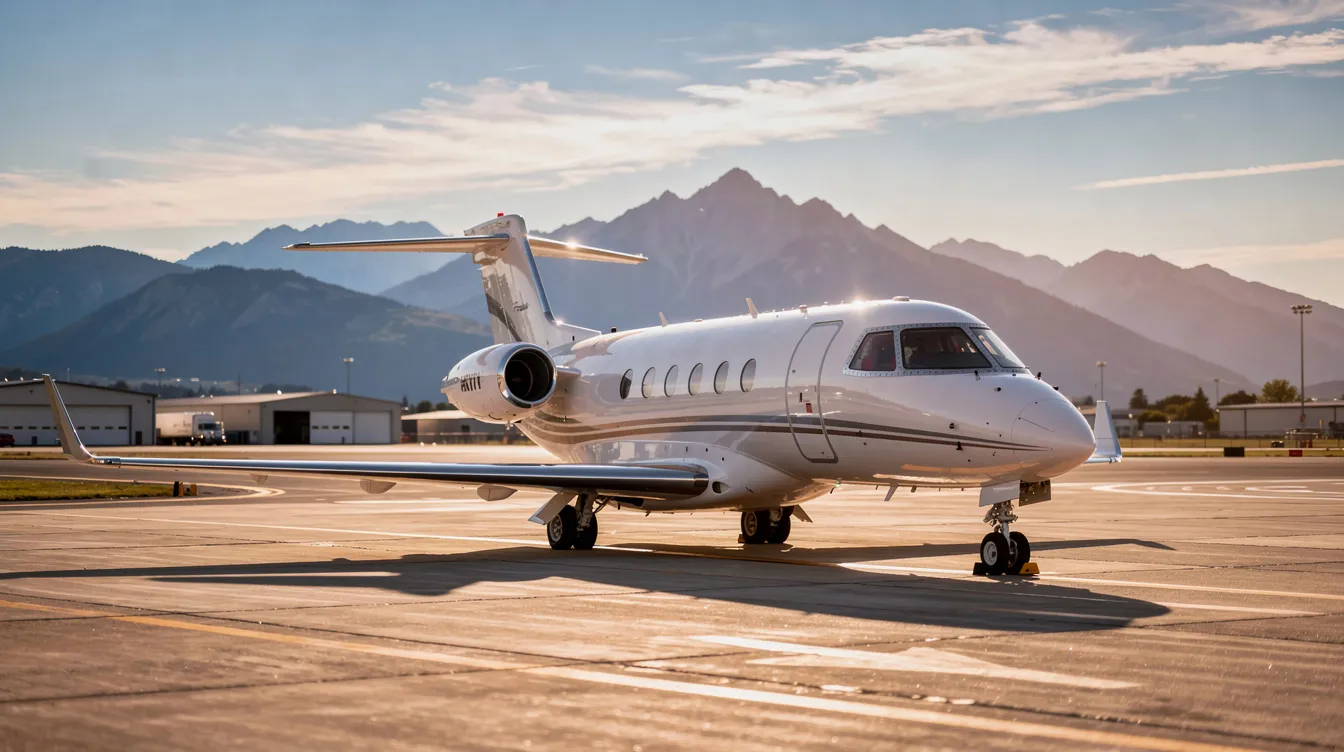
Different types of jets serve different missions. Small private jets, also known as light jets, are designed for shorter trips and smaller groups, providing a cost-effective entry point into private jet ownership. Personal private jets cater to individuals and small groups who value flexibility and convenience in their travel plans, offering a personalized flying experience.
A four-passenger owner flying from Los Angeles to Aspen may need a light jet with strong runway performance. A 12-passenger management team flying New York–London nonstop needs a large cabin or ultra-long-range aircraft with greater range, speed, and payload.
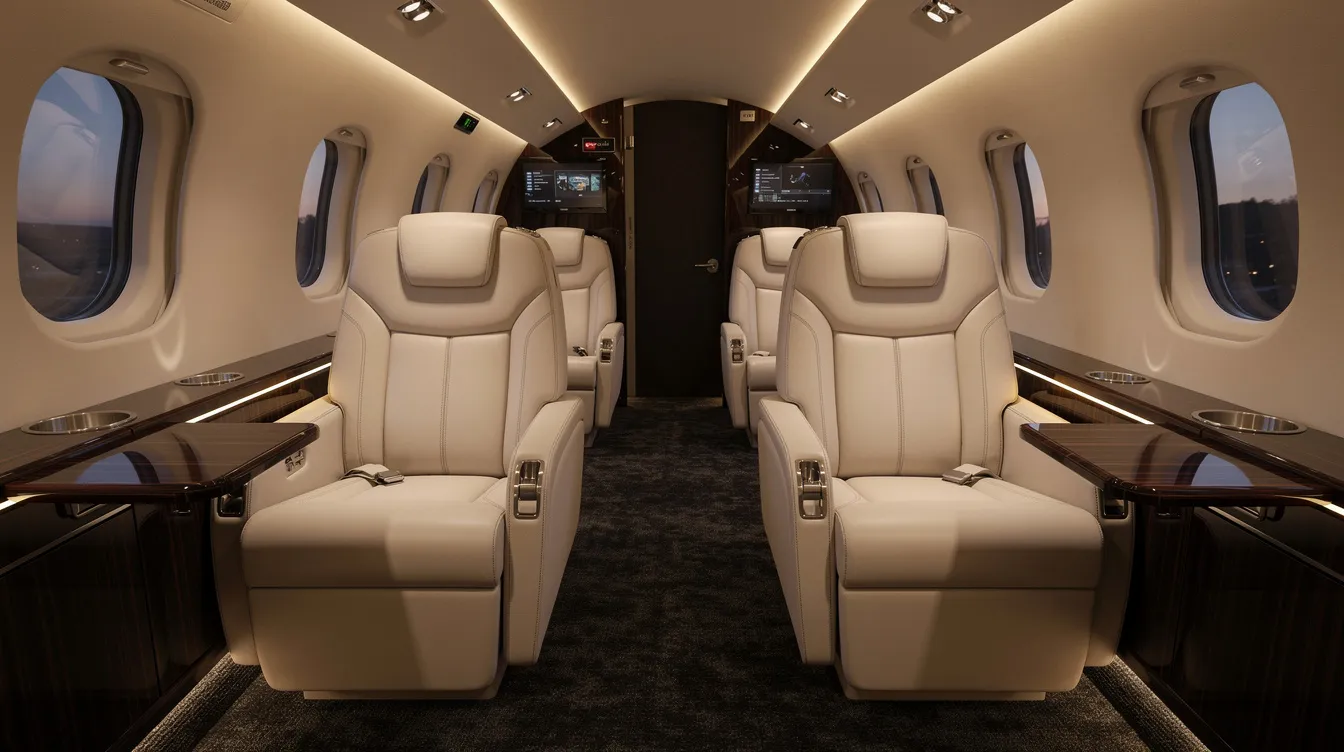
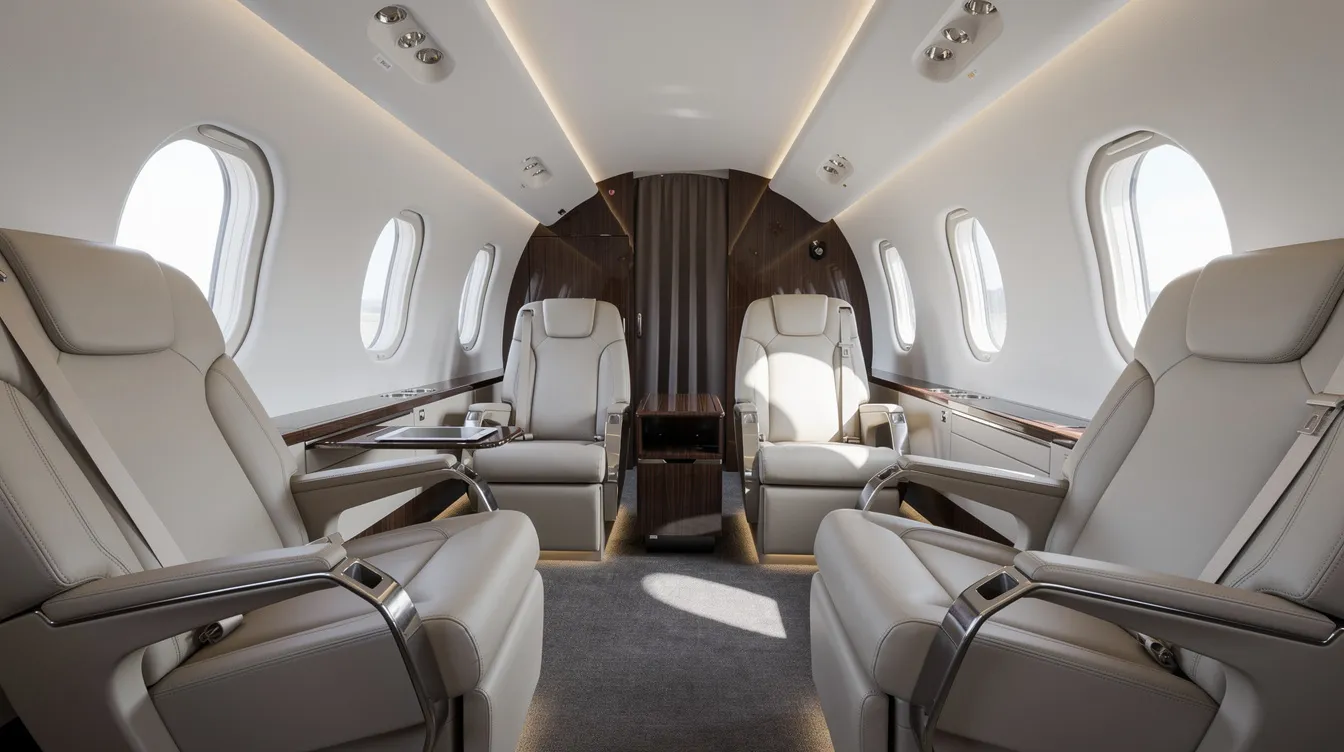
Large private jets are designed for long-haul flights and can accommodate larger groups, offering an extensive range and advanced amenities. Luxury private jets are designed to provide the utmost comfort and convenience, often featuring lavish interiors and state-of-the-art technology.
Your requirements brief should include runway length, hot-and-high airport performance, baggage, cabin layout, connectivity, crew base, maintenance support, and resale demand. BusinessJets.com uses this brief to compare different aircraft objectively before any offer is made.
New Aircraft vs Pre-Owned Jets
More than 70% of BusinessJets.com acquisition projects focus on pre-owned jets, including older jets that appeal to cost-conscious buyers in the used-aircraft market. This reflects a broader market pattern: approximately 75% to 85% of customers purchasing a private jet opt for pre-owned aircraft due to the lower initial investment required.
New aircraft offer a factory warranty, the latest avionics, current safety features, and full cabin specifications. New jets offer extensive customization options, allowing buyers to tailor the aircraft to their specific needs, while pre-owned jets can also be customized but may not have the latest technology.
New private jets typically come with a higher upfront cost, often ranging from $3 million to over $70 million, while pre-owned jets can be found for significantly less, sometimes under $2 million. The initial purchase price of a private jet can range from $3 million to over $70 million, depending on the type and condition of the aircraft.
Pre-owned aircraft often provide a lower upfront cost, shorter delivery timeline, and access to popular models already upgraded with Wi-Fi, new paint, modern interiors, and current avionics. While new jets generally have lower maintenance costs and come with a manufacturer’s warranty, pre-owned jets may incur higher maintenance expenses due to their age and technology.
The choice between new and pre-owned jets often depends on the buyer’s financial circumstances and the intended use of the aircraft, balancing budget with desired features. A new super midsize jet in 2026 may cost $25 million to $35 million or more, while a 2018–2020 pre-owned equivalent may trade at a meaningful discount depending on total flight hours, maintenance status, and configuration.
For any pre-owned candidate, review remaining engine program coverage, whether engines and APU are apu enrolled, upcoming major inspections, damage history, avionics status, and refurbishment budget.
Popular Models by Mission Profile
This is not a complete catalog, but these popular models illustrate how mission drives selection:
Mission category | Example models | Typical fit |
|---|---|---|
Very light/light jet | HondaJet HA-420, Citation M2 Gen2, Citation CJ3+ | Short trips, smaller passenger loads, efficient owner or corporate use |
Midsize / super midsize | Citation Latitude, Citation XLS Gen 2, Gulfstream G280 | Regional and transcontinental business travel |
Large cabin / ultra-long-range | Gulfstream G550, G650/G650ER, Bombardier Global 5000/6000, Dassault Falcon 2000LXS | Larger teams, international range, long-haul comfort |
The Gulfstream G650ER, for example, is known for approximately 7,500 NM published range capability, while aircraft such as the Falcon 2000LXS can serve long-range corporate missions with strong runway performance. BusinessJets.com advises on on-market and off-market opportunities for these and similar luxury private jets, matched to each client’s specific needs.
Where to Find Private Jets for Sale
Modern aircraft sourcing includes OEMs for new aircraft, brokers, dealers, and online marketplaces for pre-owned jets. Public listings are useful, but they rarely show the whole market. Some of the best aircraft trade quietly before broad advertising.
BusinessJets.com curates private jets for sale across the world, combining visible inventory with off-market intelligence. That matters when demand is concentrated in young, low-hour, well-maintained aircraft.
When reading an online listing, look beyond the asking price. Review:
Airframe total time and landings
Engine and APU program status
Last major inspection dates
Avionics and connectivity
Interior condition
Maintenance program enrollment
Damage history
Complete technical specifications
Before traveling to inspect an aircraft, request the full maintenance status report, the aircraft’s maintenance history, and relevant maintenance records. A polished listing can still hide expensive costs.
Working with an Aircraft Broker and Consultant
An experienced broker is not only a salesperson. The broker should act as transaction manager, market analyst, and technical advocate.
BusinessJets.com uses market data, recent comparable transactions, and experience from 1,500+ completed aircraft transactions to benchmark fair value. This helps buyers avoid overpaying in a competitive market or dismissing a strong candidate because the headline price appears high.
Typical services include:
Aircraft search and shortlist development
Independent aircraft valuation
Offer strategy and LOI support
Coordination of pre-purchase inspection
Closing oversight
Entry-into-service planning
Corporate buyers and fleet managers also engage BusinessJets.com for aviation consulting, including fleet renewal, operator advisory, financing strategy, and aircraft sale planning. Confidentiality, off-market access, and risk mitigation are often the strongest reasons to use representation instead of going direct.
The True Cost of Buying and Operating a Private Jet
The purchase price is not the total cost of ownership. The total cost of ownership for a private jet includes not just the purchase price but also ongoing expenses such as maintenance, crew salaries, insurance, and hangar fees.
The initial purchase price of a private jet varies dramatically depending on its size, age, and capabilities, with older, pre-owned jets available for under $2 million and new large-cabin jets costing up to $80 million or more.
Representative 2025–2026 acquisition ranges:
Segment | Typical acquisition range |
|---|---|
Used very light/light jet | $1.5M–$10M |
Used midsize jet | $8M–$20M |
New super midsize jet | $15M–$35M+ |
Large cabin / ultra-long-range | $30M–$80M+ |
Annual operating costs for a private jet can reach several million dollars, which includes expenses such as maintenance, crew salaries, fuel, and insurance. A good rule of thumb is to expect annual operating costs to be about 10% of the jet's purchase price, covering all recurring expenses necessary to keep the aircraft operational.
Operating costs include fuel, maintenance, engine programs, crew salaries, pilot training, insurance, hangarage, navigation fees, handling, subscriptions, and management. Maintenance programs can help manage irregular maintenance bills by charging a set hourly fee for operating hours.
As a simplified example, a pre-owned midsize jet flying 300 hours per year may require an annual operating budget of roughly $800,000 to $1.5 million, depending on crew model, hangar location, fuel, maintenance exposure, and program coverage. For midsize jets, direct operating costs often fall near $3,000–$3,800 per hour before fixed costs.
BusinessJets.com helps buyers compare owning, chartering, jet cards, and fractional ownership, then model exit timing around depreciation, market demand, and upcoming inspections.
Financing, Tax, and Ownership Structures
Financing can include traditional asset-backed loans, operating leases, or cash purchases. Lenders typically require a down payment ranging from 15% to 20% of the aircraft’s value.
Ownership structure matters. A corporate entity, trust, or special-purpose company can affect tax, liability, depreciation, operational control, and regulatory treatment. Purchasing a jet involves intricate tax laws and FAA/EASA aviation regulations.
You must retain specialized advisors such as an aviation broker, legal counsel, tax specialist, and management company for jet purchases. BusinessJets.com routinely coordinates with clients’ legal and tax teams so transaction terms align with corporate strategy, financing requirements, and international usage plans.
Technical Due Diligence and Pre-Purchase Inspection
A thorough pre-purchase inspection is the single most important safeguard in buying a private jet. A thorough pre-purchase inspection (PPI) is essential when buying a private jet, as it uncovers hidden issues that could lead to expensive repairs later.
A typical PPI reviews the airframe, engines, APU, avionics, interior, corrosion exposure, systems, logbooks, service bulletins, and regulatory compliance. The inspection location may be an OEM service center or an independent MRO selected for the aircraft type.
Aviation maintenance operates on strict dual triggers: hours flown or calendar time elapsed. That means a jet can require major maintenance even if it has flown very little.
Common findings include upcoming engine overhauls, calendar-driven inspections, expired components, interior refurbishment needs, outdated aviation technology, and missing paperwork. When considering a pre-owned jet, its history is crucial; a well-maintained older jet can offer incredible value, but it is important to review maintenance records and ensure a thorough pre-purchase inspection is conducted.
BusinessJets.com organizes PPIs, interprets findings for non-technical buyers, and uses due diligence results to renegotiate, require seller corrections, or walk away from hidden issues.
Documentation, Title, and Regulatory Compliance
Paperwork risk is often underestimated. Key documents include logbooks, maintenance releases, airworthiness directive compliance, damage and repair history, STC approvals, registration records, and import/export documentation.
A title search confirms there are no liens, encumbrances, or ownership disputes before escrow releases funds. Registration with the FAA, EASA, or another national authority must be handled correctly, especially in cross-border deals.
BusinessJets.com works alongside aviation attorneys and escrow agents to support a clean, compliant transfer of ownership and a smooth transaction.
Your Step-by-Step Process to Buying a Jet
The acquisition process for purchasing a private jet typically spans 2 to 6 months. For straightforward domestic pre-owned acquisitions, 60–120 days is common; complex financing, scarce inventory, and cross-border approvals can extend the timeline.
Buying a private jet involves several key steps, including defining your travel needs, inspecting the aircraft, negotiating the price, finalizing the closing, and setting up operations.
Define mission and budget
Capture routes, passenger loads, range, business use, family use, and financial situation.Engage advisors
Retain an experienced broker and request an independent aircraft appraisal or market study from BusinessJets.com.Shortlist aircraft
Compare pre-owned, pre-owned aircraft, and, where appropriate, new aircraft delivery positions using standardized criteria.Submit an offer
Use an LOI with clear conditions precedent, including satisfactory inspection, document review, and financing approval.Complete inspection and closing
Conduct the PPI, adjust terms if needed, close through escrow, register the aircraft, and prepare for entry into service.
The goal is an informed decision, not simply a completed purchase.

Setting Up Operations After Closing
After closing, the owner must decide whether to operate in-house or contract an aircraft management company. This affects pilots, scheduling, regulatory compliance, maintenance, reporting, and charter eligibility.
Select experienced crew, define operating standards, choose maintenance providers, and establish safety protocols aligned with regulatory requirements and the aircraft’s maintenance history. Consider crew salaries and training to maintain a high level of professionalism and safety. Implement efficient scheduling systems to maximize aircraft utilization while accommodating your own schedule and mission needs.
If opting for management services, vet providers carefully to ensure they offer comprehensive support, including maintenance oversight, regulatory compliance, and operational logistics. Management companies can also assist with chartering the aircraft when not in use, potentially offsetting operating costs.
Ensure all electronic charts, avionics software, and aviation technology are current to support safe and efficient flight operations. Establish maintenance programs and inspection schedules based on the aircraft’s total flight hours and calendar time triggers to prevent unexpected downtime or hidden issues.
Finally, set up insurance coverage tailored to your ownership structure and operational profile, including liability and hull insurance. A thorough understanding of annual operating costs will help you budget effectively for fuel, maintenance, crew, insurance, hangar fees, and other expenses, ensuring a smooth and efficient ownership experience.
Frequently Asked Questions (FAQs)
What are the advantages of buying a private jet over chartering or fractional ownership?
Buying a private jet offers unparalleled privacy, complete control over scheduling, and the ability to customize the aircraft to your exact preferences. Ownership also provides access to more airports worldwide, enhancing flexibility and efficiency. Unlike chartering or fractional ownership, you avoid sharing the aircraft with unknown parties, ensuring confidentiality and consistent availability.
How much should I budget for the total cost of owning a private jet?
Beyond the purchase price, expect annual operating costs to be approximately 10% of the jet’s value. These costs include maintenance, crew salaries, fuel, insurance, hangar fees, and ongoing inspections. Factoring in these expenses early helps ensure a realistic financial plan for ownership.
Is it better to buy a new or pre-owned private jet?
The choice depends on your financial situation and mission requirements. New jets come with the latest technology, warranties, and customization options, but have a higher upfront cost. Pre-owned jets offer lower initial investment and faster delivery, though they may incur higher maintenance costs and have older technology. BusinessJets.com advises buyers to weigh these factors carefully.
How long does the process of buying a private jet typically take?
The acquisition process generally spans 2 to 6 months. Simpler domestic transactions may close within 60 to 120 days, while complex financing, international regulations, or scarce inventory can extend this timeline.
What is a pre-purchase inspection (PPI), and why is it important?
A PPI is a comprehensive examination of the aircraft’s condition, including engines, avionics, airframe, and maintenance records. Conducted by qualified experts, it uncovers potential issues that could lead to costly repairs. The PPI is critical for informed decision-making and negotiation during the buying process.
How can BusinessJets.com assist in buying a private jet?
BusinessJets.com offers expert brokerage and consulting services, including aircraft appraisal, market analysis, negotiation support, coordination of inspections, and closing management. With over 1,500 transactions completed, they provide discreet, knowledgeable guidance to help buyers make informed decisions and optimize their investment.
Conclusion
Buying a private jet is a significant investment that requires a deep understanding of your operational needs, financial considerations, and the broader market dynamics. Whether opting for a new or pre-owned aircraft, the decision should be guided by a clear mission profile, thorough due diligence, and expert advice. BusinessJets.com stands as a trusted partner in this complex process, offering discreet, expert-led brokerage and consulting services tailored to private jet owners, corporate buyers, and fleet managers worldwide. With a proven track record of over 1,500 completed transactions and more than 5,000 satisfied customers, BusinessJets.com provides comprehensive support—from initial appraisal and aircraft search to negotiation, inspection coordination, and closing. Engaging with BusinessJets.com ensures access to extensive market knowledge, off-market opportunities, and strategic guidance, helping you make an informed decision that aligns with your goals and maximizes the value of your private aviation investment. Visit BusinessJets.com to explore how their expertise can elevate your private jet acquisition experience.