Smallest Private Jet: Buyer’s Guide to Very Light & Compact Light Jets
Selecting the smallest private jet involves more than just size—it requires a nuanced understanding of aircraft design, mission requirements, and operational considerations. For private jet owners, corporate buyers, and fleet managers, identifying the right aircraft means balancing factors such as passenger capacity, range, cabin comfort, safety features, and total cost of ownership. This guide provides an expert overview of the smallest practical private jets available today, emphasizing critical factors that influence purchasing decisions.
BusinessJets.com leverages its extensive experience in aircraft brokerage and aviation consulting to help clients navigate this complex market. With over 1,500 successful transactions and deep industry insight, we provide practical advice on aircraft valuation, acquisition strategy, and operational optimization. Whether you are considering a Very Light Jet (VLJ) or a compact light jet, understanding the nuances of these aircraft classes and their capabilities is essential to making an informed investment.
This introduction sets the stage for a detailed exploration of the smallest private jets, highlighting key models, market trends, and strategic considerations to help you select the right aircraft for your unique needs.
Key Takeaways
The Cirrus SF50 Vision Jet is the smallest private jet in practical, certified business use, measuring 30 feet 11 inches (9.4 meters) in length and accommodating up to seven people, including a pilot.
Serious buyers should compare certified very light jets, not novelty micro-jets; the Cirrus Vision Jet, Eclipse 500/550, Cessna Citation Mustang, Embraer Phenom 100EV, and HondaJet are the most relevant options.
The cheapest private jet is not always the best value. Maintenance history, fuel efficiency, engine programs, avionics status, and support network drive long-term operating costs.
BusinessJets.com supports buyers, sellers, and operators with appraisals, acquisition advice, resale strategy, and consulting informed by 1,500+ aircraft transactions.
This guide is a practical outline for comparing the smallest private jet options against a larger light jet, larger aircraft, or even a heavy jet.
What Is the Smallest Practical Private Jet Today?
Among certified business aircraft, the Cirrus Vision Jet SF50 is generally regarded as the smallest light business jet currently in production as of 2025–2026. The Cirrus SF50 Vision Jet is the smallest private jet, measuring 30 feet 11 inches (9.4 meters) in length and accommodating up to seven people, including a pilot.
That distinction matters. Aviation history includes smaller experimental machines, but a buyer comparing private jets should focus on practical aircraft with certification, support, pilot training, insurance pathways, parts availability, and modern safety features. The BD-5J-style microjet may be interesting, but it is not a realistic business aviation tool.
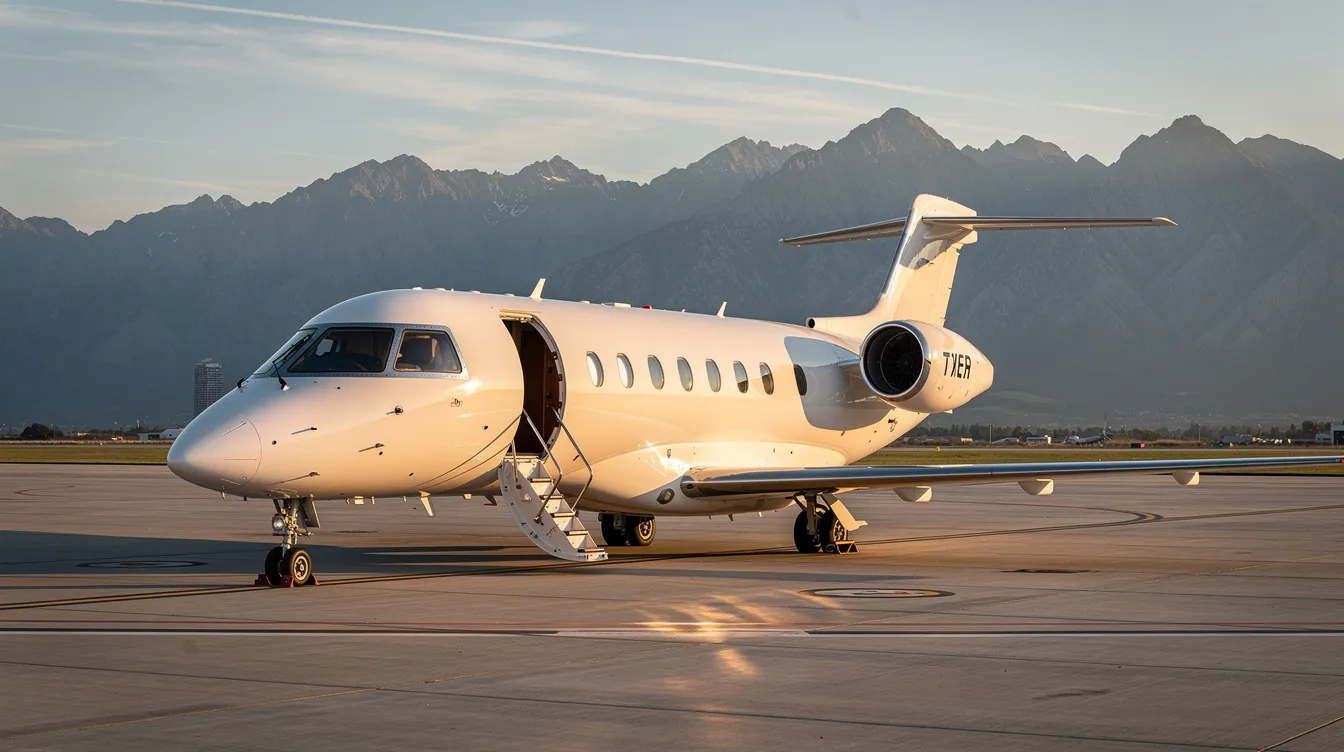
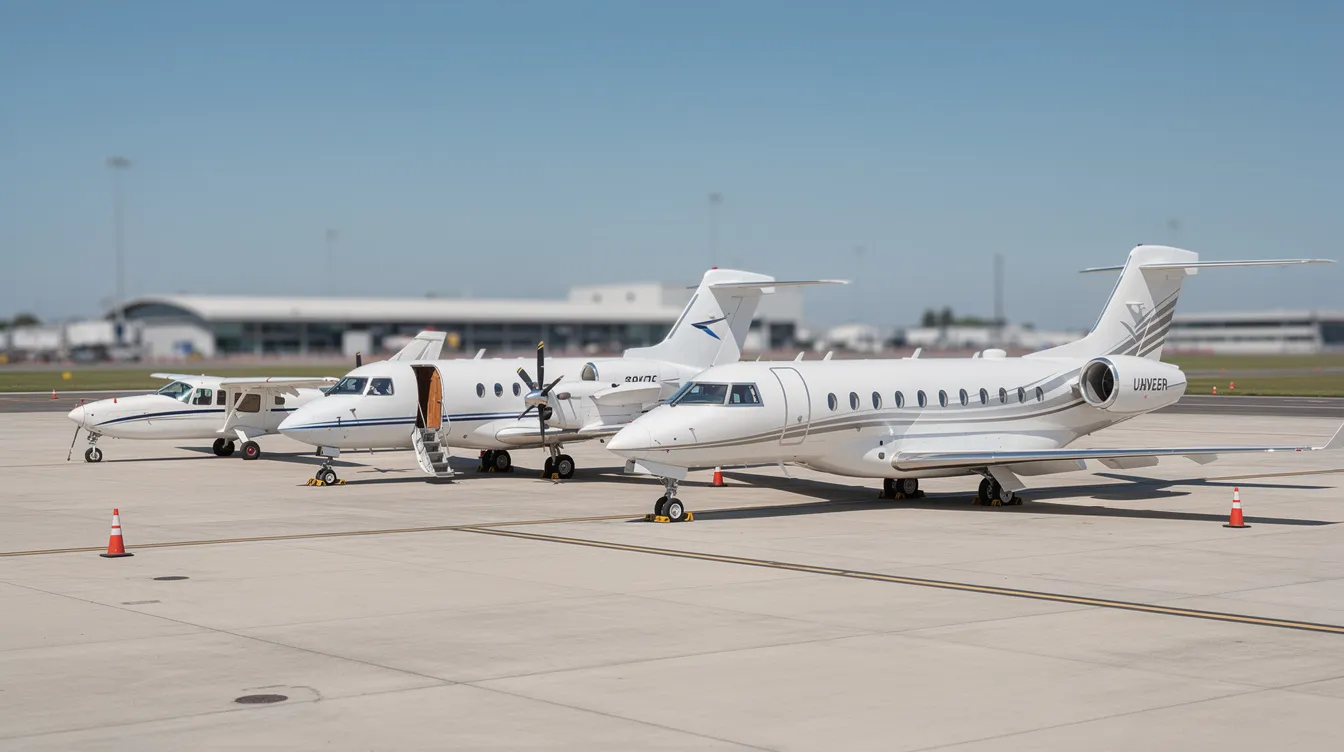
Practical small private jets usually fall into the very light jets category. Very Light Jets (VLJs) typically seat between 4 and 6 passengers and offer ranges up to 1,200 miles, making them suitable for regional trips while maintaining flexibility in private aviation. The small private aircraft category encompasses four primary classes: high-performance piston singles, small turboprops, Very Light Jets (VLJs), and Light Jets, with passenger capacity typically ranging from 2 to 8, depending on configuration.
The key aircraft type names in this segment include the Cirrus Vision Jet, Eclipse 500/550, Cessna Citation Mustang, Embraer Phenom 100/100EV, HondaJet HA-420/Elite variants, and experimental programs such as the Stratos 716X.
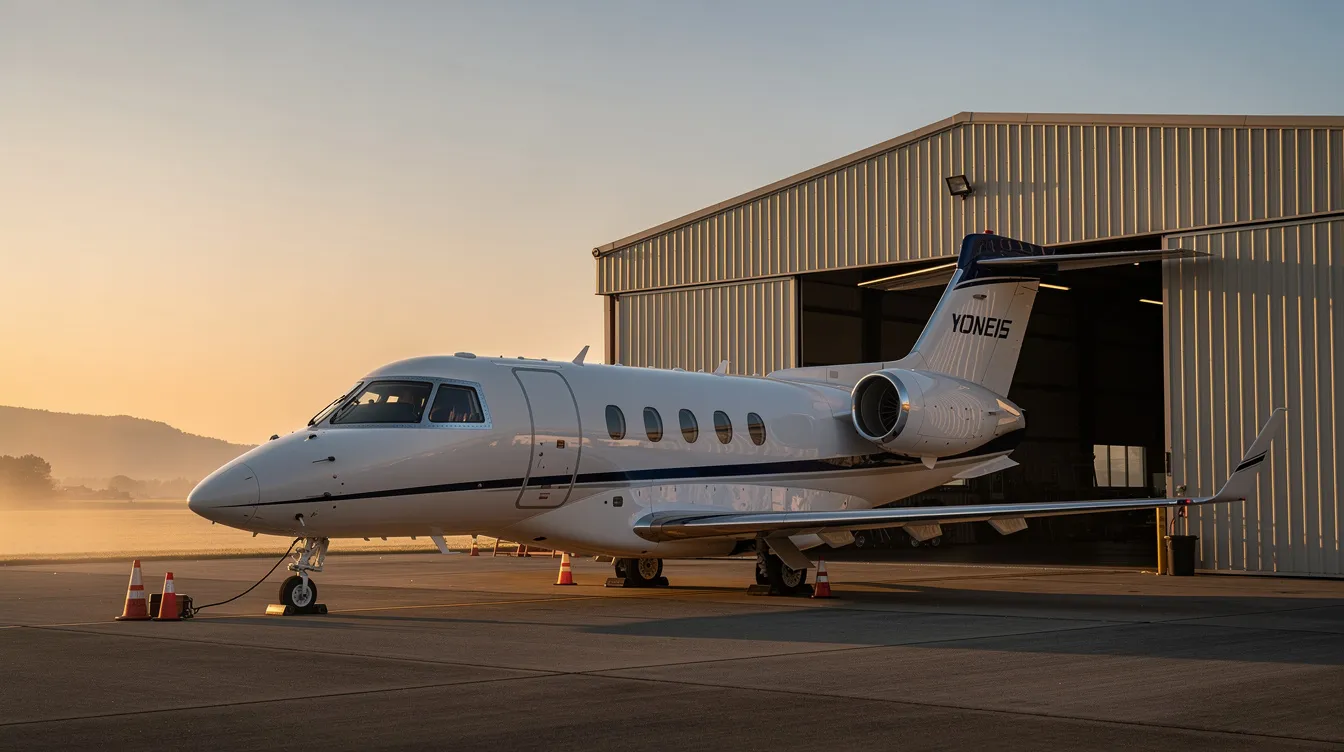
Very Light Jets vs Light Jets: Where “Smallest Private Jet” Fits
The aviation industry does not classify aircraft by “smallest” alone. Buyers normally compare categories: very light jets, light jet models, midsize jets, super-midsize jets, and heavy jet options. At BusinessJets.com, we start with the mission rather than the ramp presence.
VLJs and compact light jets typically offer 4–6 seats, lower maximum takeoff weights, ranges of around 900–1,400 nautical miles, and frequent single-pilot operation. They are often cost-effective for 300–800 nm regional trips, especially when operating from smaller airports with limited ramp space or hangar space.
Light jets, such as the HondaJet Elite II and Embraer Phenom 100EV, generally provide cruise speeds of 400-450 KTAS and ranges of 1,500-2,000+ nautical miles, catering to business travel and longer regional flights, while buyers needing more nonstop capability may need to step up to larger light jets for longer-range missions. In practice, buyers should confirm the exact maximum range at expected passenger load, reserves, weather, and routing.
Compared with larger light business jets and heavy jets, VLJs usually burn fewer gallons per hour and can deliver better operational efficiency on short sectors.
The right small private jet depends on passenger count, baggage, runway performance, annual hours, and flying habits. A single aircraft that works well for two executives on frequent 500 nm trips may be unsuitable for ski equipment, multiple connecting flights, or routine cross-country flights.
Cirrus Vision Jet SF50: The Smallest Light Business Jet
The Vision Jet is the benchmark personal jet for buyers asking about the smallest private jet. Built by Cirrus Aircraft, it received initial FAA certification in 2016, followed by the G2 in 2019 and G2+ in 2021. The model’s maiden flight program helped establish a new owner-pilot category between turboprop aircraft and traditional twin-engine jets.
Core specifications include a length of 30 ft 11 in, one Williams FJ33-5A engine, cruise speed around 300 KTAS, service ceiling near 31,000 ft, and typical range near 1,200 nm depending on payload and reserves. The Cirrus Vision Jet is currently the most affordable certified jet available, with a new price of approximately $3.3-3.5 million.
Its defining safety differentiator is the Cirrus Airframe Parachute System. The Cirrus Vision Jet features an innovative airframe parachute system designed to safely lower the entire aircraft in emergencies, enhancing passenger safety during flights. Later aircraft also offer an emergency autoland system known as Safe Return, adding advanced safety features that can reduce pilot workload in a critical event.
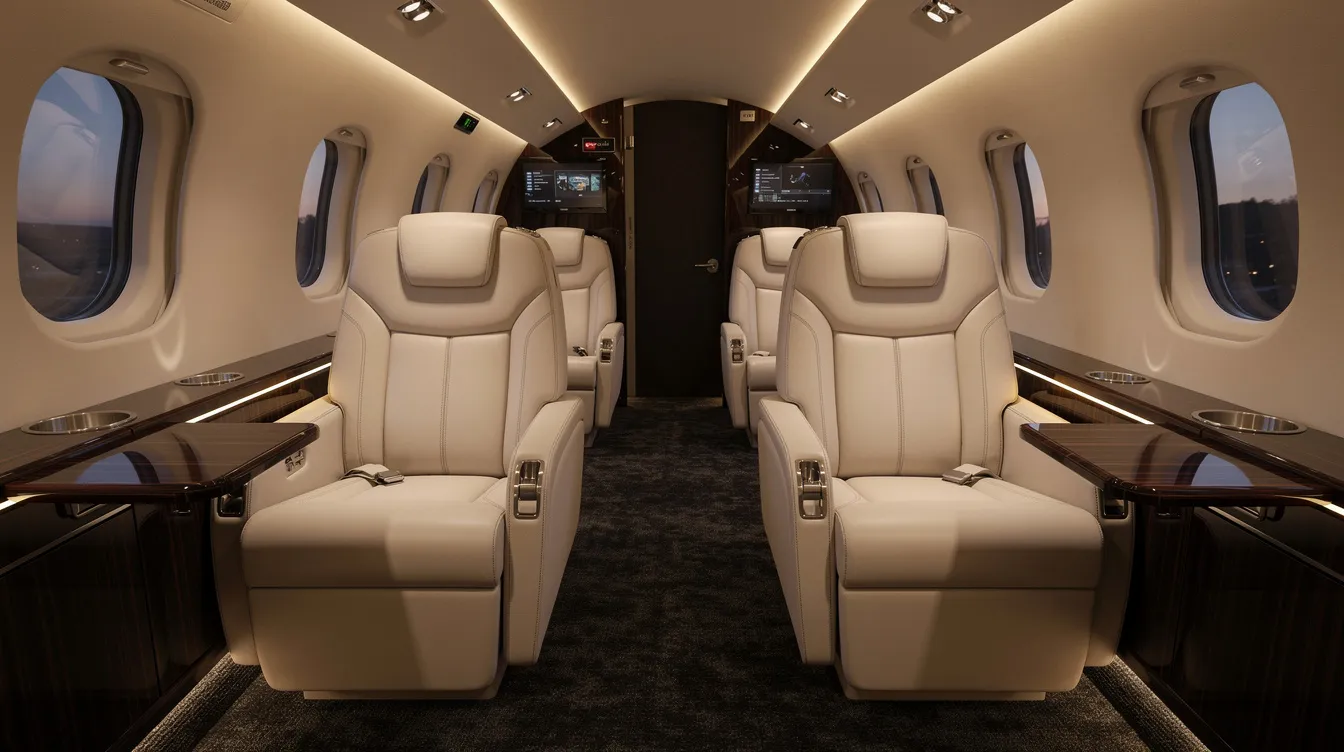
Cabin space is compact but thoughtfully arranged, with club seating, large windows, optional lavatory provisions, and room for up to six passengers in certain configurations, though the aft seats are best suited to children. Many Very Light Jets (VLJs) offer refined cabins with features such as Wi-Fi connectivity, comfortable seating, and entertainment systems, proving that luxury doesn't require a large footprint.
From an ownership perspective, the Cirrus Vision Jet stands out for fuel efficiency, approachable single-pilot training, and lower complexity than twin-engine light jets. BusinessJets.com helps Vision Jet buyers and sellers evaluate market value, trade-ins from SR22T or turboprop aircraft, and whether a step-up to a twin-engine light business jet is more appropriate.
Other Notable “Smallest Private Jet” Contenders
While the Vision Jet is the smallest light business jet produced for current practical use, several small jets deserve close review, alongside larger models featured in our curated aircraft for sale inventory.
Aircraft | Length | Typical role |
|---|---|---|
Eclipse 500/550 | 33 ft 6 in | Compact twin-engine VLJ |
Cessna Citation Mustang | ~40 ft | Pre-owned owner-pilot jet |
Stratos 716X | 41 ft 1 in | Experimental/high-performance program |
Phenom 100EV | 42 ft 1 in | Entry-level business jet |
HondaJet HA-420 | 42 ft 7 in | Premium VLJ/light jet hybrid |
The Eclipse 500 is the second smallest private jet, with a length of 33 feet 6 inches (10.2 meters) and a capacity for six people, including pilots. It offers efficient performance and a twin-engine design, but buyers must evaluate avionics support, parts availability, and fleet-specific maintenance risk.
The Stratos 716X jet measures 41 feet 1 inch (12.5 meters) in length and can accommodate six people, including pilots, and has been tested at speeds up to Mach 0.73. Because certification and production status differ from established OEM-backed jets, it is best viewed separately from mainstream acquisition candidates.
The Phenom 100EV is 42 feet 1 inch (12.8 meters) long and powered by two Pratt & Whitney Canada PW617F1-E turbofan engines, each producing 1,730 lbf of thrust. It is a respected entry-level business jet with modern avionics, strong OEM support, and appeal for owner-pilot and corporate training fleets.
The HondaJet HA-420 is 42 feet 7 inches (13 meters) long and can accommodate up to six people, featuring a unique over-the-wing engine design for improved aerodynamics. The HondaJet Elite II features innovative over-the-wing-mounted jet engines, which reduce cabin noise, improve aerodynamics, and free up interior space, contributing to a more comfortable flying experience. The Honda Aircraft Company positioned the aircraft as a premium compact solution, not the absolute smallest.
Smallest Private Jet vs Cheapest Private Jet: Pricing & Cost Drivers
The smallest private jet and the cheapest private jet are not always the same. Older legacy light jets, early Eclipse 500 aircraft, first-generation Mustangs, and early Phenom 100s may appear inexpensive, but deferred inspections or engine events can erase the apparent discount.
Very Light Jets (VLJs) typically have purchase prices ranging from $3.3 million to $5 million, emphasizing single-pilot operation and accessible ownership. Used pricing varies widely based on total time, damage history, engine programs, avionics, paint, interior, and records.
Operational costs for owning a small private jet can exceed $500,000 annually for active owners, factoring in maintenance, insurance, and hangar fees. Aircraft experience significant depreciation, losing value over time, which can lead to financial loss when selling, making a professional aircraft appraisal service an important part of your decision process.
Key cost drivers include:
Scheduled and unscheduled maintenance
Engine reserves and program enrollment
Insurance and crew requirements
Hangar, hangar fees, databases, training, and regulatory compliance
Avionics upgrades, including weather radar, ADS-B, and flight deck modernization
Private jets emit significantly more carbon per passenger than commercial flights, indicating a high environmental impact. That does not eliminate the business case for private aviation, but it should be part of board-level decision-making, especially when comparing ownership, charter, and commercial aviation.
Performance, Safety & Flight Deck Technology in the Smallest Private Jets
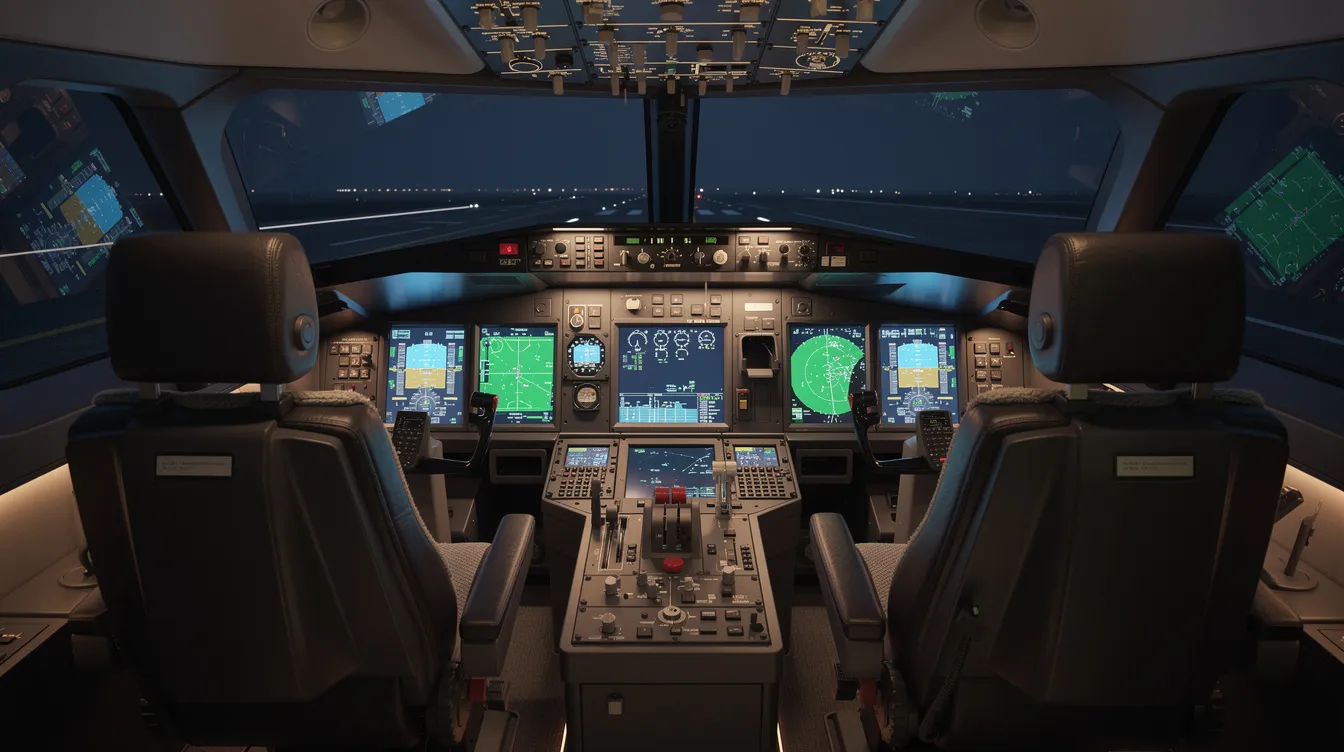
Smaller does not mean basic. Modern small jets and advanced pistons offer glass cockpits with synthetic vision, onboard Wi-Fi, and executive seating configurations for 2-7 passengers, enhancing the overall flying experience.
Typical performance bands:
Vision Jet: max cruise near 300 KTAS, ceiling near 31,000 ft, range near 1,200 nm.
Phenom 100EV: cruise around 400+ KTAS, strong short-field capability, refined flight deck.
HondaJet Elite II: cruise above 400 KTAS, longer range, quiet cabin architecture.
Citation Mustang: around 340 KTAS, practical pre-owned VLJ performance.
Many new Very Light Jets (VLJs) offer greater safety than legacy light jets due to advancements in regulatory standards and technology, including enhanced avionics and improved situational awareness systems. Modern small private jets are designed to meet rigorous safety standards, incorporating advanced safety systems such as autopilot integration, envelope protection, and in some cases, whole-airframe parachutes.
Advanced avionics such as Garmin-based suites, synthetic vision, coupled VNAV, and integrated autopilot modes help experienced pilots manage IFR workloads. These systems are designed to reduce pilot workload, but they do not replace disciplined pilot training, weather planning, and operational control.
BusinessJets.com evaluates whether avionics are current or nearing obsolescence because this affects valuation, dispatch reliability, and upgrade budgets.
Mission Profiles: When the Smallest Private Jet Is the Right Tool
Ownership of a small private jet provides unmatched flexibility, privacy, and time savings by allowing owners to bypass commercial terminals and set exact schedules. Ownership of a small private jet can provide the ultimate convenience and availability for frequent flyers, but it also comes with high ongoing costs such as maintenance, insurance, and regulatory compliance responsibilities.
A VLJ works best when the flight plan is predictable: two to four passengers, 300–700 nm stages, manageable baggage, and access to smaller airports near the destination. If weather changes, the nearest suitable airport, reserves, runway length, and alternate requirements still control the operation.
Owner-pilots often move from high-performance piston or turboprop aircraft into a personal aviation jet for speed, pressurization, and dispatch flexibility. For corporate flight departments, compact light jets can handle short-haul routes while larger jets remain available for long-range missions.
Industry experts recommend purchasing a private jet only if flying more than 200 hours per year; otherwise, Fractional Jet Ownership or Jet Cards may be more viable options. For individuals flying fewer than 100 hours per year, chartering a private jet is often more financially efficient than ownership, as it eliminates costs related to maintenance, insurance, and hangar fees.
Chartering a private jet allows users to access a variety of aircraft types tailored to specific missions without the capital tied up in ownership, making it a flexible option for varying travel needs. Can small private jets cross the country or the ocean? They can sometimes do so with stops, but nonstop transcontinental missions usually call for midsize, super-mid, or heavy categories, and nonstop transatlantic capability typically begins with larger light jets and above rather than VLJs or compact light jets, especially for popular long-haul routes such as private jet travel to Paris.
BusinessJets.com is uniquely positioned to advise on market timing and aircraft condition to maximize resale value.
Resale value for compact light jets depends heavily on aircraft condition, maintenance history, and avionics currency. Buyers prioritize models with recent upgrades, well-documented service records, and compliance with the latest regulatory mandates such as ADS-B Out and RVSM certification.
Market trends indicate increasing interest in VLJs and compact light jets due to their operational efficiency and suitability for regional missions. However, depreciation remains a factor, especially as newer models with enhanced technology enter the market.
Environmental considerations are increasingly shaping buyer preferences, with demand growing for aircraft that offer better fuel efficiency and compatibility with sustainable aviation fuels (SAF). This trend may influence future residual values and operational costs.
For sellers, timing the market to coincide with peak demand periods, such as economic upswings or corporate travel rebounds, can enhance sales outcomes. BusinessJets.com offers tailored consulting to align aircraft marketing strategies with these market dynamics, ensuring clients achieve optimal transaction results.
In summary, ownership and resale of the smallest private jets require careful attention to aircraft condition, market timing, and evolving buyer priorities. BusinessJets.com’s expertise supports clients throughout this process, from acquisition to disposition, maximizing asset value in a competitive marketplace.
Frequently Asked Questions (FAQs)
What defines the smallest practical private jet?
The smallest practical private jet is generally considered to be the Cirrus Vision Jet SF50, which measures 30 feet 11 inches in length and accommodates up to seven people, including the pilot. It combines certification, safety features, and operational practicality suitable for personal and business use.
How do Very Light Jets (VLJs) differ from light jets?
VLJs typically seat 4 to 6 passengers and offer ranges up to 1,200 nautical miles, focusing on regional trips and single-pilot operation for cost efficiency. Light jets, such as the HondaJet Elite II and Embraer Phenom 100EV, provide faster cruise speeds, longer ranges (1,500-2,000+ nm), and more spacious cabins, catering to longer regional flights.
Is owning the smallest private jet more cost-effective than chartering?
Ownership becomes financially viable when flying more than 200 hours annually, considering fixed costs like maintenance, insurance, and hangar fees. For fewer hours, chartering or Jet Card programs often offer better cost efficiency and flexibility without the burdens of ownership.
Do small private jets have fully enclosed lavatories?
Some small private jets, including models like the Embraer Phenom 100EV and HondaJet Elite II, feature fully enclosed lavatories, enhancing comfort for longer flights despite the aircraft's compact size.
Can the smallest private jets fly transatlantic routes?
Most VLJs and compact light jets lack the range for nonstop transatlantic flights. Such missions typically require midsize or larger jets with ranges exceeding 3,000 nautical miles. Transatlantic travel with small jets often involves multiple fuel stops, which may not be practical for regular business use.
What safety features are standard in the smallest private jets?
Modern small jets incorporate advanced avionics, autopilot integration, envelope protection, and, in some cases, whole-airframe parachute systems like the Cirrus Airframe Parachute System (CAPS). Enhanced situational awareness and autoland capabilities further improve safety profiles.
How does BusinessJets.com assist buyers and sellers of small private jets?
BusinessJets.com provides expert aircraft appraisals, acquisition consulting, resale strategy guidance, and market intelligence. With over 1,500 transactions and 5,000 satisfied clients, the firm supports informed decision-making to maximize value and optimize ownership experiences.
Conclusion: Partner with BusinessJets.com for Your Small Private Jet Needs
Choosing the smallest private jet that aligns with your mission profile, budget, and operational requirements is a nuanced process. It demands expert insight into aircraft capabilities, market dynamics, and long-term ownership considerations. BusinessJets.com stands ready to assist discerning buyers, sellers, and operators in navigating this complex landscape. Leveraging a proven track record of over 1,500 successful aircraft transactions and a commitment to personalized aviation consulting, we deliver tailored solutions that optimize value and operational efficiency.
Whether you are evaluating the Cirrus Vision Jet as an entry point into private jet ownership, considering a compact light jet for expanded mission flexibility, or stepping up to large-cabin options comparable to an Airbus ACJ319 private jet, BusinessJets.com offers the expertise and discretion essential for confident decision-making. Engage with us to request an aircraft appraisal, explore acquisition support, or list your aircraft for sale. Your journey to seamless, efficient private aviation begins with a trusted partner—BusinessJets.com.