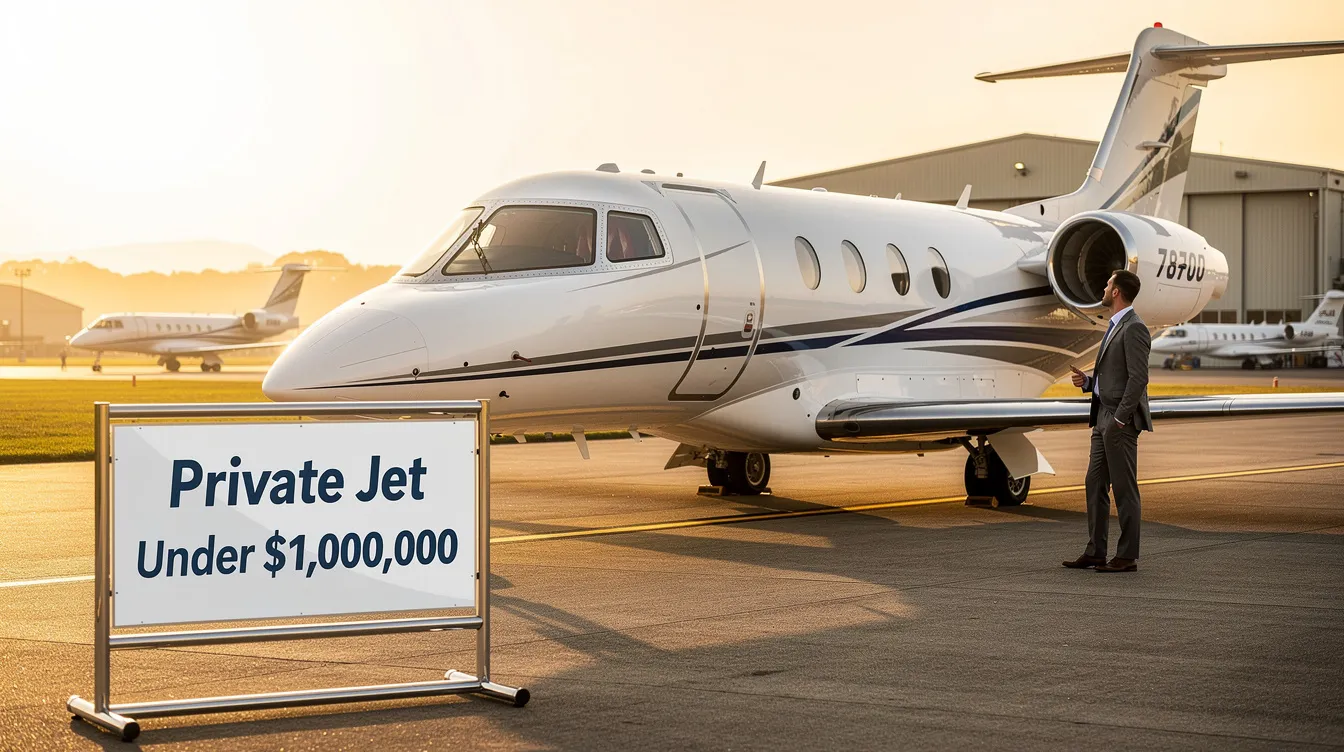
How Much Is a Small Private Jet? (2026 Buyer’s Guide)
This comprehensive guide explores the costs of owning, operating, and renting small private jets in 2026. Whether you are a prospective buyer, a charter user, or an aviation enthusiast, understanding the financial landscape of small private jets is crucial for making informed decisions. The article covers upfront purchase prices, ongoing ownership expenses, rental and charter alternatives, and the hidden fees that can impact your budget. With the private aviation market evolving rapidly, knowing what to expect in 2026 helps you plan smarter, avoid costly surprises, and choose the best solution for your travel needs.
Key Takeaways
How much is a small private jet in 2026? Upfront purchase costs for small private jets can range from $2 million to $10 million, depending on whether the aircraft is new or pre-owned and its specifications. Very light jets generally run about $2.0M–$4.0M new, while a new light jet typically falls around $5M–$11M+, with examples including the Cirrus Vision Jet, HondaJet Elite II, Embraer Phenom 100EV, Citation CJ3+, and Phenom 300E.
Small private jets generally fall into two categories: Very Light Jets (VLJs) and Light Jets.
Pre-owned examples often cost 25–50% less than new aircraft, with older VLJs commonly around $1.3M–$2.5M and older light jets often around $2.0M–$4.5M.
Annual operating budgets for small private jets typically range from $500,000 to $1.2 million, before financing and depreciation.
Fixed annual costs for owning a small private jet typically range from $200,000 to $500,000 annually, independent of flight activity. These fixed costs include hangar fees, insurance, pilot salaries, and management expenses.
Operating costs for small private jets can range from $1,000 to $2,200 per flight hour, covering variable expenses such as fuel, maintenance, and crew.
Annual maintenance and inspection costs for small private jets typically range from $200,000 to $1,000,000, depending on the aircraft's age and usage.
For buyers flying fewer than roughly 150–200 flight hours per year, private jet rental, private jet charter, jet cards, or fractional access may be more efficient than full ownership.
BusinessJets.com supports buyers, sellers, and private jet owners with appraisals, acquisitions, consulting, and brokerage informed by 1,500+ completed aircraft transactions.
Small Private Jet Cost Overview (2026)
Jet Category | Typical Purchase Price (New) | Typical Purchase Price (Pre-Owned) | Seating Capacity | Range (Nautical Miles) | Estimated Hourly Operating Cost | Typical Charter Hourly Rate |
|---|---|---|---|---|---|---|
Very Light Jets (VLJs) | $2M – $4M | $1.3M – $2.5M | 4 – 6 | 1,000 – 1,300 | $1,200 – $1,800 | $2,000 – $3,000 |
Light Jets | $5M – $11M+ | $2M – $4.5M | 6 – 8 | 1,800 – 2,200 | $1,600 – $2,500 | $2,500 – $4,000 |
Midsize Jets | $9M – $20M | $4M – $10M | 5 – 8 | 2,000 – 3,500 | $2,000 – $3,500 | $4,000 – $6,000 |
Super Midsize Jets | $15M – $30M | $7M – $15M | 6 – 9 | 3,200 – 3,500 | $3,000 – $5,000 | $5,000 – $8,000 |
This table summarizes key financial and operational metrics for small private jets, helping buyers and charter users benchmark their options effectively.
What Counts as a “Small Private Jet” – And How Much Do They Cost in 2026?
In practical business aviation terms, a small private jet usually refers to a VLJ or light jet: aircraft sized for short- to medium-distance missions, smaller passenger groups, and access to regional airports. These aircraft are often used for private jet travel between city pairs such as New York and regional business centers, or for cross-country flights where commercial flights require inconvenient connections, while offering more schedule flexibility and access to smaller airports than commercial airlines.
Private jets are categorized into different classes based on their size and capabilities, including Very Light Jets (VLJs), Light Jets, Midsize Jets, Super Midsize Jets, Heavy Jets, and Ultra Long Range Jets. A midsize jet, midsize private jet, heavy jet, Boeing business jet, large jets, vip airliners, and ultra long-range aircraft serve different missions and sit outside the “small jet” category, especially in markets such as Los Angeles, where longer-range and VIP-style aircraft are more relevant.
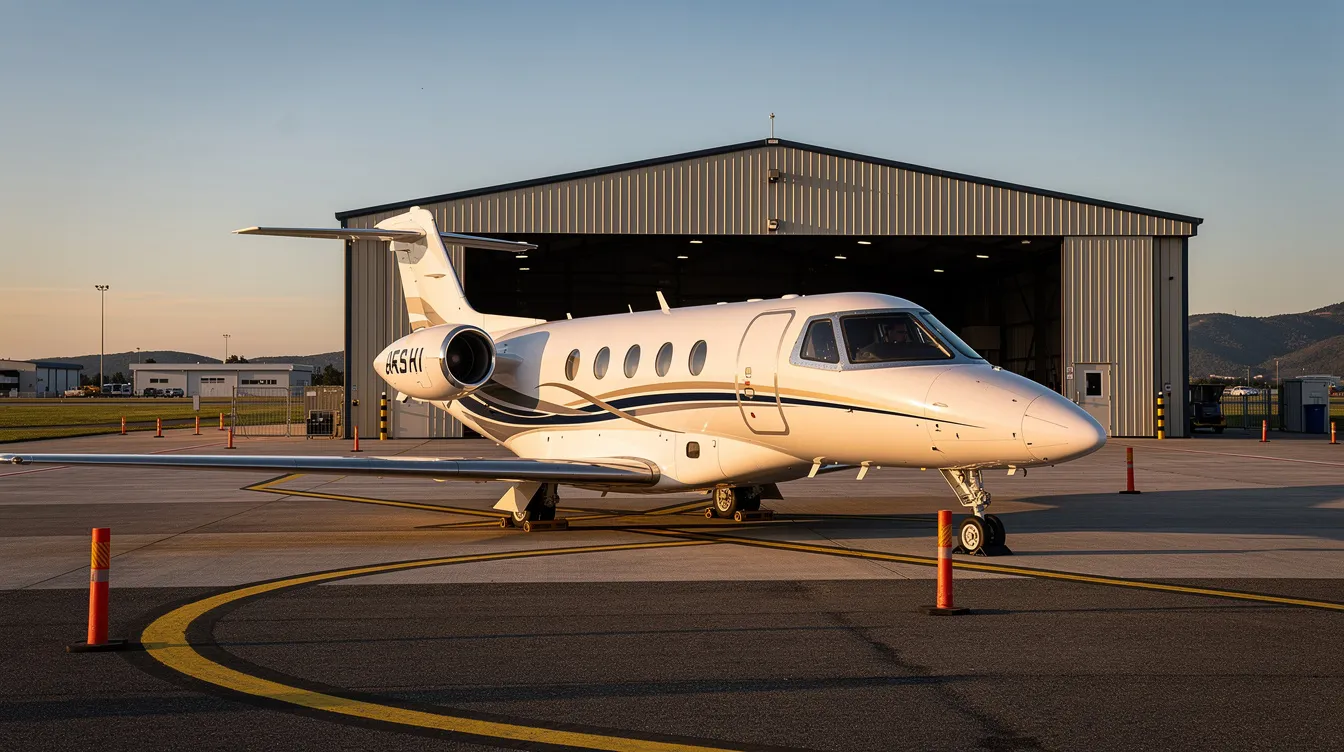
Very light jets: usually seat 4–6 passengers, offer ranges near 1,000–1,300 nautical miles, and may be certified for single-pilot operation. New VLJs are generally about $2.0M–$4.0M, while late-2000s and early-2010s pre-owned jets may trade around $1.3M–$2.5M.
Light jets: usually seat 6–8 passengers, offer roughly 1,800–2,200 nautical miles of range, and are more capable for longer routes. New light jet pricing is typically $5M–$11M+, while older jets from the early 2000s in good condition often trade around $2.0M–$4.5M.
Quick contrasts: super midsize jets, Heavy Jets, and Ultra Long Range Jets carry more passengers farther, but aircraft size, aircraft weight, fuel burn, crew model, and airport fees all increase materially.
Representative 2026 examples include the Cirrus Vision Jet G2+/G3 in the low-to-mid $3M range, new, with earlier units often below $3M; the Phenom 100EV around the low-to-mid $4M to $5M band, depending on options; and the HondaJet Elite II around $6M–$7M. In light jets, a Citation CJ3+ may approach $9M–$10M new, a CJ4 Gen2 is around $10M–$11M, and a Phenom 300E is generally around $10M–$11M. Final pricing depends on jet category, aircraft type, year, aircraft age, flight hours, engine cycles, maintenance status, avionics, aircraft availability, and current private aviation market demand.
New vs Pre-Owned Small Private Jets: How Much Does It Cost?
The largest private jet cost decision is whether to buy new or pre-owned. New aircraft bring warranty coverage, the latest avionics, improved fuel efficiency, and predictable early-life maintenance, but they also require more capital and face early depreciation. Pre-owned aircraft reduce acquisition cost, but due diligence becomes more important.
Typical new small private jet cost bands in 2026 remain broad. Very light jets include the Cirrus Vision Jet, where earlier or lightly used examples may be under $3M while new examples are generally low-to-mid $3M, and the Phenom 100EV, commonly discussed in the low-to-mid $4M or low-$5M range depending on configuration. Light jets include the Citation CJ3+, around $9M–$10M new, the CJ4 Gen2, circa $10M–$11M, and the HondaJet 2600 concept as a useful future capability reference, though buyers should note its availability status rather than treat it as an immediate acquisition option.
For pre-owned aircraft, useful 2026 planning ranges are:
3–7 years old: often 25–35% below original list price, assuming strong records, modern avionics, and no major inspection surprises.
8–15 years old: often 40–60% below original list price, depending on maintenance programs, refurbishment history, and engine status.
New VLJ vs 8–10-year-old VLJ: a new VLJ may cost around $3M–$4M; an 8–10-year-old example may cost $2M–$2.5M, but may need avionics, paint, interior, or inspection spending.
New light jet vs 12–15-year-old light jet: a new light jet may cost $9M–$11M; a 12–15-year-old aircraft may cost $4M–$7M, with greater focus on downtime, engine reserves, and refurbishment needs.
Two aircraft with the same aircraft type and similar flight time can still differ by hundreds of thousands or millions of dollars. BusinessJets.com provides independent aircraft appraisals using transaction data, maintenance review, and current market trends so buyers can determine whether a specific aircraft is fairly priced before entering negotiations.
Upfront Purchase Price vs. Ongoing Ownership Costs
First-time buyers often ask, “much does it cost to buy the aircraft?” The better question is what the entire aircraft will cost to own over five to ten years. For light jets used 150–300 hours annually, the acquisition price is only one part of the total cost of ownership.
Fixed Annual Costs
Fixed annual costs for owning a small private jet typically range from $200,000 to $500,000 annually, independent of flight activity. These costs include hangar fees, insurance, training, subscriptions, management, and crew expenses. Typical planning ranges include:
Hangar and parking: $30,000–$90,000 per year
Insurance: roughly 1–2% of hull value or about $25,000–$120,000 for many VLJs and light jets
Pilot compensation: may exceed $90,000–$140,000 per pilot annually
Management fees: if a professional management company is used
Variable Costs
Variable costs are driven by flight hours. Operating costs for small private jets can range from $1,000 to $2,200 per flight hour for various expenses, including fuel and maintenance. In practical budgeting:
VLJs may run around $1,200–$1,800 per hour
Light jet costs may run about $1,600–$2,500 per hour, depending on fuel prices, engine programs, maintenance reserves, navigation fees, catering, landing fees, and fixed base operators
Maintenance Costs

Maintenance is where optimistic budgets often fail. Annual maintenance and inspection costs for small private jets typically range from $200,000 to $1,000,000, depending on the aircraft's age and usage. Key maintenance expenses include:
Mandatory inspections
Corrosion findings
Engine work
Paint
Cabin refurbishment
Avionics upgrades
These can create six-figure events every few years. BusinessJets.com advisory work often starts with a 5–10-year ownership model so buyers understand the capital plan, not just the acquisition price.
Private Jet Rental vs Ownership: At What Point Does Buying a Small Jet Make Sense?
Many BusinessJets.com clients begin with private jet rental before acquiring a private plane. Prior charter history is useful because it shows route patterns, passenger loads, flight duration, schedule flexibility, and whether the same aircraft category is repeatedly needed. Travelers also often weigh chartering against commercial airlines when comparing flexibility, privacy, and time savings.
Rental Cost Breakdown
Very Light Jets (VLJs): Ideal for short hops with 4–6 passengers, typically cost between $2,000 and $3,000 per hour to rent.
Midsize Jets: Accommodate 5–8 passengers, rental costs range from $4,000 to $6,000 per hour, suitable for medium-distance trips.
Heavy Jets: Designed for long-haul or international flights, accommodate 8–12 passengers, and cost between $8,000 and $14,000 per hour.
Ultra Long Range Jets: Capable of international flights, the highest cost bracket, rental prices range from $12,000 to $20,000 per hour.
On-demand private jet rental prices typically range from $2,000 to $14,000+ per billable hour, depending on aircraft size, distance, and real-time logistics. Private jet rental costs can vary significantly based on the aircraft category, with very light jets costing around $2,000–$3,000 per hour and ultra-long-range jets costing $12,000–$20,000 per hour. Private jet charter rates and hourly charter rates also depend on route and aircraft type, aircraft positioning, crew availability, airport constraints, and billable flight time.
The total cost of renting a private jet includes not only the base hourly rate but also additional costs that affect the total charter cost, such as:
Fuel surcharges, which can add $600 to $900 per hour or more, depending on the aircraft size and current fuel prices.
Landing fees, which can vary widely between airports, typically range from $150 to $500 or more, depending on the size and weight of the aircraft.
Crew expenses
Applicable taxes (which can add 20–40% on top of the base rate)
Mandatory government taxes and fees, such as the US Federal Excise Tax (7.5%) and various segment fees, which can materially change the final trip price
Short leg fees, minimum billable legs, ground transportation, and incidental charges such as de-icing, crew overnight charges, and catering, which are often excluded from the initial quote and vary by itinerary
When Does Ownership Make Sense?
For most owners, full ownership becomes competitive around 200–250 flight hours per year. A client flying 80 hours annually may preserve capital and flexibility through charter access, private jet charter costs, jet cards, membership programs, or occasional empty leg flights.
A client flying 250+ hours annually on predictable routes may benefit from owning a small light jet, particularly if frequent flyers need short-notice scheduling or access to smaller regional airports. Chartering a private jet provides all the benefits of ownership, such as comfort and privacy, without the ongoing costs of maintenance and management; ownership provides control, availability, and a lower marginal billable flight hour once fixed costs are absorbed. BusinessJets.com can review historic charter invoices and model whether continuing to fly private by charter or acquiring a small jet offers better long-term value.
Jet Cards and Membership Programs
Jet cards and membership programs allow travelers to purchase hours in bulk or subscribe to private aviation services, which can reduce per-hour costs and offer added benefits.
Empty legs can appeal to bargain hunters, but they are not a dependable substitute for scheduled travel needs. Empty leg flights are discounted one-way flights that can save travelers up to 75% off regular charter rates, but they come with less flexibility in scheduling.
Key Price Drivers for Small Private Jets
Two similar-looking business jets can differ in price by millions because their records, programs, specifications, and maintenance positions are different. That is why valuation should not rely on the listing price alone.
Primary price drivers include:
Jet category and manufacturer, including Cessna, Embraer, Honda, Cirrus, Pilatus, and other OEMs
Airframe age, total time on engines, cycles, and overall aircraft age
Maintenance status, logbook quality, damage history, and upcoming inspections
Avionics suite, such as Garmin G3000/5000 or legacy systems, plus regulatory compliance
Cabin configuration, refurbishment date, connectivity, Wi-Fi, and passenger amenities
Market factors, including interest rates, recent demand, comparable listings, and negotiating leverage
Enrollment in engine and airframe programs can add 10–20% to resale value because it reduces uncertainty and smooths heavy maintenance bills. In the private aviation market, an aircraft with strong program coverage, clean records, and no near-term inspection exposure will usually command a premium over a cheaper aircraft with deferred obligations. BusinessJets.com valuation work incorporates these drivers and real-time market data to help sellers set realistic ask prices and buyers avoid overpaying, and its curated selection of premium aircraft for sale helps buyers compare options across major manufacturers.
Hidden Fees and “Gotchas” When Budgeting Small Private Jet Costs
Beyond the advertised purchase price and hourly estimates, hidden fees can change the economics quickly. These costs matter whether the buyer is acquiring a jet, using private jet charter, or evaluating private jet rental against ownership.
Acquisition Hidden Fees
Commonly underestimated items include:
Pre-purchase inspections
Independent technical reviews
Test flights
Escrow
Title work
Sales/use tax or VAT
Import/export paperwork
Cross-border compliance
A purchase agreement should also address:
Deferred maintenance
Corrosion
Incomplete records
Outdated avionics
Any six- or seven-figure upgrades that may appear soon after closing
Charter Hidden Fees
For charter users, private jet charter costs also include operational extras. The total cost of renting a private jet includes not only the base hourly rate but also additional costs such as:
Fuel surcharges
Landing fees (can vary widely between airports, typically ranging from $150 to $500 or more, depending on the size and weight of the aircraft)
Crew expenses
Applicable taxes (can add 20–40% on top of the base rate)
De-icing fees
Crew overnight charges
Catering costs
Fees airports charge
Fixed base operators
Peak-day surcharges
Aircraft positioning
Short leg fees
These incidental charges are often not included in the initial quote and can vary significantly based on the specifics of the flight. BusinessJets.com routinely manages these risk points for buyers and sellers so costs are disclosed, negotiated, and structured correctly.
Representative Small Private Jet Models and What They Cost
The following 2026 ranges are indicative, not appraisals. Actual value depends on condition, region, records, hours, programs, and current aircraft availability. They are useful benchmarks for estimating how much small private jets cost, and buyers asking about the cheapest private jet are usually looking at older VLJs or early-entry light jets rather than newer, larger aircraft, while others may compare these to VIP airliners like the Airbus ACJ319 for long-range or head-of-state missions.
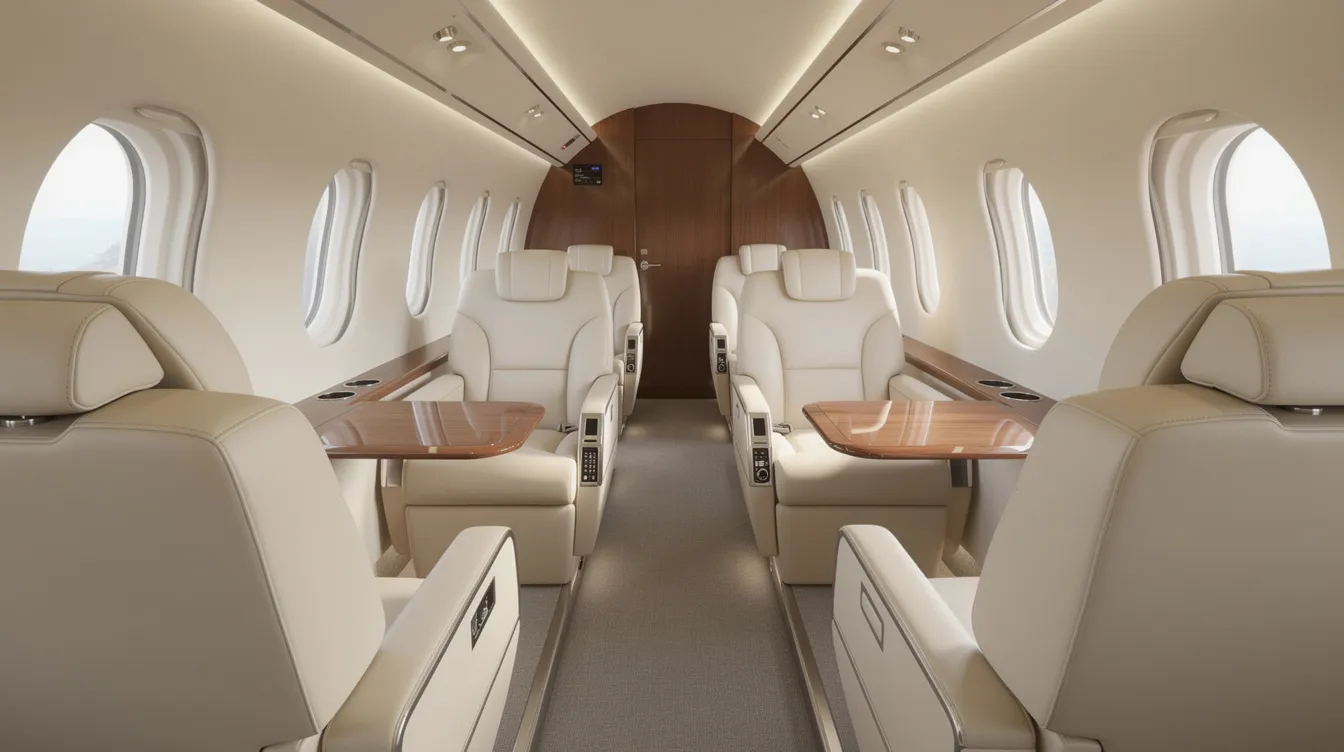
Cirrus Vision Jet G2+/G3
VLJ with about 5–7 seats and roughly 1,200–1,300 nm of range
New examples: generally low-to-mid $3M
Late-2010s aircraft: may be under $2.5M
Chosen for owner-pilot accessibility, simplified systems, short-field utility, and parachute safety system
Embraer Phenom 100EV
VLJ/light-edge aircraft with about 4–6 passenger seats and roughly 1,100–1,250 nm of range
New pricing: often in the mid-$4M to low-$5M area
Earlier Phenom 100s: often trade around $2M–$3M depending on avionics and hours
Selected for cabin feel, performance, and single-pilot capability
HondaJet Elite II
Small light jet with about 5–7 passenger seats and roughly 1,500+ nm of range
New aircraft: around $6M–$7M
Earlier HondaJet models: may be $3.5M–$5M
Valued for cabin quietness, over-the-wing engine design, and efficient mission profile
Cessna Citation CJ2+/CJ3+
Light jets with 6–7 passenger seats and strong runway performance
New CJ3+: may approach $10M
2010s pre-owned values: often fall around $4M–$7M depending on year, programs, and inspection status
Chosen for support, reliability, and broad market acceptance
Embraer Phenom 300E
Larger-end small light jet with 6–8 passenger seats and approximately 2,000–2,200 nm of range
New examples: around $10M–$11M
Early Phenom 300s: commonly trade around $6M–$8M
Popular for speed, cabin comfort, and charter demand
Learjet 45XR
Pre-owned light jet, no longer produced, typically seating 6–8 passengers with around 1,900–2,000 nm of range
Many examples: trade around $2.5M–$4M
Buyers should budget carefully for parts, inspections, and higher operating exposure than newer aircraft
Some older pre-owned aircraft can appear to be the lowest-cost option upfront, yet inspection findings and parts exposure may make them more expensive to own over time
BusinessJets.com can provide access to current on-market and off-market aircraft, comparable private jets for sale, and confidential opportunities not broadly advertised, including charter-ready large-cabin aircraft serving destinations like Paris.
Summary: How Much Is a Small Private Jet in 2026?
Understanding the true cost of a small private jet in 2026 requires more than just looking at the sticker price. Prospective buyers and charter users must consider not only the upfront purchase price but also ongoing ownership costs, variable and fixed expenses, maintenance, and hidden fees. For those flying fewer than 200 hours per year, charter, jet cards, or membership programs may offer better value and flexibility. For frequent flyers, ownership can provide control and long-term savings, especially when supported by expert guidance and thorough due diligence. With a wide range of models, price points, and operational considerations, working with experienced advisors like BusinessJets.com ensures you make the right investment for your travel needs and budget.
Frequently Asked Questions (FAQs)
What is the typical purchase price range for a small private jet?
Small private jets generally range from $2 million to $10 million, depending on whether the aircraft is new or pre-owned, its size category (VLJ or light jet), and specifications.
How much does it cost to operate a small private jet annually?
Annual operating budgets for small private jets typically range from $500,000 to $1.2 million, covering fixed costs like hangar and insurance, as well as variable costs such as fuel, maintenance, and crew expenses.
When does it make financial sense to buy a small private jet instead of chartering?
Ownership generally becomes cost-effective for users flying around 150–200 hours or more annually. Below that, chartering, jet cards, or membership programs often offer better flexibility and financial efficiency.
What hidden fees should I consider when budgeting for private jet costs?
Hidden fees can include pre-purchase inspections, maintenance reserves, fuel surcharges, landing and handling fees, crew overnight charges, de-icing, catering, and applicable taxes, which can add 20–40% on top of base rates.
How do charter costs for small private jets compare to ownership costs?
Charter costs include hourly rates plus additional fees and taxes, often making it more economical for infrequent flyers. Ownership involves significant fixed and variable expenses but offers greater control and lower marginal costs for frequent use.
Can I find discounted private jet flights?
Yes, empty leg flights offer discounted one-way trips, sometimes up to 75% off regular charter rates, though they come with less scheduling flexibility.
How can BusinessJets.com assist with small private jet purchases or charters?
BusinessJets.com provides expert aircraft appraisals, acquisition consulting, brokerage services, and market insights based on extensive transaction experience to help clients make informed decisions.
Conclusion: Making Informed Decisions in Small Private Jet Ownership and Charter
Choosing the right approach to private aviation—whether purchasing a small private jet or utilizing charter services—requires a clear understanding of the full financial picture, operational needs, and travel patterns. Small private jets offer unmatched convenience, flexibility, and privacy for short- to medium-range missions, but ownership involves high fixed and variable costs beyond the purchase price. For many, especially those flying fewer than 150–200 hours annually, chartering, jet cards, or membership programs provide efficient, cost-effective alternatives that deliver the benefits of private flight without the commitments and complexities of ownership.
BusinessJets.com stands ready as a trusted partner to guide you through every stage of your private aviation journey. With over 1,500 aircraft transactions and deep market expertise, BusinessJets.com offers tailored aircraft appraisals, acquisition support, brokerage services, and aviation consulting designed to optimize your investment and operational outcomes. Whether you seek to buy, sell, or charter, their discreet, expert-led approach ensures you make informed decisions aligned with your unique travel requirements and financial goals.
Explore how BusinessJets.com can help you navigate the evolving private jet market with confidence and clarity. Request an appraisal, list your aircraft, or engage their consulting services today to experience the advantage of working with an industry leader committed to your success.
Visit BusinessJets.com to begin your private aviation journey with expert guidance and comprehensive support.