Private Jet Manufacturers: How to Choose the Right Partner for Your Aircraft Strategy

Selecting a private jet is not simply about prestige or price. It is a strategic decision shaped by mission requirements, operating economics, and long-term asset value. This guide examines the major private jet manufacturers across every segment, from very light jets to ultra-long-range jets and VIP airliners, and provides a framework to match the right airframe to your actual needs.
Key Takeaways
The global private jet market is led by a small group of major aerospace companies specializing in different aircraft size categories. About a dozen manufacturers globally dominate production, each strongest in specific segments ranging from entry-level jets to intercontinental flagships.
The most important decision is not brand prestige alone but matching your mission profile and performance capabilities—range, payload, cabin requirements, and airport access—to the right manufacturer and specific model.
BusinessJets.com operates as an independent aircraft brokerage and aviation consulting partner with over 1,500 completed transactions and 5,000+ satisfied clients, helping buyers and sellers navigate manufacturer comparisons, market timing, and valuation.
Sections below cover Gulfstream Aerospace, Bombardier, Dassault Aviation, Textron Aviation, Embraer, Pilatus Aircraft, HondaJet, Airbus Corporate Jets, Boeing Business Jets, and others, plus a structured framework for choosing the right manufacturer.
Readers can engage BusinessJets.com for aircraft appraisals, listing aircraft for sale, and consulting on new aircraft acquisitions or fleet optimization.
Business Aviation Segments and Where Manufacturers Compete
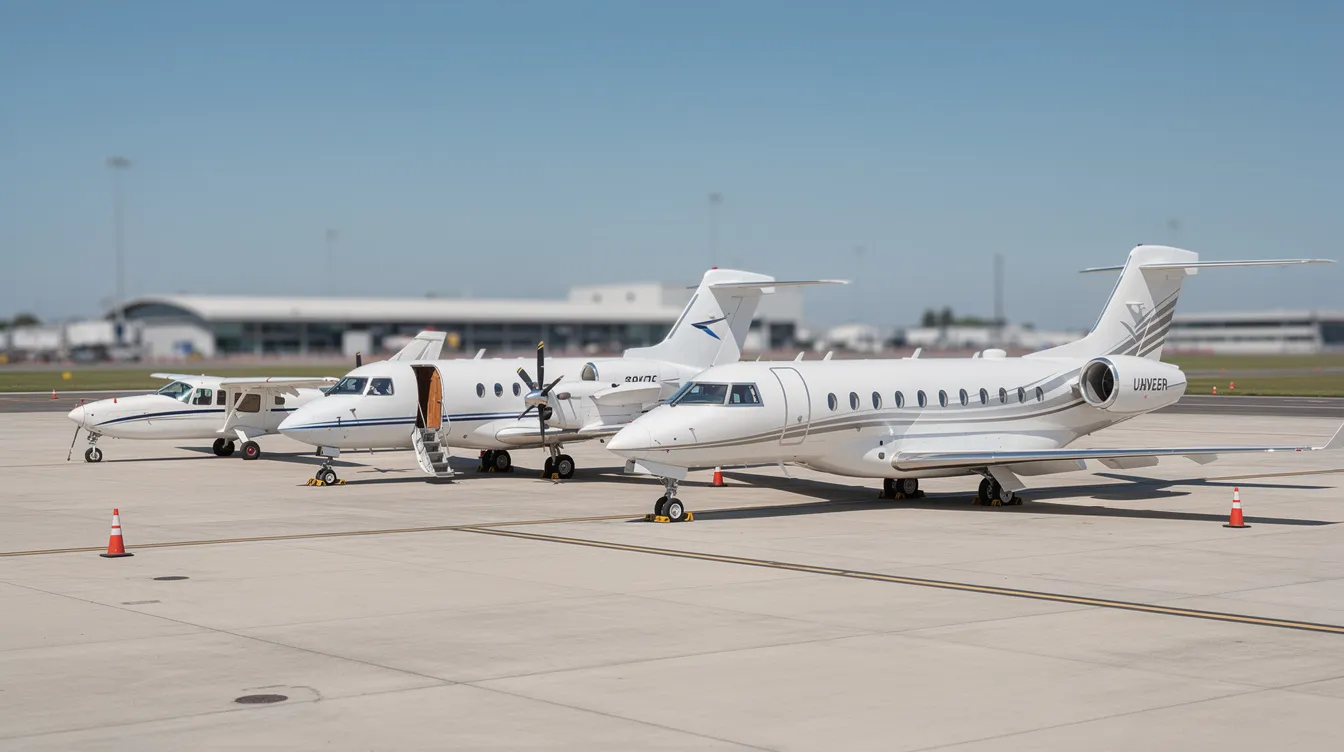
Understanding where private jet manufacturers compete starts with how the industry segments its products, with Midsize jets / Super midsize often including midsize jets in common market usage. The business aviation market is driven by elite aerospace manufacturers specializing in different tiers of private flight.
Segment | Typical Seats | Range | Primary Use |
|---|---|---|---|
Very Light Jets | 6–7 passengers | 500–1,500 nm | Regional hops, owner-pilot missions |
Light Jets | 6–8 passengers over ~1,953 nm | 1,500–2,500 nm | Short domestic, charter flights |
Midsize jets / Super midsize | 10–11 passengers over ~3,420 nm | 2,500–4,000 nm | Coast-to-coast, transcontinental |
Large cabin / Ultra long range | 10–19 passengers | 5,500–8,000+ nm | Nonstop intercontinental |
Bizliners (VIP airliner) | 20–50+ | 6,000–9,000+ nm | Heads of state, large corporate shuttles |
Ultra-long-range jets can fly up to 14,800 km non-stop, making them the backbone of global corporate travel.
Manufacturers map unevenly across these segments, and these same labels are used by manufacturers in the world when positioning products across private aviation categories. Cessna, part of Textron Aviation (founded 1992), and HondaJet dominate the light jet and very light jet segments. Embraer, the world's fourth-largest aircraft manufacturer and the best-selling light jet maker, competes strongly in light and super midsize categories. Gulfstream Aerospace specializes in ultra-long-range jets, and Bombardier, producer of the Global 8000 with its 8,000 nautical miles range, leads large jets and ultra-long-range segments. Meanwhile, turboprops like the Pilatus PC-12 and Beechcraft King Air excel in short-field access and low operating cost.
BusinessJets.com routinely evaluates segment fit when advising on first-time acquisitions, fleet upgrades, or replacing aging business aircraft.
A Brief History of Private Jet Manufacturing
Private jet manufacturing traces its roots to the early 1960s, when the Learjet 23 became the first purpose-built small business jet in 1963. Before that, private aviation relied on military derivatives and modified commercial aircraft.
Key milestones followed quickly. Dassault Aviation, founded in 1929 in France, brought its military-aerospace expertise into the Falcon line with innovative designs like the first Falcon trijets. Gulfstream developed early large cabin jets for corporate use, specializing in ultra-long-range jets. Cessna launched the Citation family, creating a broad ladder of entry-level to midsize jets. Bombardier expanded from the Challenger series into the Global line, producing some of the longest-range jets in the industry, including the Global 8000.
Consolidation reshaped the landscape. Textron Aviation brought Cessna and Beechcraft together in 2014 to offer jets and turboprops under one roof. Bombardier exited Learjet in 2021 to concentrate on Challenger and Global programs. Regulatory changes, fuel prices, and corporate globalization through the 1980s–2000s pushed manufacturers toward longer range, more efficient airframes.
Understanding this evolution helps buyers interpret each brand's design philosophy, support footprint, and long-term commitment to business aviation.
Gulfstream Aerospace: Large Cabin and Ultra Long Range Specialist
Gulfstream Aerospace, based in Savannah and part of General Dynamics, specializes in ultra-long-range jets and is a reference brand in large cabin private aviation. Gulfstream produces jets with ranges over 7,000 nautical miles, with its flagship models pushing the boundaries of speed and distance.
Current lineup highlights:
G280: Super midsize, strong short-field performer
G500 / G600: Large cabin, long-range aircraft for intercontinental missions
G700: Ultra-long-range (~7,750 nm), reaching speeds near Mach 0.925
G800: Advertised at approximately 8,000 nm range, high-speed cruise at Mach 0.90, cabin volume ~2,138 cu ft
Typical buyers include corporations with global networks, governments, and UHNWIs needing nonstop missions like Asia–US or Middle East–Americas. Cabin features—oval panoramic windows, low cabin altitude, advanced connectivity—directly influence both resale value and charter demand for Gulfstream jets.
BusinessJets.com evaluates Gulfstream options against competitors when clients prioritize speed, range, and cabin volume over operating cost per hour.
Bombardier: From Challengers to the Global 7500 and Beyond
Bombardier, headquartered in Montreal, is now fully focused on business jets after divesting its commercial aircraft and rail businesses. The company holds a strong presence from super midsize through ultra long range segments.
The Challenger family (350/3500, 650) serves corporate fleets and high-utilization charter operators with proven reliability and cabin comfort. The Bombardier Global series represents the manufacturer's flagship line:
Global 5500 / 6500: Large cabin, intercontinental range
Bombardier Global 7500: Range around 7,700–7,800 nm, speeds near Mach 0.925, certified 2018–2019
Global 8000: Bombardier produced the Global 8000 as a long-range private jet with a range of 8,000 nautical miles.
Combined OEM backlogs reached approximately $61.6 billion by mid-2026, with Gulfstream and Bombardier accounting for roughly 75% of that total. Bombardier's backlog alone surged over 35% year-over-year, driven by demand for the Global 8000 and Challenger models.
BusinessJets.com includes residual value trends, pre-owned inventory levels, and maintenance program options when comparing Bombardier Global versus Gulfstream for long-range fleet decisions.
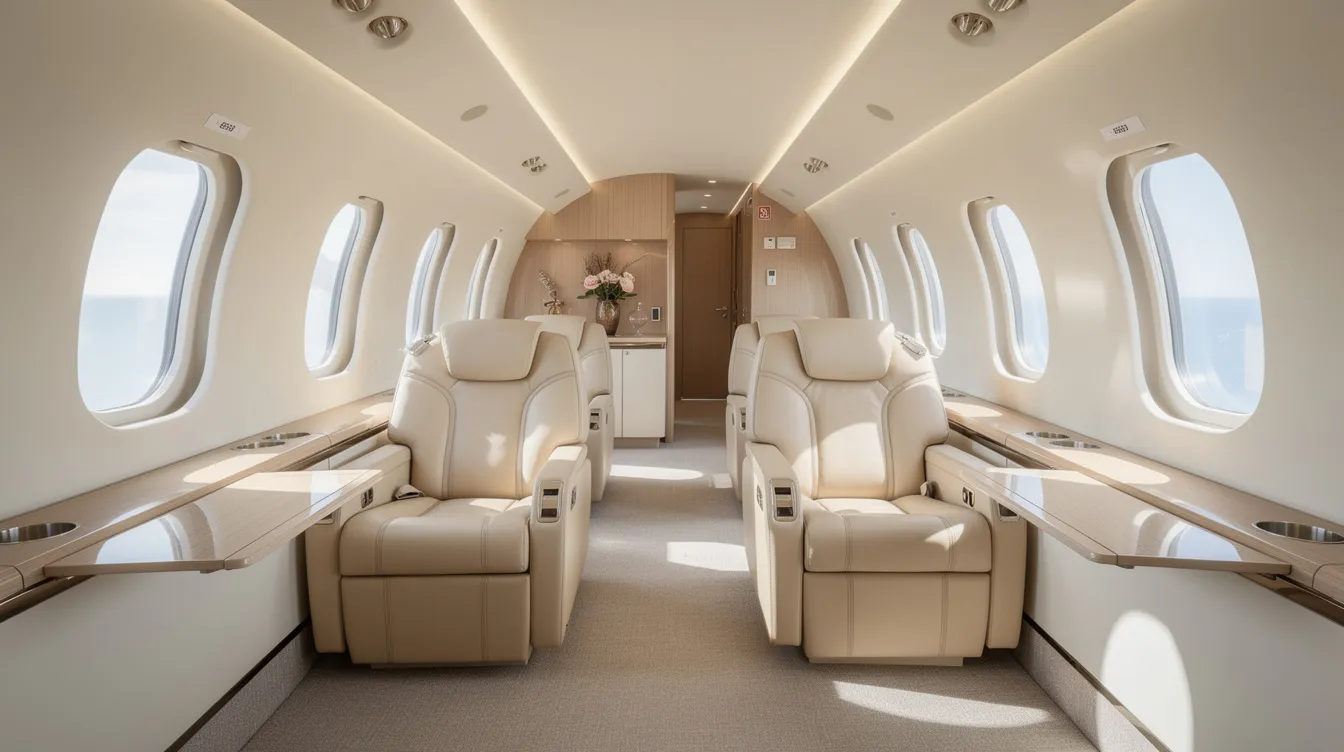
Dassault Aviation: Falcon Business Jets and European Design
Dassault Aviation, founded in 1929 in France, brings dual heritage from military aviation and Dassault Falcon business jets. The company focuses on super midsize to ultra long-range roles, with a reputation for performance from challenging runways and advanced flight control technology.
Key Falcon models for current buyers:
Falcon 2000LXS: Super midsize with excellent short-runway capability
Falcon 900LX: Large cabin trijet
Falcon 7X / 8X: Long-range trijets with engines mounted in a distinctive trijet configuration providing engine-out redundancy
Falcon 6X: New-generation large cabin
Falcon 10X: Ultra-long-range flagship with ~7,500 nm range, cabin width of 9 ft 1 in (widest in class), and a cabin volume of approximately 2,780 cu ft
Dassault's strengths include fly-by-wire flight controls, quiet cabins, and strong support for European and transatlantic operations. BusinessJets.com often sees Falcon jets in mixed fleets where operators value runway flexibility and European service network coverage.
Textron Aviation (Cessna & Beechcraft): From Very Light Jets to Super Midsize
Textron Aviation acts as the volume leader in smaller private aircraft. Cessna, part of Textron Aviation founded in 1992, and the 2014 integration with Beechcraft created a combined offering spanning light jets, midsize jets, and turboprops.
The Citation family covers multiple segments:
Citation M2: Very light jet for owner-pilots, typically accommodating 6–7 passengers
CJ3+ / CJ4 Gen2: Light jet workhorses for charter and corporate use, usually seating 6–8 passengers over a ~1,953 nm range
Citation Latitude: Midsize with a flat-floor cabin
Citation Longitude: Super midsize with approximately 3,500 nm range, quiet cabin, popular for North American coast-to-coast flights
Beechcraft King Air turboprops (260, 360) complement the jet line for short-field regional missions where a jet is not essential, but business aviation standards still apply. Cessna jets dominate many charter operators and owner-pilot fleets due to favorable acquisition cost, operating economics, and a broad maintenance services network.
BusinessJets.com advises clients choosing between a super midsize jet like the Citation Longitude and alternatives such as the Praetor 600 or Challenger 3500, based on mission frequency, cabin expectations, and resale outlook.
Embraer Executive Jets: Phenom, Praetor, and Emerging Long-Range Players
Embraer is the world's fourth-largest aircraft manufacturer and has built a dominant position in the light jet segment. Embraer is also the world's best-selling light jet manufacturer, with the Embraer Phenom 300 being the world's best-selling private jet in 2022, according to sales rankings commonly cited from the General Aviation Manufacturers Association.
Core models:
Embraer Phenom 100: Very light jet for regional operations
Phenom 300E: Light jet, consistently the top-selling business jet globally across several years
Praetor 500: Midsize jet with transcontinental capability
Praetor 600E: Super midsize with best-in-class range of ~4,018 nm, takeoff distance ~4,436 ft, and strong runway performance
Embraer's cabin and avionics focus—comfortable interiors, modern flight decks—and a growing global support network make it especially attractive to operators in Latin America, Europe, and North America. BusinessJets.com frequently compares Embraer options against Textron and Bombardier when optimizing operating cost, performance, and the overall flying experience in corporate fleets.
Very Light Jets and Entry-Level Private Jets
Very light jets bridge the gap between turboprop aircraft and larger light jets. These small jets typically accommodate 6–7 passengers, with ranges of 500–1,200 nm, low operating costs, and the option for owner-pilot use.
Key players in this segment:
Honda Aircraft Company (HondaJet Elite II): ~1,547 nm range, unique over-the-wing engine-mounted configuration, 422 KTAS cruise speed
Cessna Citation M2: Entry point in the Citation family
Embraer Phenom 100: VLJ with strong cabin for its class
Cirrus Vision Jet: Single-engine personal jet
Mission profiles where VLJs excel include regional business shuttles, short corporate hops between secondary cities, and private owners stepping up from high-performance pistons or turboprops. The trade-offs versus larger light jets are clear: lower acquisition and hourly cost, but reduced cabin volume, baggage capacity, and weather penetration in some conditions.
BusinessJets.com helps first-time private jet buyers evaluate whether a very light jet, a light jet, or charter flights through charter arrangements provides the best value before committing capital.
Large Jets, Ultra Long Range, and Bizliner Manufacturers
Large cabin and ultra long range jets—typically seating 10–19 passengers with ranges from 5,500 to 8,000+ nm—form the backbone of nonstop intercontinental corporate and governmental travel.
Key players:
Gulfstream: G600, G700, G800
Bombardier: Global 5500, 6500, 7500, 8000
Dassault: Falcon 7X, 8X, 10X
Business airliners are converted from commercial airliners for VIP use, representing the largest private aircraft available. Airbus Corporate Jets (ACJ319neo, ACJ320neo, ACJ TwoTwenty) and Boeing Business Jets (BBJ MAX 7/8/9, future BBJ 777X) offer extremely large cabins and ultra-long-range capability, with platforms such as the Airbus ACJ319 private jet showcasing the potential for high-capacity, long-range VVIP configurations. Airbus has delivered six new large jets since 2022. The Boeing Company produces BBJ variants that serve as VIP airliner platforms with multiple cabin zones including offices, bedrooms, and conference areas.
Typical buyers for Boeing Business Jets and Airbus Corporate Jets include heads of state, large family offices, and corporate flight departments requiring the capacity of commercial airliners with VVIP interiors, especially on high-profile routes to global hubs such as Paris by private jet charter. These are not standard commercial aircraft—each is custom-configured to provide access to amenities impossible in purpose-built business jets.
BusinessJets.com helps clients in this segment with complex evaluations involving aircraft specs, airport infrastructure, crew requirements, and long-term fleet strategy. Browse current aircraft for sale to see available inventory across these segments.

Specialized and Niche Manufacturers: Pilatus, HondaJet, and Others
Several niche key players fill specific roles in general aviation rather than competing across all segments.
Pilatus Aircraft (Switzerland) produces the PC-12 NGX turboprop and the PC-24 light jet—the "Super Versatile Jet" capable of operating from short, unpaved, or challenging runways with a cargo door and business-class cabin. The PC-24 offers approximately 2,000 nm range with six passengers and takeoff distances under 3,100 ft.
Honda Aircraft Company developed the HondaJet series, including the Elite II and planned Echelon, as innovators in very light and light jet technology. The over-the-wing engine mount design improves cabin volume and reduces fuselage noise.
Other niche manufacturers—Piaggio (P.180 Avanti), Cirrus (Vision Jet), and select remanufacturers—fill specialized roles or upgrade existing worldwide fleet assets rather than dominating market share by volume.
BusinessJets.com includes these niche options in advisory work when specific runway, noise, or cost constraints make them strategically valuable for an operator seeking the perfect aircraft for their mission.
How to Choose the Right Manufacturer for Your Missions
This section provides a decision framework rather than a brand ranking, aimed at corporate flight departments, UHNW individuals, and operators planning acquisitions.
Mission and performance factors:
Typical mission length and region of operation
Payload and cabin requirements (cabin comfort and customization options significantly influence the choice of a private jet)
Airport infrastructure constraints
Whether ultra-long-range or shorter regional hops dominate usage
Frequency of long-haul flights versus domestic operations
Cost considerations:
Acquisition budget by segment (VLJ ~$3–7M, super midsize ~$20–35M, ultra long range ~$50–75M+)
Total cost of ownership includes acquisition price and operating costs such as fuel and maintenance
Expected annual utilization and fuel efficiency, supported by established engine makers such as Pratt & Whitney Canada
Certain brands and specific models hold their resale value significantly better than others
Qualitative factors:
Safety record and engineering reliability are crucial considerations when selecting an aircraft manufacturer
Reliability and dispatch availability should be assessed when evaluating a private jet manufacturer
A robust global service network reduces downtime and enhances ownership experience for private jets
Customer support includes maintenance services and technical assistance
Cockpit commonality for operators building or standardizing their own fleet
BusinessJets.com uses independent appraisals, comparative market data, and scenario analysis to guide clients toward the right manufacturer and model. Explore our full range of aviation services designed to support these decisions.
Private Jet Appraisals, Acquisitions, and Sales with BusinessJets.com
Manufacturer choice should be integrated with aircraft valuation, timing, and broader fleet strategy. The private jet market is led by about a dozen manufacturers globally, and navigating their offerings requires structured analysis.
BusinessJets.com operates as a brokerage and aviation consulting firm with a track record of over 1,500 completed transactions and 5,000+ satisfied clients across multiple manufacturers and segments. Our personalized service approach ensures every recommendation is grounded in data and aligned with each client's operating reality.
A formal private jet appraisal considers manufacturer brand, model demand, market supply, aircraft-based age and condition, maintenance status, and upcoming technology shifts. Pre-owned inventory currently sits at 6–7% of active fleet—below the historical 8–10% balanced market—meaning timing and accurate valuation are essential.
The acquisition support process:
Define mission requirements and budget parameters
Shortlist manufacturers and models
Compare business cases including operating cost projections
Negotiate terms and manage pre-purchase inspections
Close and transition to operations
Request an aircraft appraisal or contact our team to discuss listing an aircraft for sale or engaging consulting on manufacturer selection.
Future Trends in Private Jet Manufacturing
Long development cycles—often 7–10 years for a new aircraft program—mean buyers must anticipate where technology, sustainability, and regulation are heading.
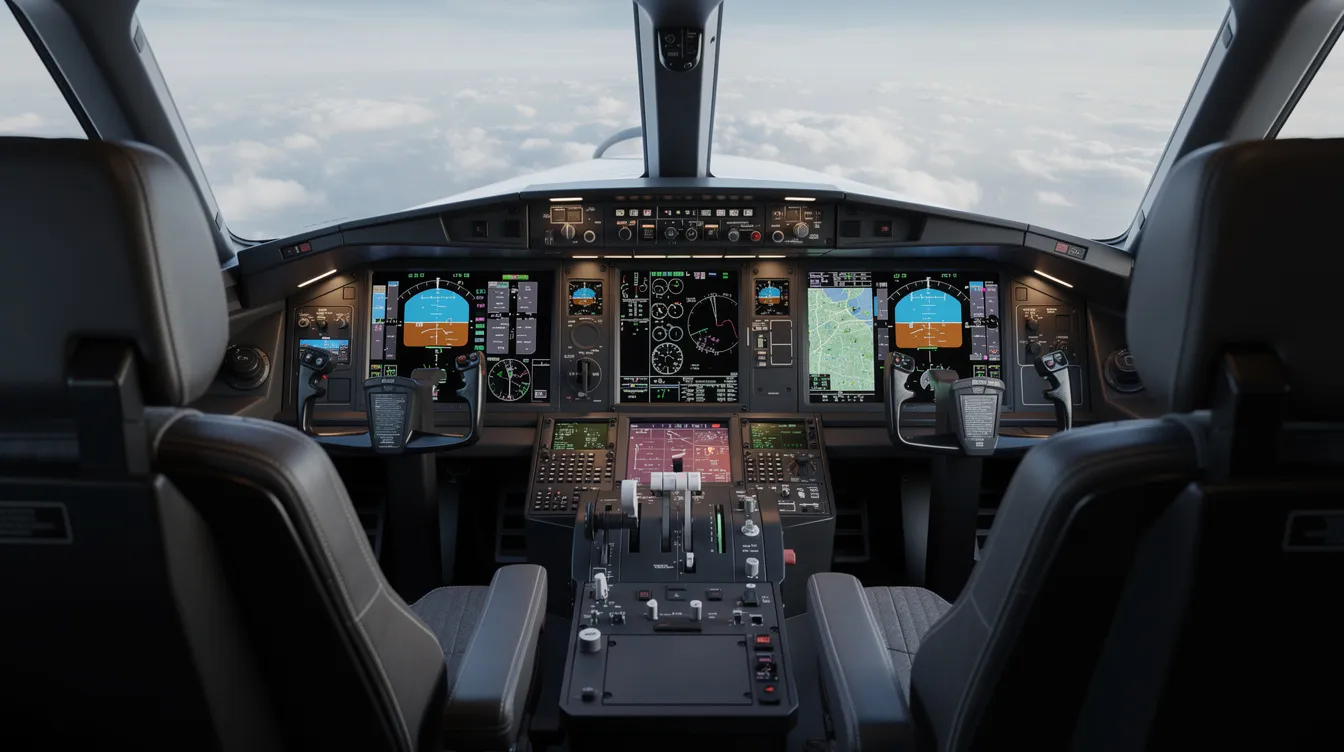
Modern private jets incorporate technological innovations such as advanced avionics and cabin management systems. These systems are becoming standard across segments, not just in high-end business jets. Manufacturers are investing in more efficient engines, composite structures, and wider use of sustainable aviation fuel (SAF) to produce jets that meet tightening emission standards.
Cabin technology integration continues to accelerate: high-speed connectivity, AI-assisted maintenance diagnostics, and modular cabin designs (as seen in the Dassault Falcon 10X) are reshaping what buyers expect from new aircraft.
Manufacturers are simultaneously refining ultra-long-range offerings—Global 8000, G800, Falcon 10X—while optimizing light and super midsize jets for charter operators and high-utilization corporate fleets. Value compression in mid-segments may emerge as buyers gravitate toward either entry-level efficiency or top-tier range and speed.
BusinessJets.com monitors these trends to advise clients on when to upgrade, which generation of aircraft to target, and how future models may affect long-term residual values across the worldwide fleet and manufacturers’ competitiveness around the world.
FAQ: Private Jet Manufacturers and Buying Decisions
These frequently asked questions address common concerns from owners, buyers, and operators evaluating manufacturers and models.
Which manufacturer is best for first-time private jet owners?
Many first-time owners gravitate toward light jets and very light jets from Cessna (Citation M2, CJ3+), Embraer (Phenom 100/300), and HondaJet due to lower acquisition cost, simpler operation, and strong support networks. There is no single "best" manufacturer—the right choice depends on mission profile, budget, and pilot or crew model. BusinessJets.com helps first-time buyers assess these factors through structured consulting before any commitment.
How important is manufacturer reputation for resale value?
Manufacturer reputation, fleet size, and global support coverage strongly influence liquidity and resale premiums. This is especially true for large jets and ultra long range aircraft, where models from Gulfstream, Bombardier, and Dassault tend to perform well in secondary markets. Heavy-jet resale values rose approximately 13% year-over-year in Q2 2026, while older inventory (over 16 years) can sit on market for 100+ days. BusinessJets.com quantifies these dynamics in every appraisal and sale strategy.
Should I prioritize range or cabin size when comparing manufacturers?
Start with a realistic mission analysis: how often are maximum-range flights actually flown versus typical trips, and how many passengers travel regularly. For many buyers in North America and Europe, a super midsize aircraft—Citation Longitude, Praetor 600, or Challenger 3500—delivers more efficient economics than ultra long range models whose full capability may be used only a few times per year. BusinessJets.com regularly demonstrates this with cost and utilization modeling tailored to each client.
Are Boeing Business Jets and Airbus Corporate Jets practical for private owners?
Boeing Business and ACJ types offer unmatched cabin space and ultra long range, but they carry significantly higher acquisition and operating costs, ultra-long-range crews, and need airport infrastructure that limits operational flexibility. They are typically suited to heads of state, governments, or large corporate flight departments involved in transporting cargo and large passenger groups rather than individual private owners. BusinessJets.com can model total cost of ownership versus large cabin traditional business jets to determine whether a bizliner is justified.
When should I engage a broker or consultant in choosing a manufacturer?
Owners and operators should involve a specialist as early as possible—before issuing RFPs, visiting OEM showrooms, or shortlisting models. Early engagement ensures mission requirements, budget, and long-term value are aligned from the start, preventing costly misalignment between the chosen aircraft and actual operating needs. BusinessJets.com provides independent advice, appraisals, and transaction support across all major manufacturers, drawing on experience with every segment of the industry.
Conclusion
Choosing the right private jet manufacturer is a critical step in aligning your aircraft acquisition or fleet strategy with your operational needs and long-term investment goals. Each leading manufacturer offers distinct advantages across segments—whether it’s the ultra-long-range and cabin luxury of Gulfstream and Bombardier, the European design and ultra-long-range versatility of Dassault Falcon, or the broad support network and efficiency of Textron Aviation and Embraer. Niche players like Pilatus and HondaJet fill specialized roles that may perfectly suit unique mission profiles.
A successful private jet purchase goes beyond brand prestige; it requires a thorough understanding of mission requirements, operating economics, resale value, and manufacturer support. BusinessJets.com stands ready to provide expert, independent guidance through appraisals, market insights, and transaction management, ensuring your aircraft choice delivers the best fit for your needs and maximizes your asset value.
Engage with BusinessJets.com today to leverage our experience from over 1,500 transactions and 5,000 satisfied clients, and make an informed, strategic decision in your private jet ownership journey.