Private Plane News & Market Insights for 2026
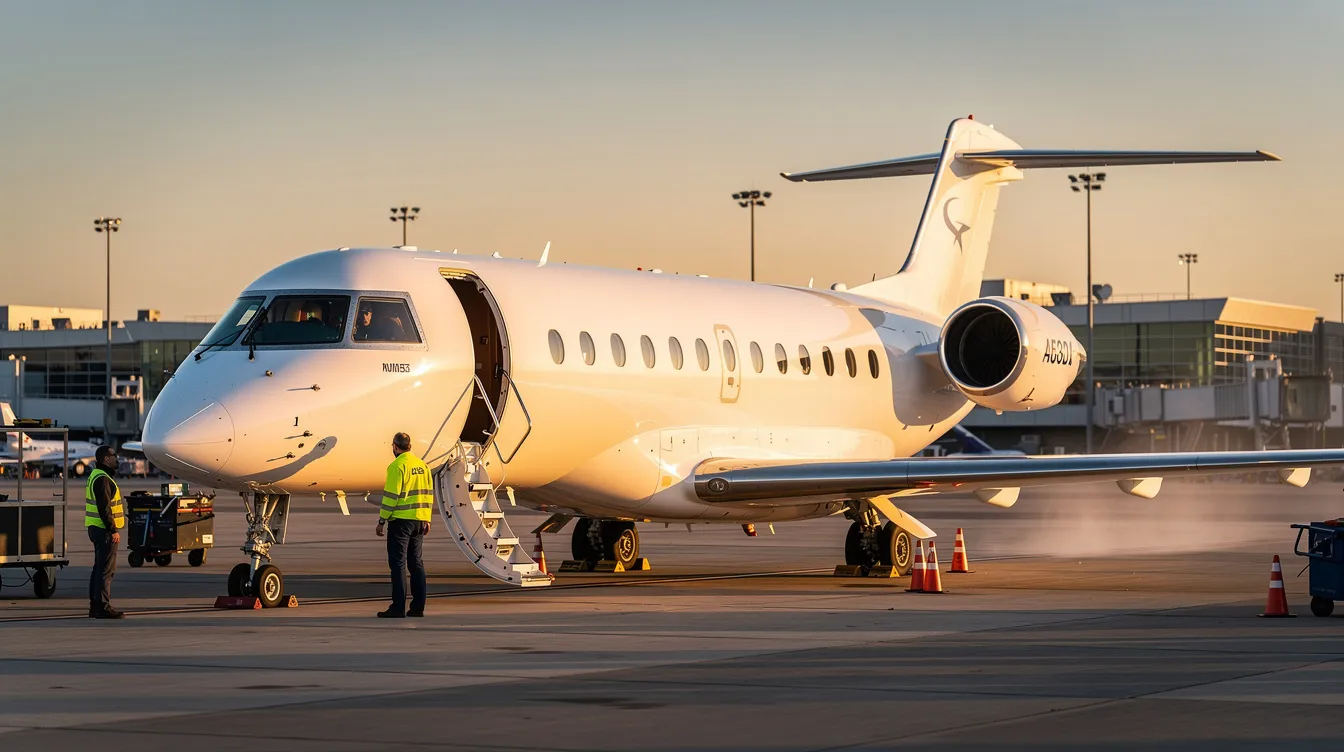
The private aviation market in 2026 is defined by recalibration, not retreat. After the extraordinary surge of 2021–2023, aircraft owners, corporate flight departments, and prospective buyers are operating in a market that demands sharper analysis and more deliberate strategy. Here is what the latest private plane news means for your next move.
Key Takeaways
Private aviation demand remains strong in 2026, with global departures up approximately 4% year-over-year, but the market has shifted from panic buying to disciplined, data-driven decision-making for aircraft owners and buyers.
Pre-owned private jet prices have normalized from 2022 peaks, with large-cabin aircraft seeing the steepest corrections (~15.7% YoY) while ultra-long-range jets hold value firmly.
Major 2026 events—Monaco Grand Prix, The Open Championship, and Las Vegas marquee events—are concentrating private jet travel into tight windows, driving charter rate surges of 3–5x at peak airports.
Sustainable aviation fuel mandates, next-generation aircraft technology, and tightening environmental regulations are reshaping long-term fleet strategy and aircraft valuation.
BusinessJets.com provides aircraft appraisals, brokerage, and aviation consulting to help clients navigate these shifts with precision.
Latest Trends in Private Aviation for 2025–2026
As of mid-2026, private aviation has settled into a more rational rhythm. Global business jet departures reached approximately 1.95 million in H1 2026, up roughly 4% year-over-year, according to JetNet's mid-2026 market snapshot. Private aviation demand remains strong among affluent travelers and corporate flyers, but the frenzied acquisition pace of the pandemic years has cooled. The private aviation market is expanding past $33 billion, with global revenues for the private jet market estimated to approach $84 billion across charter, fractional, and ownership segments combined.
Regionally, North America continues to dominate: about 86% of new jet deliveries in H1 2026 went to North American buyers. Europe is gaining ground, particularly around seasonal event corridors. The Middle East, however, contracted roughly 17.8% in flight activity, reflecting geopolitical uncertainty and energy-price volatility.
The client profile is also evolving. Nearly half of first-time private jet clients are under 45 years old, signaling a generational shift as younger entrants reshape the private jet lifestyle and who chooses to fly privately. Many pandemic-era entrants have matured from first-time charterers into seasoned users now refining fleet strategies, upgrading aircraft, or shifting between charter flight options and ownership. Private jet users increasingly prefer trip-by-trip aircraft selection rather than relying on a single owned aircraft, reflecting a market that is evolving toward an access and service business model rather than purely ownership. Shared and fractional ownership models are rising as they reduce costs and provide access to multiple aircraft types, offering flexibility across different mission profiles.
Structural demand drivers persist: commercial airline disruption, airport security lines increasing demand for private jets, executive time pressure, and heightened corporate reliance on private flights for mission-critical routes all support continued growth. Private jet owners bypass traditional airport security processes entirely, using private terminals that ensure discretion and comfort. Private jets typically fly at altitudes around 41,000 feet, providing smoother flights and greater speed. BusinessJets.com uses this market intelligence to advise clients on timing for aircraft acquisition and selling private jets as they plan their next destination.
Private Jet Prices and Asset Values in 2026
Private jet prices remain stable in 2026, though the trajectory from 2022's peak to today varies sharply by category. Average asking prices for pre-owned aircraft in mid-2026 stand at approximately:
Category | Avg. Asking Price | YoY Change | vs. 2019 |
|---|---|---|---|
Small jets | ~$3.21 million | −1.6% | +50% |
Midsize jets | ~$5.27 million | −5.2% | +45% |
Large jets | ~$12.63 million | −15.7% | +10% |
Pre-owned market dynamics show a clear split. Well-maintained aircraft under five years old average just 54 days on market, while older airframes (16+ years, now 74% of for-sale inventory) sit well over 100 days. Maintenance status, avionics upgrades, cabin refurbishments, and proximity to major inspections all heavily influence aircraft valuation. Acquisition costs for new private jets can range from $3 million to $90 million depending on category and specification.
Categories holding value best in 2026:
Ultra-long-range and large-cabin jets with transatlantic capability
Super midsize aircraft with modern avionics and full maintenance enrollment
Low-time, well-pedigreed aircraft under 10 years old
For aircraft owners considering a sale or refinancing, an independent appraisal benchmarked against current 2026 comparables is essential. You can request a formal aircraft appraisal from BusinessJets.com.
The True Cost of Private Jet Ownership Today
Private jet ownership costs can exceed $1 million annually before capital charges. Understanding the full cost stack is critical for any person weighing ownership against alternatives.
Key cost components include:
Acquisition price: Capital outlay or structured financing/leasing
Depreciation: Varying by aircraft age, type, and market conditions
Crew salaries and training: Inflation in pilot and crew wages has been persistent since 2022
Hangar, insurance, and ground support: Fixed costs that scale with aircraft size
Fuel and SAF surcharges: Subject to commodity volatility and regulatory blending mandates
Maintenance and overhaul programs: Estimated annual operating expenses for midsize aircraft can reach hundreds of thousands to over $1 million before capital costs; annual operational costs for private jets average around $700,000
Cabin and avionics modernization: Increasingly necessary to protect resale value
Chartering a private jet can cost between $1,200 and $8,000 per hour, depending on aircraft type and route. Shared ownership models reduce costs by distributing fixed expenses, while fractional ownership can reduce costs by sharing expenses among multiple owners. Consistent industry analysis suggests that full ownership becomes financially rational at roughly 200–300 flight hours per year, though this threshold shifts with aircraft category, route profile, and financing terms.
Private jet ownership offers flexibility in travel schedules, and chartering a private jet allows for personalized travel schedules—both models serve different usage profiles. Private jet travel also offers superior cabin air quality with advanced filtration systems, a feature increasingly valued by discerning travelers. BusinessJets.com can model multi-year total cost of ownership and exit scenarios as part of its aviation consulting services.
Charter Flight News: How Events Shape Private Jet Travel
Major events around the world in 2026 are compressing private jet travel into concentrated windows, creating operational and pricing pressure across key airports. Private jet charter surges around the Monaco Grand Prix, The Open Championship, and headline Las Vegas events have tested ramp capacity and driven charter rates to 3–5x normal levels at peak destinations, with seasonal spikes during key winter travel windows.
During the Monaco Grand Prix 2026, Nice Côte d'Azur Airport handled approximately 245 business jet movements per day, roughly 60% above its typical 150/day baseline. Peak days approached 310 movements. Parking dwell times collapsed from 24 hours to about 6, with many aircraft forced to reposition to overflow airports in Cannes, Genoa, or Marseille.
For UHNW and corporate travelers, the guidance is straightforward: secure aircraft and airport slots early, remain flexible on arrival airports, and work with experienced brokers who understand routing strategy, handling costs, and crew logistics. Empty leg flights provide luxury travel at reduced rates and can sometimes be leveraged around these events. BusinessJets.com acts as a strategic advisor to aircraft owners and operators navigating event-driven demand, and readers can join the team early to plan before peak windows tighten further.
Destination Focus: Monaco Grand Prix, French Riviera & Las Vegas
The Monaco Grand Prix and the wider French Riviera remain among the world's most demanding private jet destinations. Primary airports for race week include Nice, Cannes-Mandelieu, and La Môle, with helicopters providing the critical last-mile transfer into Monaco itself. The seasonal traffic doesn't end with the race—yacht shows, the Cannes Film Festival, and summer leisure travel keep the Riviera corridor active through autumn, compressing ground logistics and making early planning essential for anyone looking to arrive during peak windows.
Major U.S. event traffic also builds around Florida and the Kentucky Derby corridor for high-end private jet itineraries.

Las Vegas operates as a year-round private jet hub. Gaming, conferences, major sporting events, and entertainment premieres create rolling demand waves that shape both charter pricing and aircraft basing decisions. Some travelers also use these marquee routes as an escape, while others see them as part of a rich travel lifestyle. For owners considering positioning their aircraft to these hubs for charter revenue, the calculation must weigh revenue potential against wear and additional maintenance cycles.
BusinessJets.com can help evaluate charter revenue opportunities versus asset wear for owners exploring these destination strategies.
Next-Generation Private Jets and Technology
In private aviation, next generation means measurable improvements in range, fuel efficiency, cabin connectivity, cabin features, and emissions profile. The latest iterations of long-range and super midsize business jets entering service between 2024 and 2026 offer tangible advantages over their predecessors—lower fuel burn, quieter cabins, higher cruise altitude capabilities, and advanced avionics that reduce pilot workload and improve safety.
Aggregate OEM backlogs reached roughly $66.8 billion in Q2 2026, reflecting sustained demand for factory-new aircraft. Fractional providers absorbed approximately 20% of new deliveries in H1 2026, up from 10% pre-pandemic, indicating that private aviation is seeing a rise in fractional ownership. Fractional ownership allows access to multiple aircraft types, giving operators flexibility across different mission profiles. Product history still matters when buyers compare new models with established aircraft families.

Production backlogs and certification timelines mean that buyers face real trade-offs: order a new aircraft and wait 18–30 months, or acquire a nearly new pre-owned jet that's available now. Avionics upgrades, cabin connectivity, and noise-reduction technology are influencing buyer preferences and, critically, long-term aircraft valuation. Private jet travel offers superior cabin air quality with advanced filtration systems—a feature that has become a standard expectation in this generation of aircraft. BusinessJets.com assists clients in comparing current-generation aircraft to upcoming models within a broader fleet strategy and investment horizon.
Sustainability and Regulatory News in Private Aviation
Private aviation faces pressure over emissions and invests in sustainability measures across the industry. The regulatory landscape is moving from voluntary commitments to enforceable mandates.
In 2024, only about 0.6% of all aviation fuel supplied at EU airports was sustainable aviation fuel, according to EASA's latest report.
Under the ReFuelEU Aviation Regulation, EU departure airports must supply at least 2% SAF in 2025, rising to 6% by 2030, with synthetic fuel sub-mandates increasing in parallel.
Sustainable aviation fuel can cut emissions by up to 80% compared to conventional jet fuel, making it a core element of the industry's decarbonization course.
Government financial pressures on private aviation are increasing, including higher Air Passenger Duty rates in the UK and expanded ETS obligations across Europe.
Sustainable aviation fuel is gaining importance for emissions reduction and energy security, but cost remains a barrier—advanced biofuels and synthetic fuels can cost several times more than conventional jet fuel. Aircraft with better fuel efficiency, SAF compatibility, and modern avionics are likely to retain value as environmental policies tighten and companies face stricter ESG reporting requirements. BusinessJets.com incorporates sustainability and regulatory risk into aircraft valuation and consulting work for corporate flight departments and operators.
Operational Insights: Security, Airports and FBO Experience
Operational details—security protocols, airport choice, and FBO quality—directly affect trip efficiency, aircraft preservation, and the overall journey for both charter clients and aircraft owners.
Private jet passengers bypass traditional airport security entirely, and nervous travelers often find private flying more controlled and less stressful. Instead of navigating TSA lines at commercial terminals, travelers access their aircraft through dedicated private terminals, maintaining protection standards appropriate to their region while eliminating the congestion that drives many executives to fly privately in the first place. Private jets typically fly at altitudes around 41,000 feet, above most commercial traffic, offering smoother flights and greater speed.
FBOs are crucial for efficient private jet operations. They provide private terminal services for discretion and comfort, ensure flexibility in ground services, facilitate quick turnaround times, and offer amenities like lounges and concierge services. The quality of FBO support at a given airport can influence everything from the experience for guests to aircraft maintenance logistics and crew welfare. Capacity constraints at high-demand private aviation airports—slot controls, curfews, noise limits—affect trip planning and should be factored into any basing or schedule decision.
BusinessJets.com evaluates base and operating airport options as part of consulting engagements, balancing convenience with cost and regulatory exposure.
Private Jet Charter vs Aircraft Ownership: Strategic Choices
For executives, family offices, and fleet managers, the charter-versus-ownership decision in 2026 hinges on usage patterns, route profiles, and risk tolerance.
High-level decision criteria:
Factor | Favors Charter | Favors Ownership |
|---|---|---|
Annual flight hours | Under 200 hrs | 300+ hrs |
Route profile | Varied, unpredictable | Consistent corridors |
Cabin customization | Not essential | Brand or privacy needs |
Balance sheet | Minimize fixed costs | Asset appreciation, taxes |
Fleet flexibility | High (trip-by-trip) | Moderate (single type) |
Private jet travel is preferred to avoid commercial flight delays, and both charter and ownership deliver this advantage. The future state of the market favors those who treat aircraft as strategic assets, not status symbols. Private aviation is seeing scenarios where fractional solutions or membership programs offer the exclusive benefits of ownership—schedule control, cabin familiarity—without the full cost burden. Aviation Week data shows fractional utilization rose approximately 181% compared to 2019 levels, underscoring this trend.
Risk considerations include residual value uncertainty, technology obsolescence, evolving regulations, and crew availability. BusinessJets.com has supported over 1,500 aircraft transactions and can build a bespoke acquisition or divestment strategy aligned with each client's usage and risk profile.
How BusinessJets.com Supports Aircraft Owners and Buyers
BusinessJets.com is a brokerage and consulting partner specializing in private jets for sale, independent aircraft valuation, and transaction strategy, serving clients worldwide across the private aviation world.
Core services include:
Aircraft brokerage: Buying and selling private jets with global reach
Aircraft appraisals: Independent, market-data-driven valuation
Operator advisory: Fleet optimization, sales timing, and acquisition planning
Aviation consulting: Multi-year cost modeling, regulatory risk analysis, and partnership structuring
Market data, comparable transactions, and technical due diligence feed into accurate pricing, negotiation, and time-to-sale optimization. With experience across more than 1,500 transactions and 5,000+ clients globally, BusinessJets.com provides the discretion, deal structuring expertise, and long-term asset planning that this market demands.
Ready to act? Request an aircraft appraisal, explore listing your aircraft for sale, or let us invite you to engage BusinessJets.com for acquisition or fleet-strategy support.
Outlook: What to Watch in Private Plane News Beyond 2026
Market analysts project continued growth in the private aircraft market through the 2030s, driven by expanding wealth, corporate demand, and the beginning of fleet renewal cycles as next-generation aircraft reach full production. Key watchpoints include SAF production scaling, new long-range and short-runway capable jets, digital charter platforms, and shifting corporate travel policies shaped by both economics and sustainability mandates.
Risks remain real: economic slowdowns, interest-rate changes affecting financing, the fight over public scrutiny of corporate and UHNW private jet use, and regulatory escalation in Greece, the UK, and across Europe could reshape operating economics. Treat private jet assets as strategic investments requiring continuous monitoring—not one-time purchases. Discover more industry insights and analysis on our aviation blog, and stay ahead of these changes with data-driven advisory from BusinessJets.com.

Frequently Asked Questions
How often should I get an updated appraisal of my private jet?
In the dynamic 2024–2026 market, most aircraft owners should obtain a professional private jet appraisal every 12–24 months—or immediately before refinancing, restructuring ownership, or listing for sale. Values are shifting at different rates across cabin classes, and an outdated appraisal can leave significant money on the table.
Is now a good time to sell a pre-owned private jet?
While prices have softened from 2022 peaks, high-quality, well-maintained aircraft with strong maintenance records still sell efficiently in 2026. Whether it's the right time depends on your aircraft type, region, and individual objectives. BusinessJets.com can analyze your specific situation and help you prepare for optimal market positioning.
What utilization level justifies moving from charter to ownership?
A common rule of thumb is 200–300 or more flight hours per year, but this varies significantly by aircraft category, route profile, and financing terms. Light jets used for frequent regional trips may justify ownership at lower thresholds; heavy jets require more hours to amortize capital. Tailored financial modeling is essential before making this decision.
How will sustainability regulations affect aircraft values in the long term?
Aircraft with better fuel efficiency, SAF compatibility, and modern avionics are positioned to retain value as environmental policies tighten across Europe and beyond. Older, less efficient airframes may face higher operating costs, restricted airport access, and accelerated depreciation. BusinessJets.com factors these regulatory trends into its valuation and consulting work.
Can BusinessJets.com advise both individual owners and corporate flight departments?
Yes. The firm works exclusively with private owners, family offices, corporations, and operators worldwide, adapting its brokerage, appraisal, and consulting services to the governance, reporting, and risk requirements of each client type—whether you're managing a single aircraft or an entire fleet. Yes. The firm works exclusively with private owners, family offices, corporations, and operators worldwide, adapting its brokerage, appraisal, and consulting services to the governance, reporting, and risk requirements of each client type-whether you're managing a single aircraft or an entire fleet.
Conclusion
The private aviation landscape in 2026 is marked by a strategic recalibration where data-driven decision-making and market insight are paramount. Owners and operators must navigate evolving aircraft values, sustainability mandates, and shifting client preferences toward flexible access models. With rising demand, stable pricing in key segments, and technological advancements shaping fleet choices, private jet ownership and charter remain compelling solutions for discerning travelers and corporate flight departments alike. BusinessJets.com stands ready to provide expert guidance, leveraging extensive market experience to optimize aircraft acquisition, sales, and operational strategies in this dynamic environment. Engaging with seasoned aviation consultants ensures informed decisions that protect asset value and align with long-term travel and investment goals. For expert assistance, request an aircraft appraisal, explore private jets for sale, or contact BusinessJets.com for consulting services.