Global Jet Market: Private, Business, and Commercial Aircraft in 2026

Jay Franco Ser
September 4, 2026

The jet market in 2026 is defined by persistent demand, constrained supply, and a shifting mix of ownership models across private, business, and commercial aviation. This article breaks down the data, regional dynamics, and aircraft-level trends that matter most to buyers, sellers, and operators navigating this complex aircraft market.

Key Takeaways

  • The global jet market spans private jets, business jets, and commercial jets. In 2026, demand is shaped by rising corporate travel, post-pandemic travel patterns in North America, and persistent supply chain constraints across all segments.

  • The private aircraft market is projected to reach $50.8 billion by 2034, growing at a compound annual growth rate of 6.7%. Business jets account for over 34% of that segment, while light aircraft represent over 40%.

  • North America holds 59.7% of the global business jet market, with the North American business jet market valued at $69.9 billion in 2024 and a forecast CAGR close to 6.7% through 2029, driven by corporate and UHNW demand.

  • Technological advancements in connectivity, sustainable aviation fuels, aircraft efficiency, and predictive maintenance are reshaping both the business jet market and the commercial jets segment. Fractional ownership and jet cards are expanding access to private aviation for new users.

  • BusinessJets.com, with over 1,500 aircraft transactions completed and more than 5,000 satisfied clients, provides expert guidance through valuations, acquisitions, and sales across this evolving market.

Overview of the Global Jet Market in 2026

The jet market encompasses private jets used in business aviation, commercial jets serving airline networks, and the supporting services—charter, maintenance, consulting—that keep both segments operating. With 24,270 private jets in operation worldwide as of July 2024, and a commercial fleet expanding at roughly 2.5% annually, the scale of global aviation activity is substantial.

The private jet and business aviation market is expected to generate revenues of roughly $83.97 billion by 2026. Looking further out, the private aircraft market is projected to reach $50.8 billion by 2034, growing at a CAGR of 6.7% from 2025 to 2034. Private jets range from $1 million to $80 million depending on size, age, and configuration, while commercial jets are procured through airline-driven order books worth hundreds of billions.

Demand drivers differ sharply between segments. Private jet users prioritize time efficiency, point-to-point flexibility, and access to smaller airports and destinations that commercial carriers do not serve. Commercial jets respond to airline network expansion, low-cost carrier growth, and fuel-efficiency mandates. Economic cycles, interest rates, fuel prices, and geopolitical risk influence both—but corporate travel decisions and leisure traffic react on different timelines. The rest of this article focuses on the business jet market, regional dynamics, aircraft types, and what current market trends mean for buyers and sellers.

Structure of the Jet Market: Private vs. Commercial

Private jets and commercial jets occupy distinct but interconnected parts of the aircraft market. They share original equipment manufacturers, a common supply chain for engines and avionics, and overlapping technologies in materials and propulsion. When one segment faces bottlenecks, the other typically feels the effects.

The private jet segment is characterized by relatively low fleet volumes, high asset values, bespoke cabin configurations, and reliance on charter, corporate ownership, and owner-flown operation. Commercial jets—dominated by A320neo and 737 MAX families—operate in large fleet orders, high daily utilization, and standardized cabin layouts driven by airline procurement cycles.

Supply chain constraints in engines, avionics, and interiors affect both segments. OEM delivery slots for new aircraft now extend well into the late 2020s, which supports strong pre-owned private jet valuations and keeps inventory tight.

Factor

Private Jets

Commercial Jets

Use case

Corporate, personal, charter

Scheduled airline service

Passengers

4–19 typical

100–400+

Typical range

1,200–7,700 nm

2,500–8,500 nm

Ownership

Individual, corporate, fractional, lease

Airline fleet, lease companies

Fleet size (global)

~24,270

~28,000+

Business Jet Market: Size, Growth, and Key Drivers

The business jet market sits at the core of private aviation. Business jets account for over 34% of the private aircraft market share, and corporate jets represent over 38% when including dedicated corporate flight department aircraft. The market for business and private jets is growing at a compound annual growth rate of approximately 6% to 8%, depending on the source and scope measured.

Flight activity in the global business jet market grew by approximately 3.4% year-over-year in the first half of 2026, helping the segment maintain its strong market position rather than reflecting only a temporary post-pandemic spike.

Key growth drivers include:

  • Rising demand from high net worth individuals and corporations prioritizing executive mobility and time savings

  • Market expansion of fractional ownership and jet cards, which are increasing and enriching consumer access to private aviation

  • Demand for private aviation heightened by wealth creation and evolving consumer habits

  • Appetite for longer-range, large-cabin aircraft types among multinational companies

Restraints remain real: high acquisition and operating costs, pilot and technician shortages, environmental scrutiny, and higher borrowing costs that slow some buyers' timelines. These competitive dynamics shape both new and pre-owned transaction activity.

Regional Focus: North America's Dominant Role

North America holds 59.7% of the global business jet market and remains the benchmark for business aviation worldwide. The North American business jet market is valued at $69.9 billion in 2024 and projected to approach $117.2 billion by 2029 at about 6.7% CAGR—outpacing the global average. North America commands approximately 72% of global business jet departures.

The region's demand fundamentals are well supported: the highest concentration of UHNW individuals, large corporate headquarters, Fortune 500 presence, and mature charter services and fractional ownership ecosystems. Infrastructure plays a role too—dense networks of FBOs, advanced MRO capabilities, and a transparent regulatory framework encourage fleet renewal and cross-border transactions.

The United States dominates, accounting for the vast majority of the North American market, while Canada maintains a meaningful share. Many of the aircraft transactions completed by BusinessJets.com have involved North American-based aircraft, making the firm a practical partner for cross-border buyers and sellers.

Beyond North America, the Asia-Pacific region is rapidly emerging as a primary market for growth in business aviation, and the Middle East continues to invest in infrastructure and fleet expansion. These regions present new destinations and opportunities for operators looking beyond traditional markets, including high-demand city pairs and luxury destinations such as private jet travel to Paris.

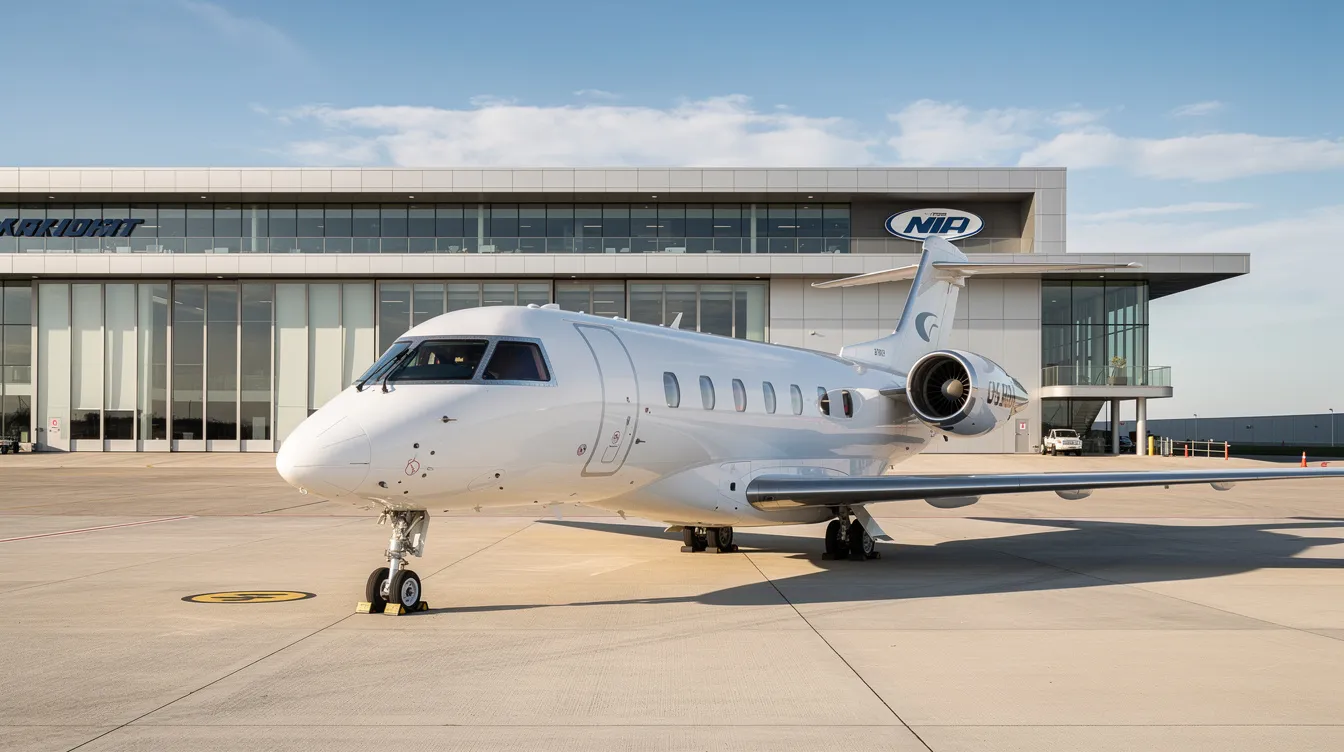
A private jet is landing at a modern airport, with majestic mountains in the background, illustrating the rising demand and market expansion in the business aviation sector. This scene reflects the luxury and efficiency sought by high net worth individuals and private jet users in today's competitive aircraft market.

Jet Market by Aircraft Type and Size Class

The jet market is segmented by aircraft type—light, midsize, super-midsize, large-cabin, and ultra-long-range—and by mission profile. Light aircraft account for over 40% of the private aircraft market, driven by cost-effectiveness, easier operations, and strong demand in North America's owner-pilot and training communities. Private jets range from $5 million to $30 million in typical midrange categories, though overall the spectrum runs from about $1 million for older light jets to $80 million for new flagship models.

Demand for larger and more comfortable jets is driven by high-net-worth individuals and corporate users seeking transcontinental and intercontinental capability, often in VIP airliners and large-cabin platforms such as the Airbus ACJ319 private jet. The average age of corporate and private aircraft has surpassed 18 years in major markets like the U.S., creating a noticeable increase in fleet renewal activity and new listings of older models.

Aircraft Class

Revenue Share

Typical Range

Common User

Light / Very Light

~23–24%

1,200–2,200 nm

Owner-pilots, small charter

Midsize / Super-Midsize

~29–34%

2,800–4,000 nm

Corporate, regional charter

Large / Ultra-Long-Range

~46–47%

5,500–7,700 nm

UHNW, multinationals, global charter

Real-world examples illustrate the range: a Citation M2 Gen2 suits short-haul owner-operators, a Challenger 604 or Citation Latitude serves regional corporate missions, while a Global 6000 or Gulfstream G650 addresses intercontinental needs. Current aircraft for sale listings reflect this segmentation clearly.

Technological Advancements Shaping Jet Market Trends

Technological innovation in aircraft design leads to improved fuel efficiency and advanced avionics in business jets. These advancements affect both private jets and commercial jets, from cockpit systems to cabin connectivity to propulsion.

Flight-deck upgrades include synthetic vision, enhanced flight data recorders, and modern FMS platforms that improve situational awareness and regulatory compliance. Cabin technology now includes Starlink and Ka-Band broadband, HD cabin management systems, and real-time diagnostics—features that are increasingly baseline expectations for private jet users rather than luxury add-ons.

Predictive maintenance deserves particular attention. NBAA reports that aircraft equipped with comprehensive engine health monitoring have seen dispatch reliability improve from approximately 97.5% to 99.2%, with 35–40% reductions in unscheduled maintenance events. For operators, this translates directly to better operation uptime and lower lifecycle costs.

Sustainability pressures in the industry are leading to investments in sustainable aviation fuels and efficient engines. Operators are focusing on sustainability initiatives, including sustainable aviation fuel adoption and carbon-offset programs. These factors increasingly influence long-term fleet strategy and residual value forecasts across the forecast period.

Aircraft with modern connectivity, refreshed interiors, and enrolled maintenance programs typically command stronger pricing—a consideration both buyers and sellers should factor into any transaction.

Supply Chain, Regulation, and Other Market Headwinds

Behind strong demand, the jet market faces structural headwinds. The global combined original equipment manufacturer backlogs are around $66.8 billion, resulting in longer wait times for new deliveries. The global business jet market is characterized by robust backlogs for new aircraft and a limited supply of pre-owned models.

About 6.6% of the global business jet fleet is currently listed for sale, well below the historical average of 10%. This inventory tightness supports firm pricing for late-model, well-maintained aircraft while pushing some buyers toward older or less equipped options. The market is influenced by mixed operational headwinds like jet fuel price volatility and supply chain normalization that have yet to fully resolve.

Key risk factors for companies and operators to monitor:

  • Engine and component shortages continue to extend maintenance turnaround times and new delivery schedules

  • Pilot and technician shortages drive operating cost escalation and affect dispatch reliability

  • Regulatory and trade policy shifts—including post-2025 US tariff changes on certain aircraft and components—affect manufacturing costs and import/export decisions

  • Environmental mandates around emissions and SAF compatibility testing add compliance costs

Buyers and owners should review these factors before investing in an acquisition or committing to a long-term fleet strategy.

A close-up view of a modern business jet cockpit showcases advanced digital avionics displays and pilot controls, highlighting the technological advancements in the aircraft market. This sophisticated environment reflects the rising demand among private jet users and the substantial growth of business aviation.

Implications for Buyers, Sellers, and Operators

Current jet market conditions reward preparation and data-driven decision-making. Demand trends remain positive, but the interplay of constrained inventory, rising operating costs, and evolving technology creates a market where confidence comes from thorough analysis rather than assumptions.

For buyers: limited new-delivery slots and strong demand keep late-model, low-time aircraft at a premium. Accurate valuation, verification of maintenance history by serial number, and technical due diligence are not optional—they protect against overpaying and post-acquisition surprises. Prospective buyers should search the market with clear mission requirements and engage aviation intelligence early.

For sellers: positioning an aircraft competitively means presenting recent inspections, up-to-date avionics, connectivity upgrades, and complete logbooks. The business jet market remains robust, but buyers are selective. Well-prepared aircraft sell faster and closer to asking price.

For operators and fleet managers: optimizing fleet mix by aircraft type, leveraging charter and fractional models, and integrating sustainability considerations all support long-term stakeholder expectations. Lease versus ownership analysis should be revisited as borrowing costs and residual value projections shift.

BusinessJets.com supports each audience segment with independent aircraft appraisals, market-aligned pricing strategies, confidential listing of private jets, and acquisition advisory. Whether you are a first-time buyer or managing a corporate fleet over several years, professional representation reduces risk and improves outcomes.

How BusinessJets.com Helps You Navigate the Jet Market

BusinessJets.com operates as a data-driven aircraft brokerage and consulting partner with experience across over 1,500 transactions and more than 5,000 satisfied clients. Aviation consulting supports operators with strategic guidance, and consulting services facilitate buying and selling of private jets at every stage.

The brokerage offering covers full-cycle support: valuation, pricing strategy, marketing, buyer screening, negotiation, and closing for sellers—and requirements analysis, market scan, off-market opportunities, and contract support for buyers. Aviation consulting includes aircraft appraisal services, fleet strategy for corporate flight departments, lease versus own analyses, and guidance on how regulatory changes should influence long-term plans.

BusinessJets.com maintains particular strength in North America but has transaction experience across Europe, Asia, and the Middle East, enabling cross-border deals and import/export support through comprehensive aviation services.

High net worth individuals drive demand for aviation consulting services, and the firm's insights are calibrated to the specific needs of each client—whether catering to a first-time private jet buyer, a seasoned owner preparing for market, or a corporate flight department evaluating its next move. Contact BusinessJets.com to discuss your specific requirements and align your next decision with current market data.

Frequently Asked Questions about the Jet Market

How is the business jet market different from the broader private aircraft market?

The business jet market is a subset of the private aircraft market, focused on turbine-powered jets used for corporate and high-end personal travel. The broader private aircraft market also includes turboprops, pistons, and light sport aircraft. Business jets typically represent the largest share of total private aircraft value—over 34% market share in 2024—because of higher unit prices and long-range capabilities. BusinessJets.com primarily operates in the business jet segment but also advises on select turboprop and special-mission aircraft as part of a client's fleet strategy.

Is now a good time to buy a private jet given current market trends?

Timing depends on mission profile, budget, and flexibility on aircraft type and age. Certain models remain tight on supply while others—particularly older midsize jets—show normalized inventory. Elevated demand and constrained OEM production in 2025–2026 support relatively firm pricing for late-model aircraft, but motivated sellers and fleet renewals can still create attractive opportunities. Work with BusinessJets.com to obtain a data-driven appraisal and stress-test total ownership costs before committing.

How do technological upgrades impact the value of private jets?

Connectivity upgrades such as Starlink and Ka-Band, modern avionics with synthetic vision, and recent interior refurbishments typically enhance both marketability and resale value. Engines and APUs enrolled on factory or independent maintenance programs reduce buyer risk and often support higher transaction prices. Owners considering a sale should consult with BusinessJets.com before investing in major upgrades, to prioritize changes most likely to be rewarded by the market.

What role does North America play if I am based in another region?

Because North America is the largest business jet market—holding 59.7% of global share—many pre-owned aircraft opportunities and recent comparable sales data originate from the US and Canada, even for buyers in Europe, the Middle East, or Asia. Aircraft imported from North America can offer substantial growth in value provided regulatory, tax, and modification requirements for the destination country are understood and budgeted. International buyers should engage BusinessJets.com to navigate export and import logistics and any required upgrades to meet local standards.

Why should I use an aircraft brokerage and consulting firm instead of transacting directly?

Aircraft transactions involve valuation, technical due diligence, contract negotiation, regulatory compliance, tax structuring, and closing logistics—exposing inexperienced parties to meaningful risk. A specialist firm like BusinessJets.com brings aviation intelligence from 1,500+ completed deals, access to off-market aircraft and qualified buyer networks, and the transaction experience needed to protect a client's interests. Professional representation helps optimize price, reduce time on market, and manage risk around maintenance findings and contract contingencies. Visit the aviation blog for additional market insights and published data reports on current conditions.

Conclusion

The 2026 jet market remains a complex and dynamic environment shaped by strong demand, supply constraints, and evolving technology. For buyers, sellers, and operators, success hinges on leveraging expert guidance, thorough market analysis, and strategic planning. North America's dominant role and the growing influence of emerging regions underscore the importance of global market awareness. Technological advancements, sustainability initiatives, and shifting ownership models continue to redefine value and opportunity in private and business aviation.

BusinessJets.com stands ready to support clients through this landscape with tailored brokerage, appraisal, and consulting services. Whether acquiring, selling, or optimizing a fleet, partnering with experienced aviation professionals ensures informed decisions and maximized asset value in today’s competitive jet market. Explore our private jets for sale listings, request a professional aircraft appraisal, learn about our aviation consulting services, or discover how we assist with aircraft acquisition to navigate the market effectively.

Global Jet Market: Private, Business, and Commercial Aircraft in 2026

Jay Franco Ser

The jet market in 2026 is defined by persistent demand, constrained supply, and a shifting mix of ownership models across private, business, and commercial aviation. This article breaks down the data, regional dynamics, and aircraft-level trends that matter most to buyers, sellers, and operators navigating this complex aircraft market.

Key Takeaways

  • The global jet market spans private jets, business jets, and commercial jets. In 2026, demand is shaped by rising corporate travel, post-pandemic travel patterns in North America, and persistent supply chain constraints across all segments.

  • The private aircraft market is projected to reach $50.8 billion by 2034, growing at a compound annual growth rate of 6.7%. Business jets account for over 34% of that segment, while light aircraft represent over 40%.

  • North America holds 59.7% of the global business jet market, with the North American business jet market valued at $69.9 billion in 2024 and a forecast CAGR close to 6.7% through 2029, driven by corporate and UHNW demand.

  • Technological advancements in connectivity, sustainable aviation fuels, aircraft efficiency, and predictive maintenance are reshaping both the business jet market and the commercial jets segment. Fractional ownership and jet cards are expanding access to private aviation for new users.

  • BusinessJets.com, with over 1,500 aircraft transactions completed and more than 5,000 satisfied clients, provides expert guidance through valuations, acquisitions, and sales across this evolving market.

Overview of the Global Jet Market in 2026

The jet market encompasses private jets used in business aviation, commercial jets serving airline networks, and the supporting services—charter, maintenance, consulting—that keep both segments operating. With 24,270 private jets in operation worldwide as of July 2024, and a commercial fleet expanding at roughly 2.5% annually, the scale of global aviation activity is substantial.

The private jet and business aviation market is expected to generate revenues of roughly $83.97 billion by 2026. Looking further out, the private aircraft market is projected to reach $50.8 billion by 2034, growing at a CAGR of 6.7% from 2025 to 2034. Private jets range from $1 million to $80 million depending on size, age, and configuration, while commercial jets are procured through airline-driven order books worth hundreds of billions.

Demand drivers differ sharply between segments. Private jet users prioritize time efficiency, point-to-point flexibility, and access to smaller airports and destinations that commercial carriers do not serve. Commercial jets respond to airline network expansion, low-cost carrier growth, and fuel-efficiency mandates. Economic cycles, interest rates, fuel prices, and geopolitical risk influence both—but corporate travel decisions and leisure traffic react on different timelines. The rest of this article focuses on the business jet market, regional dynamics, aircraft types, and what current market trends mean for buyers and sellers.

Structure of the Jet Market: Private vs. Commercial

Private jets and commercial jets occupy distinct but interconnected parts of the aircraft market. They share original equipment manufacturers, a common supply chain for engines and avionics, and overlapping technologies in materials and propulsion. When one segment faces bottlenecks, the other typically feels the effects.

The private jet segment is characterized by relatively low fleet volumes, high asset values, bespoke cabin configurations, and reliance on charter, corporate ownership, and owner-flown operation. Commercial jets—dominated by A320neo and 737 MAX families—operate in large fleet orders, high daily utilization, and standardized cabin layouts driven by airline procurement cycles.

Supply chain constraints in engines, avionics, and interiors affect both segments. OEM delivery slots for new aircraft now extend well into the late 2020s, which supports strong pre-owned private jet valuations and keeps inventory tight.

Factor

Private Jets

Commercial Jets

Use case

Corporate, personal, charter

Scheduled airline service

Passengers

4–19 typical

100–400+

Typical range

1,200–7,700 nm

2,500–8,500 nm

Ownership

Individual, corporate, fractional, lease

Airline fleet, lease companies

Fleet size (global)

~24,270

~28,000+

Business Jet Market: Size, Growth, and Key Drivers

The business jet market sits at the core of private aviation. Business jets account for over 34% of the private aircraft market share, and corporate jets represent over 38% when including dedicated corporate flight department aircraft. The market for business and private jets is growing at a compound annual growth rate of approximately 6% to 8%, depending on the source and scope measured.

Flight activity in the global business jet market grew by approximately 3.4% year-over-year in the first half of 2026, helping the segment maintain its strong market position rather than reflecting only a temporary post-pandemic spike.

Key growth drivers include:

  • Rising demand from high net worth individuals and corporations prioritizing executive mobility and time savings

  • Market expansion of fractional ownership and jet cards, which are increasing and enriching consumer access to private aviation

  • Demand for private aviation heightened by wealth creation and evolving consumer habits

  • Appetite for longer-range, large-cabin aircraft types among multinational companies

Restraints remain real: high acquisition and operating costs, pilot and technician shortages, environmental scrutiny, and higher borrowing costs that slow some buyers' timelines. These competitive dynamics shape both new and pre-owned transaction activity.

Regional Focus: North America's Dominant Role

North America holds 59.7% of the global business jet market and remains the benchmark for business aviation worldwide. The North American business jet market is valued at $69.9 billion in 2024 and projected to approach $117.2 billion by 2029 at about 6.7% CAGR—outpacing the global average. North America commands approximately 72% of global business jet departures.

The region's demand fundamentals are well supported: the highest concentration of UHNW individuals, large corporate headquarters, Fortune 500 presence, and mature charter services and fractional ownership ecosystems. Infrastructure plays a role too—dense networks of FBOs, advanced MRO capabilities, and a transparent regulatory framework encourage fleet renewal and cross-border transactions.

The United States dominates, accounting for the vast majority of the North American market, while Canada maintains a meaningful share. Many of the aircraft transactions completed by BusinessJets.com have involved North American-based aircraft, making the firm a practical partner for cross-border buyers and sellers.

Beyond North America, the Asia-Pacific region is rapidly emerging as a primary market for growth in business aviation, and the Middle East continues to invest in infrastructure and fleet expansion. These regions present new destinations and opportunities for operators looking beyond traditional markets, including high-demand city pairs and luxury destinations such as private jet travel to Paris.

A private jet is landing at a modern airport, with majestic mountains in the background, illustrating the rising demand and market expansion in the business aviation sector. This scene reflects the luxury and efficiency sought by high net worth individuals and private jet users in today's competitive aircraft market.

Jet Market by Aircraft Type and Size Class

The jet market is segmented by aircraft type—light, midsize, super-midsize, large-cabin, and ultra-long-range—and by mission profile. Light aircraft account for over 40% of the private aircraft market, driven by cost-effectiveness, easier operations, and strong demand in North America's owner-pilot and training communities. Private jets range from $5 million to $30 million in typical midrange categories, though overall the spectrum runs from about $1 million for older light jets to $80 million for new flagship models.

Demand for larger and more comfortable jets is driven by high-net-worth individuals and corporate users seeking transcontinental and intercontinental capability, often in VIP airliners and large-cabin platforms such as the Airbus ACJ319 private jet. The average age of corporate and private aircraft has surpassed 18 years in major markets like the U.S., creating a noticeable increase in fleet renewal activity and new listings of older models.

Aircraft Class

Revenue Share

Typical Range

Common User

Light / Very Light

~23–24%

1,200–2,200 nm

Owner-pilots, small charter

Midsize / Super-Midsize

~29–34%

2,800–4,000 nm

Corporate, regional charter

Large / Ultra-Long-Range

~46–47%

5,500–7,700 nm

UHNW, multinationals, global charter

Real-world examples illustrate the range: a Citation M2 Gen2 suits short-haul owner-operators, a Challenger 604 or Citation Latitude serves regional corporate missions, while a Global 6000 or Gulfstream G650 addresses intercontinental needs. Current aircraft for sale listings reflect this segmentation clearly.

Technological Advancements Shaping Jet Market Trends

Technological innovation in aircraft design leads to improved fuel efficiency and advanced avionics in business jets. These advancements affect both private jets and commercial jets, from cockpit systems to cabin connectivity to propulsion.

Flight-deck upgrades include synthetic vision, enhanced flight data recorders, and modern FMS platforms that improve situational awareness and regulatory compliance. Cabin technology now includes Starlink and Ka-Band broadband, HD cabin management systems, and real-time diagnostics—features that are increasingly baseline expectations for private jet users rather than luxury add-ons.

Predictive maintenance deserves particular attention. NBAA reports that aircraft equipped with comprehensive engine health monitoring have seen dispatch reliability improve from approximately 97.5% to 99.2%, with 35–40% reductions in unscheduled maintenance events. For operators, this translates directly to better operation uptime and lower lifecycle costs.

Sustainability pressures in the industry are leading to investments in sustainable aviation fuels and efficient engines. Operators are focusing on sustainability initiatives, including sustainable aviation fuel adoption and carbon-offset programs. These factors increasingly influence long-term fleet strategy and residual value forecasts across the forecast period.

Aircraft with modern connectivity, refreshed interiors, and enrolled maintenance programs typically command stronger pricing—a consideration both buyers and sellers should factor into any transaction.

Supply Chain, Regulation, and Other Market Headwinds

Behind strong demand, the jet market faces structural headwinds. The global combined original equipment manufacturer backlogs are around $66.8 billion, resulting in longer wait times for new deliveries. The global business jet market is characterized by robust backlogs for new aircraft and a limited supply of pre-owned models.

About 6.6% of the global business jet fleet is currently listed for sale, well below the historical average of 10%. This inventory tightness supports firm pricing for late-model, well-maintained aircraft while pushing some buyers toward older or less equipped options. The market is influenced by mixed operational headwinds like jet fuel price volatility and supply chain normalization that have yet to fully resolve.

Key risk factors for companies and operators to monitor:

  • Engine and component shortages continue to extend maintenance turnaround times and new delivery schedules

  • Pilot and technician shortages drive operating cost escalation and affect dispatch reliability

  • Regulatory and trade policy shifts—including post-2025 US tariff changes on certain aircraft and components—affect manufacturing costs and import/export decisions

  • Environmental mandates around emissions and SAF compatibility testing add compliance costs

Buyers and owners should review these factors before investing in an acquisition or committing to a long-term fleet strategy.

A close-up view of a modern business jet cockpit showcases advanced digital avionics displays and pilot controls, highlighting the technological advancements in the aircraft market. This sophisticated environment reflects the rising demand among private jet users and the substantial growth of business aviation.

Implications for Buyers, Sellers, and Operators

Current jet market conditions reward preparation and data-driven decision-making. Demand trends remain positive, but the interplay of constrained inventory, rising operating costs, and evolving technology creates a market where confidence comes from thorough analysis rather than assumptions.

For buyers: limited new-delivery slots and strong demand keep late-model, low-time aircraft at a premium. Accurate valuation, verification of maintenance history by serial number, and technical due diligence are not optional—they protect against overpaying and post-acquisition surprises. Prospective buyers should search the market with clear mission requirements and engage aviation intelligence early.

For sellers: positioning an aircraft competitively means presenting recent inspections, up-to-date avionics, connectivity upgrades, and complete logbooks. The business jet market remains robust, but buyers are selective. Well-prepared aircraft sell faster and closer to asking price.

For operators and fleet managers: optimizing fleet mix by aircraft type, leveraging charter and fractional models, and integrating sustainability considerations all support long-term stakeholder expectations. Lease versus ownership analysis should be revisited as borrowing costs and residual value projections shift.

BusinessJets.com supports each audience segment with independent aircraft appraisals, market-aligned pricing strategies, confidential listing of private jets, and acquisition advisory. Whether you are a first-time buyer or managing a corporate fleet over several years, professional representation reduces risk and improves outcomes.

How BusinessJets.com Helps You Navigate the Jet Market

BusinessJets.com operates as a data-driven aircraft brokerage and consulting partner with experience across over 1,500 transactions and more than 5,000 satisfied clients. Aviation consulting supports operators with strategic guidance, and consulting services facilitate buying and selling of private jets at every stage.

The brokerage offering covers full-cycle support: valuation, pricing strategy, marketing, buyer screening, negotiation, and closing for sellers—and requirements analysis, market scan, off-market opportunities, and contract support for buyers. Aviation consulting includes aircraft appraisal services, fleet strategy for corporate flight departments, lease versus own analyses, and guidance on how regulatory changes should influence long-term plans.

BusinessJets.com maintains particular strength in North America but has transaction experience across Europe, Asia, and the Middle East, enabling cross-border deals and import/export support through comprehensive aviation services.

High net worth individuals drive demand for aviation consulting services, and the firm's insights are calibrated to the specific needs of each client—whether catering to a first-time private jet buyer, a seasoned owner preparing for market, or a corporate flight department evaluating its next move. Contact BusinessJets.com to discuss your specific requirements and align your next decision with current market data.

Frequently Asked Questions about the Jet Market

How is the business jet market different from the broader private aircraft market?

The business jet market is a subset of the private aircraft market, focused on turbine-powered jets used for corporate and high-end personal travel. The broader private aircraft market also includes turboprops, pistons, and light sport aircraft. Business jets typically represent the largest share of total private aircraft value—over 34% market share in 2024—because of higher unit prices and long-range capabilities. BusinessJets.com primarily operates in the business jet segment but also advises on select turboprop and special-mission aircraft as part of a client's fleet strategy.

Is now a good time to buy a private jet given current market trends?

Timing depends on mission profile, budget, and flexibility on aircraft type and age. Certain models remain tight on supply while others—particularly older midsize jets—show normalized inventory. Elevated demand and constrained OEM production in 2025–2026 support relatively firm pricing for late-model aircraft, but motivated sellers and fleet renewals can still create attractive opportunities. Work with BusinessJets.com to obtain a data-driven appraisal and stress-test total ownership costs before committing.

How do technological upgrades impact the value of private jets?

Connectivity upgrades such as Starlink and Ka-Band, modern avionics with synthetic vision, and recent interior refurbishments typically enhance both marketability and resale value. Engines and APUs enrolled on factory or independent maintenance programs reduce buyer risk and often support higher transaction prices. Owners considering a sale should consult with BusinessJets.com before investing in major upgrades, to prioritize changes most likely to be rewarded by the market.

What role does North America play if I am based in another region?

Because North America is the largest business jet market—holding 59.7% of global share—many pre-owned aircraft opportunities and recent comparable sales data originate from the US and Canada, even for buyers in Europe, the Middle East, or Asia. Aircraft imported from North America can offer substantial growth in value provided regulatory, tax, and modification requirements for the destination country are understood and budgeted. International buyers should engage BusinessJets.com to navigate export and import logistics and any required upgrades to meet local standards.

Why should I use an aircraft brokerage and consulting firm instead of transacting directly?

Aircraft transactions involve valuation, technical due diligence, contract negotiation, regulatory compliance, tax structuring, and closing logistics—exposing inexperienced parties to meaningful risk. A specialist firm like BusinessJets.com brings aviation intelligence from 1,500+ completed deals, access to off-market aircraft and qualified buyer networks, and the transaction experience needed to protect a client's interests. Professional representation helps optimize price, reduce time on market, and manage risk around maintenance findings and contract contingencies. Visit the aviation blog for additional market insights and published data reports on current conditions.

Conclusion

The 2026 jet market remains a complex and dynamic environment shaped by strong demand, supply constraints, and evolving technology. For buyers, sellers, and operators, success hinges on leveraging expert guidance, thorough market analysis, and strategic planning. North America's dominant role and the growing influence of emerging regions underscore the importance of global market awareness. Technological advancements, sustainability initiatives, and shifting ownership models continue to redefine value and opportunity in private and business aviation.

BusinessJets.com stands ready to support clients through this landscape with tailored brokerage, appraisal, and consulting services. Whether acquiring, selling, or optimizing a fleet, partnering with experienced aviation professionals ensures informed decisions and maximized asset value in today’s competitive jet market. Explore our private jets for sale listings, request a professional aircraft appraisal, learn about our aviation consulting services, or discover how we assist with aircraft acquisition to navigate the market effectively.


Related Posts